 SEGA · 1991
Game consoles
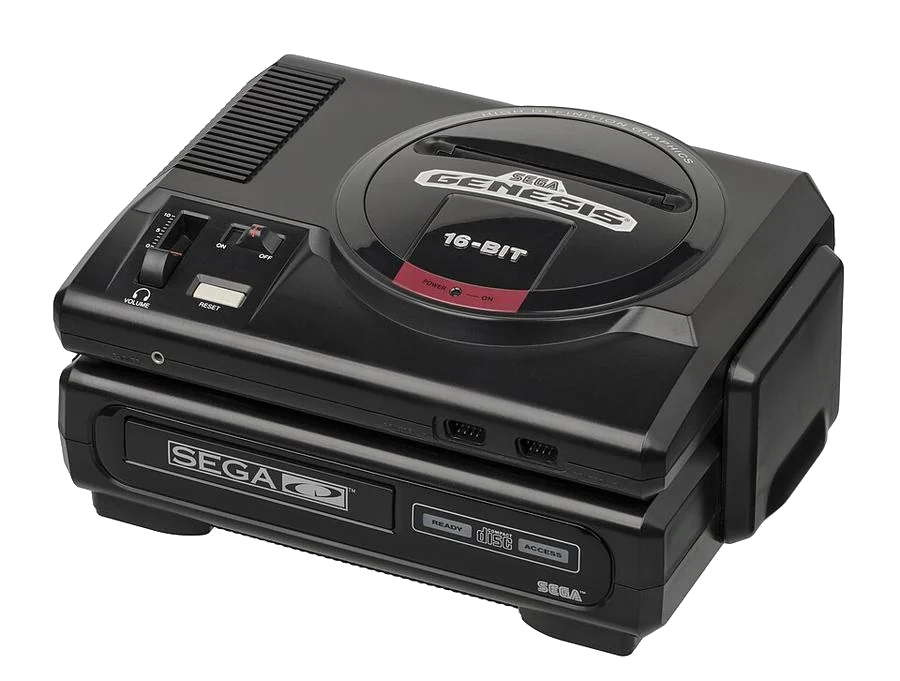
SEGA Mega-CD
History & context
At the turn of the 1980s and 1990s, the games industry embraced the notion that the future lay on optical disc. A compact disc holds hundreds of megabytes where a cartridge offers mere units, it can play back a studio recording at CD quality, and — as it seemed at the time — it can even play video. Sega jumped on that wave as the first of the major console makers: in December 1991 it launched the Mega-CD in Japan, an add-on that connected to the existing Mega Drive and turned it into a machine with a disc drive.
The unit reached the West in 1992 under the name Sega CD (in Europe the Mega-CD designation stuck) and immediately ran into its biggest problem — price. The add-on cost roughly as much as an entire console, and that was assuming you already had a Mega Drive at home. The result was a platform that won a handful of devoted fans, enormous publicity around a few controversial titles, and only a fraction of the sales Sega had hoped for. Even so, it remains one of the most fascinating pieces of hardware of its era.
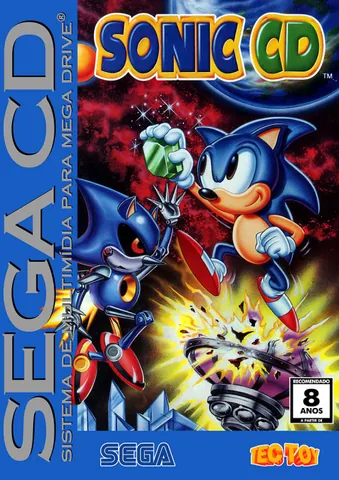
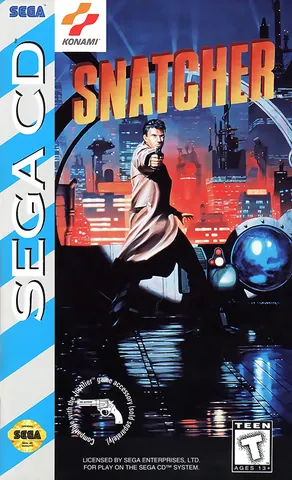
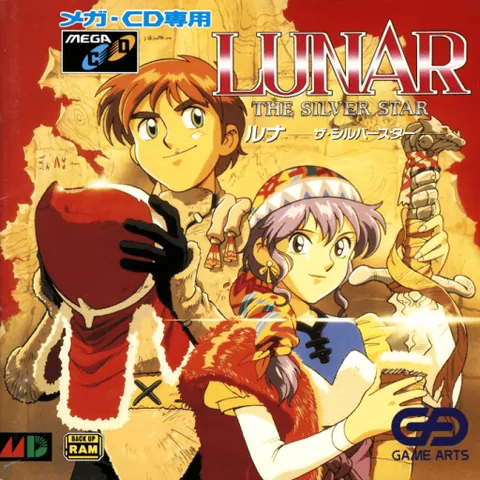
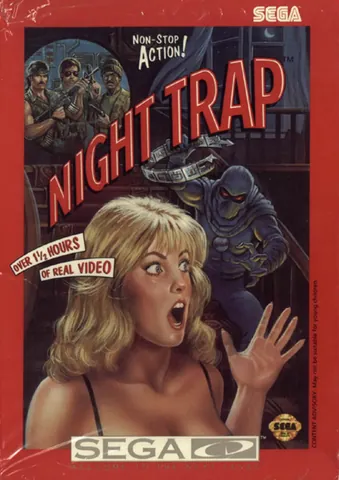
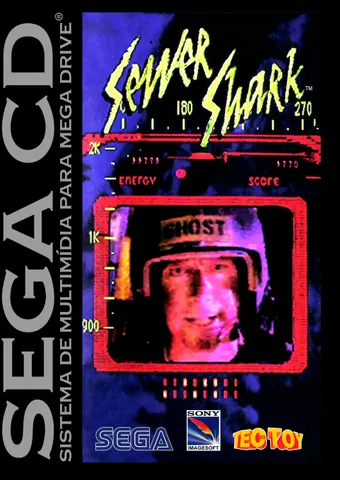
The Mega-CD's legacy is genuinely split in two. On one side stand Night Trap and Sewer Shark — games assembled from live-action footage that became a symbol of technology becoming an end in itself. On the other stand Sonic CD, Lunar: The Silver Star, and Kojima's adventure Snatcher — titles that still rank among the best Sega released in its sixteen-bit era.
Technology: graphics and sound
The Mega-CD isn't just a disc drive. The add-on brings its own Motorola 68000 processor clocked at roughly 12.5 MHz — faster than the one in the Mega Drive itself — and the two chips work in tandem. It also adds significantly more memory (several hundred kilobytes of program RAM plus a buffer for data from the disc) and, crucially, an ASIC for scaling and rotation — a hardware unit that can enlarge, shrink, and rotate graphics similarly to the famous Mode 7 on the rival SNES.
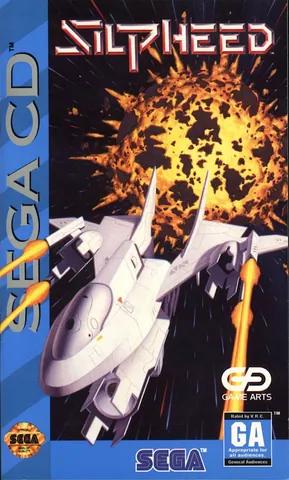
That chip is behind the platform's most striking effects: the rotating bonus stages in Sonic CD, the pseudo-3D flythroughs in Silpheed, or the moving backgrounds in action games. The color palette and resolution, however, remain dictated by the Mega Drive, so visually the Mega-CD is still a sixteen-bit console — just with more motion.
Sound is where the leap forward is greatest. Alongside the Yamaha YM2612 FM chip came the Ricoh RF5C164 PCM synthesizer with eight sample channels, and above all the ability to play regular CD audio tracks. Composers could for the first time work with real recordings, choirs, or live instruments, and the difference is audible on first listen — the Japanese and European soundtracks of Sonic CD rank among the cult recordings of the entire generation.
Connectivity and peripherals
The hookup is typically Sega, meaning a bit convoluted. The Mega-CD connects to the console via an expansion port and edge connector, has its own power supply and its own audio cabling, which mixes with the Mega Drive's output. The controllers remain unchanged — the Mega-CD adds no ports of its own and is played with the same three-button and six-button gamepads.
The console keeps saved positions in built-in battery-backed memory, which could be expanded with a Backup RAM Cart slotted into the cartridge port. The same slot could also accept the 32X add-on, creating the notorious "tower of power" — a trio of boxes with three power supplies that only a handful of games could actually take advantage of. When no game disc was inserted, the unit worked as an ordinary CD player with a graphical interface.
Models and revisions
The original Model 1 (1991) is a horizontal deck with a sliding disc tray, onto which the Mega Drive sits from above; it looks and was priced like an expensive hi-fi component. The revised Model 2 (1993) switched to a cheaper top-loading disc mechanism and connects from the side next to the console, making the whole setup more compact and reliable. On older units, a dried-out belt in the tray mechanism and leaking capacitors are typical faults today.
Sega also released combined units. The Sega CDX (in Europe the Multi-Mega) packed both Mega Drive and Mega-CD into a case the size of a portable CD player and could also work as an ordinary discman. A collaboration with JVC produced the upscale Wondermega (sold in North America as the X'Eye) with better audio output, and Aiwa offered a micro system with a Mega-CD built directly into the tower.
Clones and variants
Dedicated Mega-CD clones essentially never appeared — the mechanism with its BIOS was too complex and expensive to copy, so cheap knockoffs concentrated on the Mega Drive itself instead. There were, however, interesting licensed offshoots: the multimedia system Pioneer LaserActive could, after purchasing the Mega LD module, play Mega Drive and Mega-CD games as well as its own titles on LaserDiscs. It was one of the most expensive gaming devices of its time and is a collector's rarity today.
Competition in the disc space was ultimately fierce: NEC had its PC Engine CD-ROM², Philips pushed the CD-i, and the mid-1990s brought the 3DO, Amiga CD32, and eventually the Saturn and PlayStation, which closed the book on FMV games.
Today's scene
Mega-CD emulation is well handled today — the Genesis Plus GX and PicoDrive cores run reliably even on weaker retro handhelds, while more powerful machines have access to more accurate emulators like BlastEm or Ares. Unlike the Mega Drive, there's one crucial difference: the platform requires a BIOS file, separately for the Japanese, American, and European versions. Without it the game won't launch, and this is the step where beginners most often get stuck.
In Batocera, RetroPie, and EmulationStation, the Mega-CD has its own folder (usually segacd or megacd), and discs are most commonly stored in the CHD format, which compresses both the disc image and audio tracks into a single file. With audio tracks, it's worth not skimping on quality.
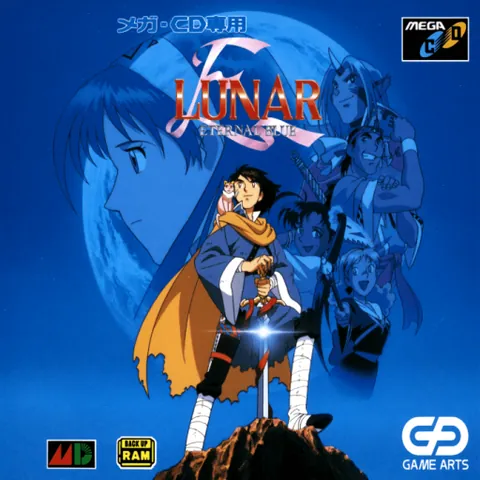
A legal path to these games does exist, though it's narrow. Sonic CD was released in a modern version on today's platforms and also as part of the Sonic Origins collection, the Lunar series received an official remaster, and even Night Trap returned in an anniversary edition. A number of other titles — Snatcher chief among them — remain trapped on their original discs, whose prices on the collector's market have been steadily climbing.
Games on this platform (29)
No game in this genre.