 Philips · 1991
Game consoles
Philips CD-i
History & context
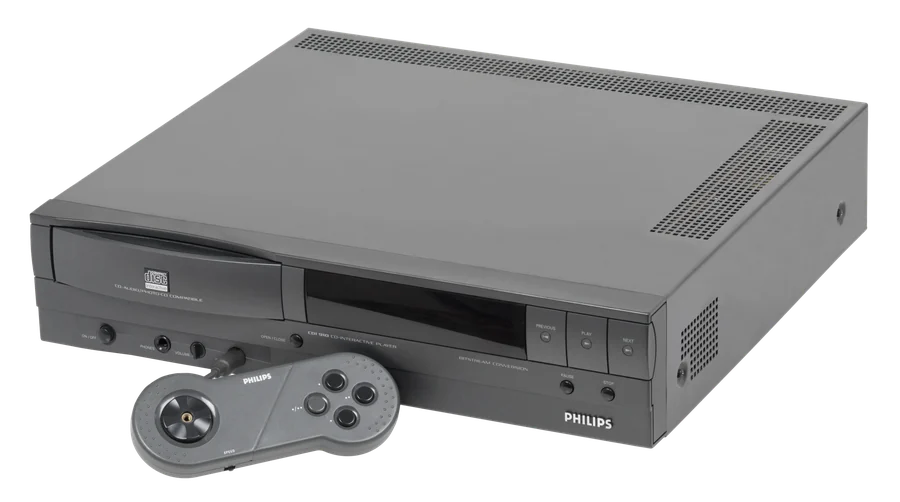
Philips CD-i is the strangest device that ever found its way onto a list of game consoles. When Philips launched it in 1991, it didn't claim to be a console at all — it talked about a home multimedia player, a device meant to sit next to the TV and the VCR and offer the family encyclopedias, language courses, music, movies, and "a few games too." The abbreviation Compact Disc Interactive denoted an entire industry standard: its own disc format, its own operating system, and a fixed hardware specification that manufacturers had to follow so a disc would work anywhere.
That ambition was a decade ahead of its time — CD-i was meant to be what DVD and the smart TV later became, combined. But in 1991 that meant an expensive box that did everything by half. And above all: the device was controlled with a remote control with a thumb joystick, because Philips expected users to browse an encyclopedia, not dodge an enemy. Games took a hit from that they never recovered from.
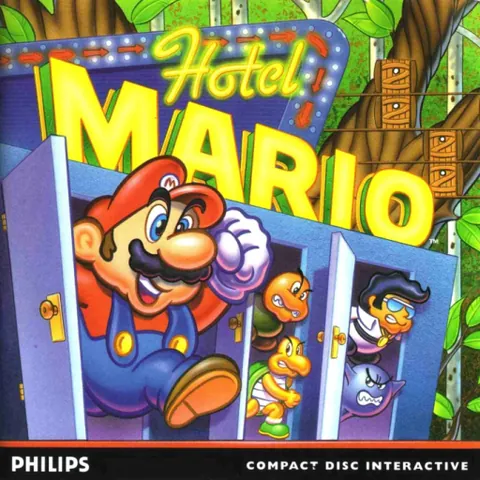
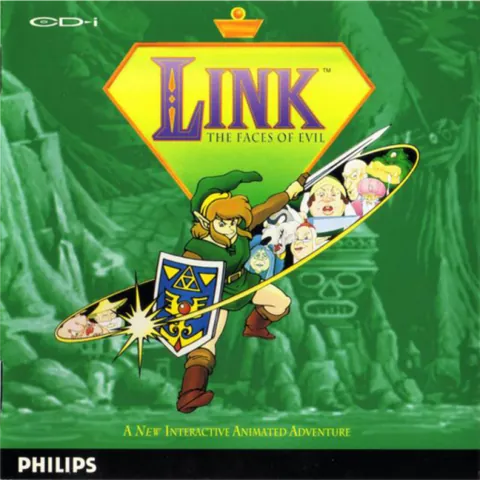
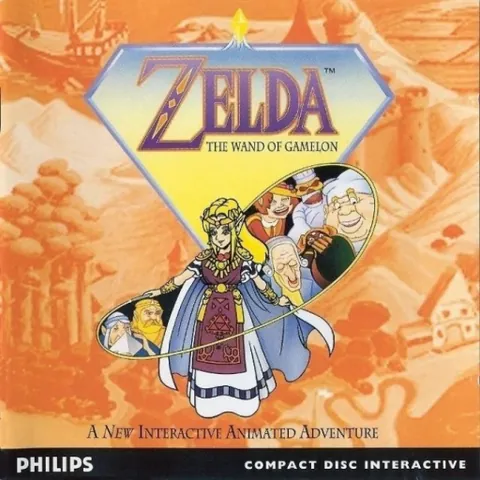
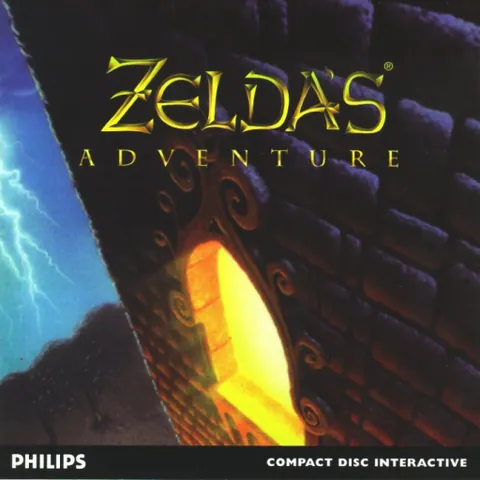
CD-i did make history, though — just not the way anyone wished. It was on CD-i that Link: The Faces of Evil, Zelda: The Wand of Gamelon, and Hotel Mario were released — titles featuring Nintendo characters that emerged as a byproduct of failed negotiations over a CD add-on for the SNES. Nintendo licensed its characters to Philips as a consolation prize, Philips turned them into games with stiff animation and awkward voice acting, and two decades later the internet decided these discs would forever be the textbook example of how not to do it.
Tech: graphics and sound
The heart of most players is the Motorola 68070 processor — a variant of the 68000 chip with integrated controllers, clocked around 15 MHz. Graphics are handled by the MCD 212 video chip series, which works with two independent graphics planes and can blend them with transparency: one carries a photographic background, the other sharp interface graphics.
Besides the usual palette modes (CLUT), the chip also supported DYUV, a compression format designed for photorealistic images. Thanks to it, static screens on CD-i looked better than the competition's — but the price was abysmal redraw speed. CD-i had no hardware accelerator for sprites or scrolling, so anything that moved had to be computed by the processor. That's the root of the notorious choppiness and "paper cutout" animation in many of its games.
Sound, on the other hand, was a strength. Alongside 16-bit stereo CD quality, the standard offered several levels of ADPCM compression, which let hours of spoken word be crammed onto a disc and played back alongside data. Narrated commentary was standard on educational discs at a time when players on cartridge-based consoles could only dream of it.
Connectivity and peripherals
The standard control device on the early models was an infrared remote control with a thumb joystick and two buttons. It was fine for browsing menus, but dreadful for playing — and because games had to be controllable with exactly this, many of them stick to a slow pace and screen-clicking. Gamepads, a trackball, a mouse, and even a touchpad were added later.
The most important accessory was the Digital Video Cartridge, a module with an MPEG-1 decoder. Only with it could a player handle Video CD and so-called Digital Video titles with full-screen video — and some games require it outright. Video-wise, the players offer composite and S-Video, with European units typically also including SCART.
Models and revisions
The first generation is represented by the bulky desktop players of the CD-i 910 series, indistinguishable from quality hi-fi components. Smaller and cheaper models followed in the 200 and 400 series, with the later 400 series explicitly targeting gamers and usually bundled with a gamepad. A special chapter belongs to the professional models for businesses, museums, and kiosks, with a more rugged chassis and expansion slots.
Portable players with their own LCD panel were also made. For collectors, one thing is essential: models differ in whether they have the Digital Video Cartridge fitted — and today the module is often pricier than the player itself.
Clones and variants
Because CD-i was an openly licensed standard, no clones appeared, but rather official variants from other brands. In the USA it was sold under Philips's own house brand Magnavox, in Europe Grundig added its model, and Asian manufacturers took out licenses too, among them GoldStar (today's LG) and Kyocera. Internally these are essentially the same machines, and discs work between them without restriction — exactly what Philips was after.
In the former Czechoslovakia, CD-i sold only marginally, and given the prices of the time it was bought more by companies and schools than families. Anyone who remembers it usually knows it from demo kiosks in department stores.
The scene today
CD-i emulation is among the most demanding and least polished in all of retro gaming. Furthest along are the specialized CD-i Emulator and the same_cdi driver based on MAME. Both require the original system ROM of the specific player model, without which nothing runs at all — and titles with digital video also run into problems emulating the MPEG module. Support exists in Batocera, but it's rather experimental and hits a performance ceiling on weaker handhelds.
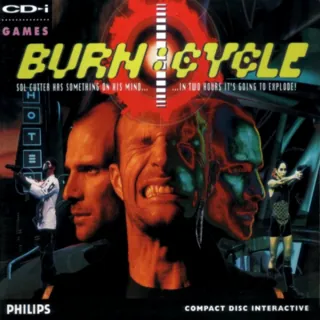
The legal route to content is through original discs, which are plentiful in secondhand shops — educational titles were pressed in huge numbers and no one collected them. Only the Nintendo games that turned CD-i into an internet legend command collector prices. Anyone wanting to get to know the platform fairly, though, should also reach for something else: Burn:Cycle shows just how well Philips could do its own interactive movie, and hundreds of encyclopedic discs still remind us that this device never really wanted to be a console first.
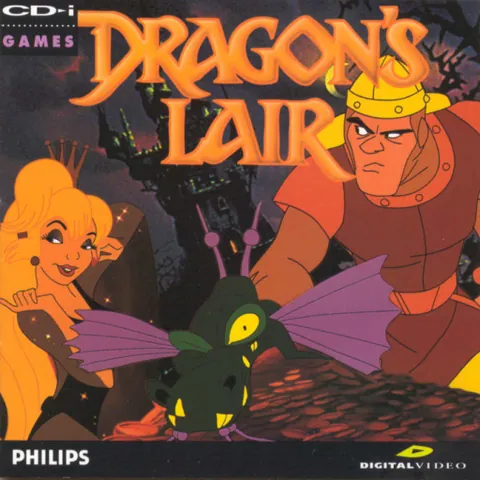
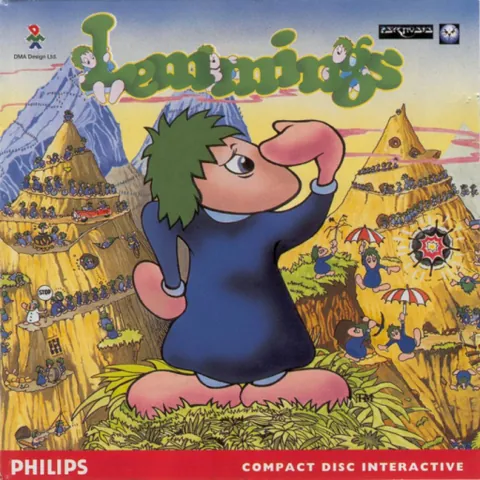
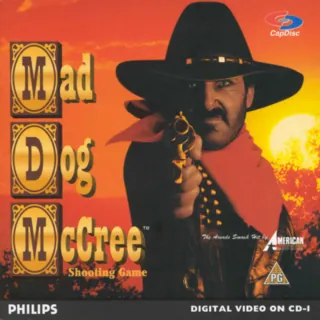
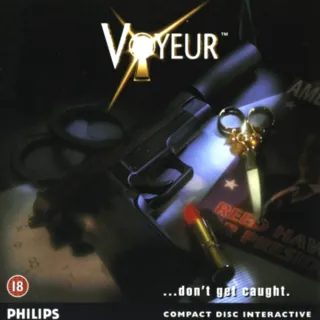
Games on this platform (13)
No game in this genre.