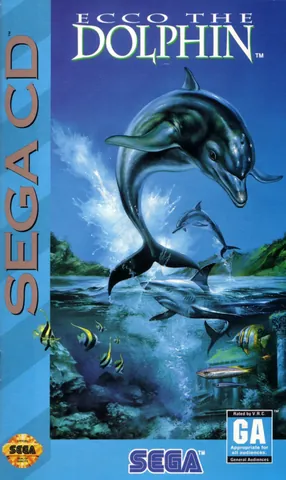
Ecco the Dolphin
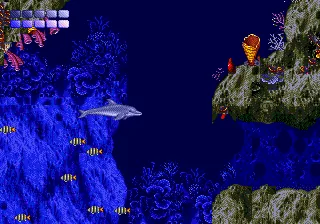
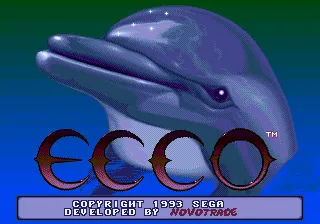
Ecco the Dolphin is one of the most unusual games of its era, and it received its most beautiful form on the Mega-CD. You play a dolphin whose entire pod is swept away by a mysterious storm, and you set out after them across the ocean, through icy seas, sunken cities, and places far stranger than what you're used to. The whole game takes place underwater, and the controls reflect that: Ecco swims in every direction, accelerates with short bursts, leaps above the surface, and must constantly keep track of two things at once — dwindling health and, above all, dwindling breath.
The gameplay is built on exploration and problem-solving rather than combat. The essential tool is sonar, which the dolphin uses to map its surroundings, talk to other creatures, and activate ancient crystals; fish serve as an energy source, and narrow tunnels act as mazes where a single mistake means drowning. Moving forward often means figuring out where you can break through an ice floe or how to use a current. The game is notorious for its difficulty and unforgiving nature, but that's exactly why it rewards patient players with the feeling of genuinely getting to know an alien world. It also regularly changes its own rules, whether by leading the dolphin into frozen caves or sending it far outside the familiar ocean.
On Mega-CD, the version benefits especially from reworked graphics and, above all, from music played from disc, which is far more spacious, dreamlike, and at times unsettling compared to the original chip-based soundtrack. The underwater backdrops layer on top of each other, with shafts of sunlight breaking through and swaying seaweed creating an atmosphere that simply wasn't common on cartridge-based consoles. At the time, the game was seen as proof that Sega could do more than just fast mascots, and it earned a cult reputation it still holds today. A modern player has to get used to the slower pace and harsh punishment for mistakes, but the reward is one of the most powerful atmospheric experiences of the entire sixteen-bit era. Few games of that time managed to so convincingly evoke the feeling of moving through an environment where you don't belong.
Game 3 of 29 for SEGA Mega-CD
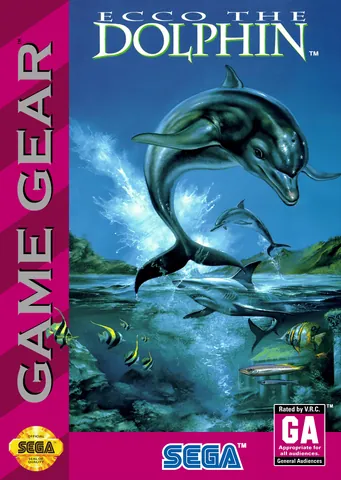
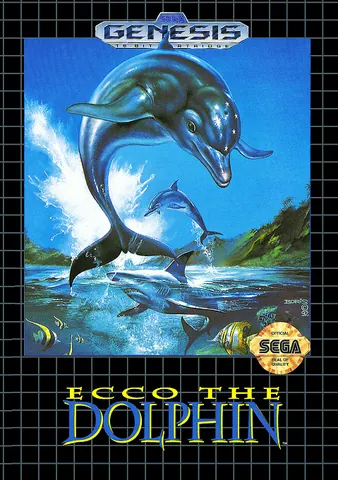
The same title elsewhere (2)
The 1992 SEGA Mega Drive original ran on a cartridge with FM-chip music and delivered a distinctive, meditative feel of swimming through the ocean. The 1993 SEGA Mega-CD version used the CD format to bring a reworked soundtrack with richer, more atmospheric sound and improved background graphics. The Mega-CD edition also includes extra content that couldn't fit onto the original cartridge due to its limited capacity. Because of this, the CD version is usually seen as the visually and sonically richer one, while the Mega Drive original remains the faster, more straightforward choice that needs no extra CD drive.