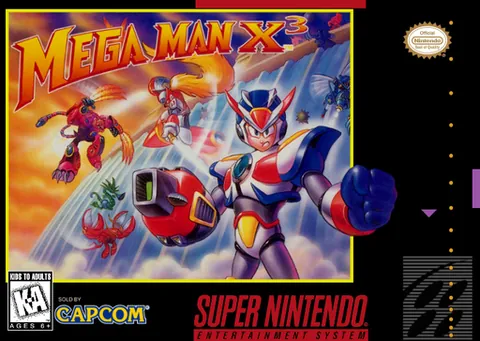
Mega Man X3
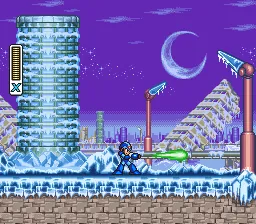
The Mavericks rise once again, and this time the robotic hunter X doesn't have to go to the battlefield alone. Mega Man X3 from 1995 closes out the Mega Man X series trilogy on the Super Nintendo and brings a long-awaited novelty: for the first time you can also play as Zero in the main game.
The gameplay builds on the solid foundations of the previous installments. You go through freely selectable levels, at the end of which you defeat the boss Mavericks, collect their weapons and armor upgrades, and use the dash, wall climbing and charged shots. Zero is playable here to a limited extent and offers a different fighting style with a light saber, which was a big deal for fans. The game also features so-called Ride Armor, robotic suits, and more paths to progress, rewarding experimentation.
Mega Man X3 was the last installment of the X line released on the Super Nintendo before the series moved on to new console generations. Capcom once again used an expansion chip in the cartridge for some effects, and the game ranks among the visually and difficulty-wise more demanding pieces of the sub-series. For many players it's quite a challenge that tests reflexes as well as patience.
In development terms the game falls into the period when Capcom was simultaneously running the classic Mega Man series and the more modern X branch, and the brand was among its most reliable pillars. The third installment thus represents the culmination of the 16-bit era of this sub-series, before the action moved into the world of 32-bit consoles. A later port to the PlayStation and Saturn then brought the game closer to some players outside the original platform.
The ability to play, even if only in a limited way, as Zero was much more than just a technical trifle. For fans it was a symbolic step that foreshadowed how important a role this character would play in later installments, and it gave the third game a special significance within the whole series. Together with expansion elements like the robotic suits, X3 thus offers a somewhat richer and more varied experience than its predecessors. At the same time, however, it escalates the difficulty: the bosses are tougher and the levels more intricate, which makes it a title that will be most appreciated by players already familiar with the previous installments, while for newcomers it can be merciless at times. Yet it is precisely in that challenge that a piece of its charm and long lifespan lies.
Culturally it is a valuable piece for collectors and fans, among other reasons because the original release was among the rarer and more sought-after titles. As a full stop to the 16-bit chapter of the Mega Man X series, it holds up to this day.
Why play: A demanding conclusion to the 16-bit Mega Man X trilogy, where for the first time you also get to play as Zero with his light saber.
Game 74 of 154 for Super Nintendo