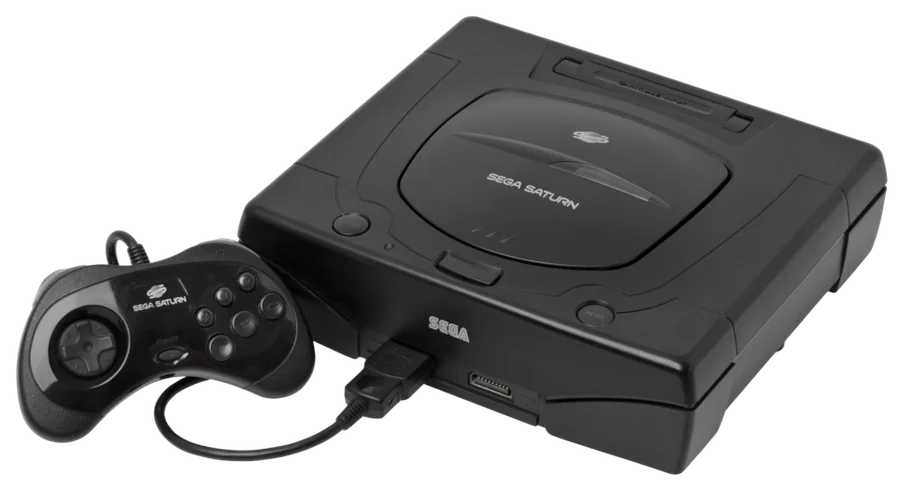
 SEGA · 1994
Game consoles
SEGA Saturn
History & context
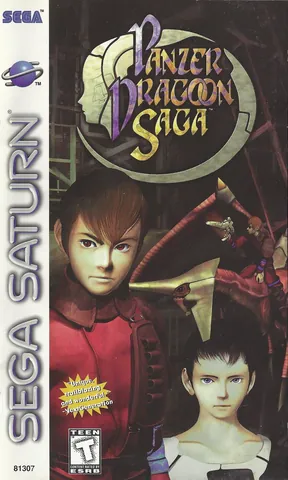
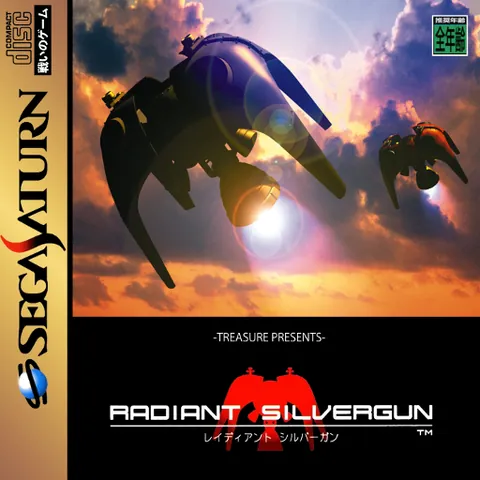
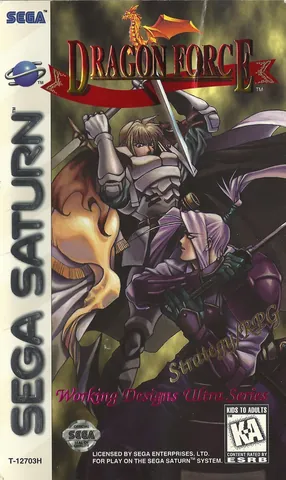
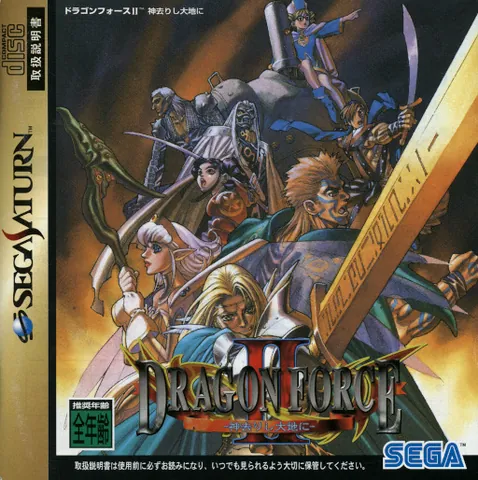
The SEGA Saturn is a tragic hero of gaming history. When Sega launched it in Japan in November 1994, it was an ambitious machine built on a series of processors — a symbol that Sega wanted to enter the 3D era at full force. But it was precisely this force that turned out to be a curse. In the American market the console was buried by the legendary moment at the E3 trade show in May 1995, where Sega announced a surprise immediate sale for 399 dollars — a move that angered retailers and developers alike and from which the Saturn never recovered in the West. In Japan, however, it was quite a different story: there the console did decently, received dozens of exclusives and to this day is a sought-after treasure among collectors and connoisseurs. It hides gems such as Panzer Dragoon Saga, Radiant Silvergun or Dragon Force.
Technology: graphics and sound
The Saturn's architecture is notorious for its complexity. At its heart are two 32-bit Hitachi SH-2 processors clocked at 28.6 MHz, complemented by two graphics chips, VDP1 (responsible for sprites, polygons and rendering) and VDP2 (background layers and scrolling). Add to that a control processor and a sound subsystem — so in total the machine contains an impressive count of eight processors. This multi-chip philosophy made the Saturn a master of 2D graphics: it handled a huge number of sprites, practically unlimited background layers and smooth scrolling, thanks to which it delivered the best home ports of the arcade 2D games of its time.
The catch lay in 3D. The VDP1 did not work with triangles but with quadrilateral sprites (quads), which was a completely different approach than the one the competition chose. Programming 3D scenes was therefore unintuitive and demanding, and moreover few people knew how to split the load between two CPUs without a shared cache. When Sony released the technically more elegant and easily programmable PlayStation, many developers rather bypassed the Saturn.
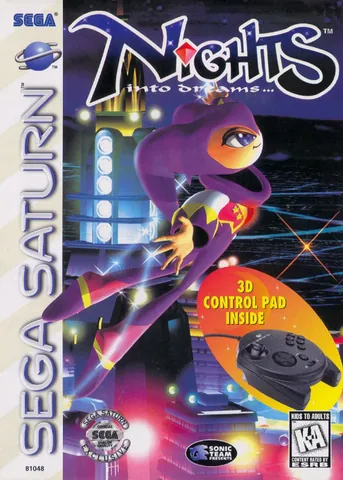
Sound was handled by the Yamaha SCSP (Saturn Custom Sound Processor) driven by its own Motorola 68EC000. It offered 32 PCM/FM channels and quality digital sound that matched the competition and positively shone in musically strong titles (such as NiGHTS into Dreams...).
The Saturn had a rich accessory ecosystem. On the front it carried two controller ports, to which the iconic 3D Control Pad with an analog stick and analog triggers connected — it was created precisely for the game NiGHTS and foreshadowed modern controls. Sega also offered a steering wheel, arcade sticks and, for shooters, the Virtua Gun (Stunner) light gun.
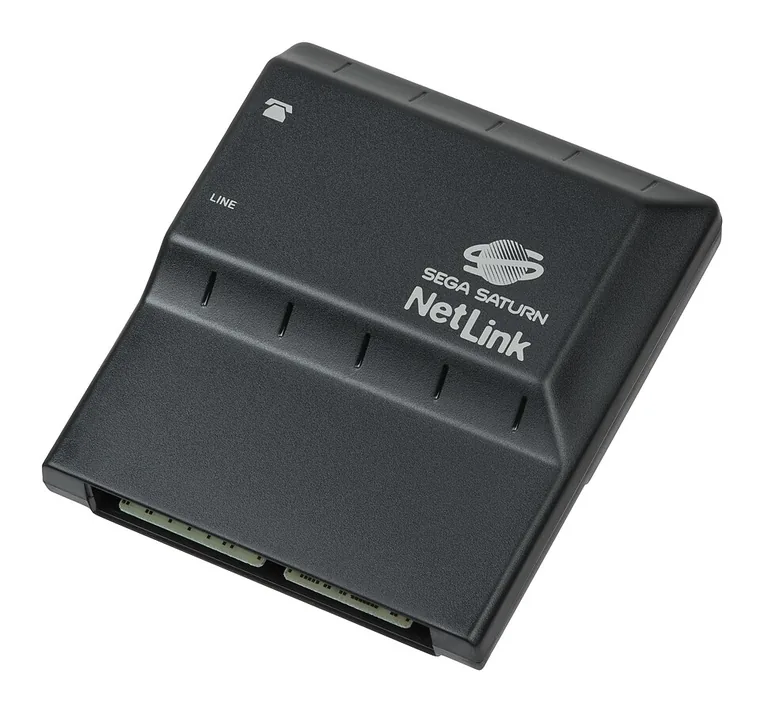
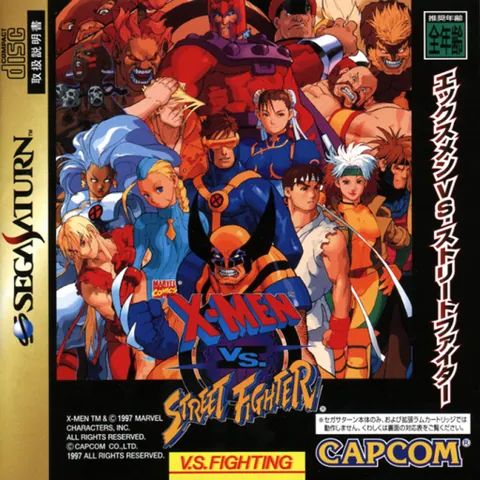
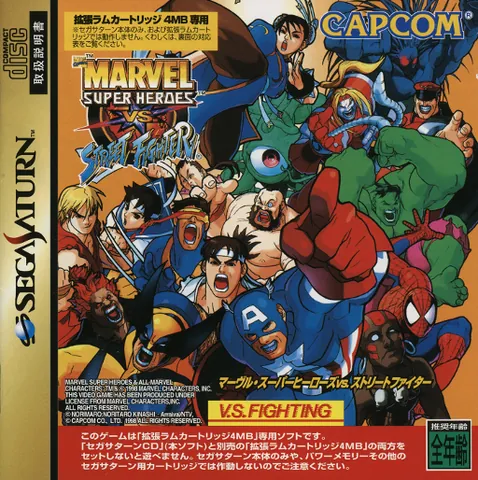
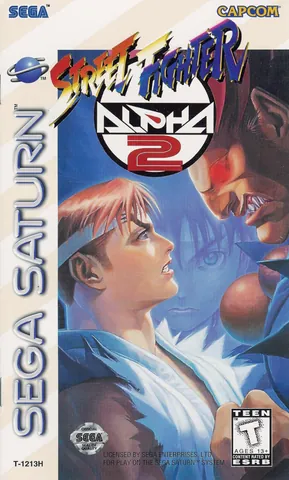
A very important element were the expansion cartridges slotted into the port on the top side. Besides a memory card for saving positions, these were mainly RAM cartridges (1 MB and 4 MB), which dramatically improved the ports of demanding 2D fighting games by Capcom and SNK — without them X-Men vs. Street Fighter, for instance, would never have run so faithfully on the Saturn. For network gaming there was the SegaNet modem in Japan and NetLink in the West. Video output covered composite, S-Video and RGB SCART, so the Saturn ranks among the best-looking consoles of its generation on a quality display.
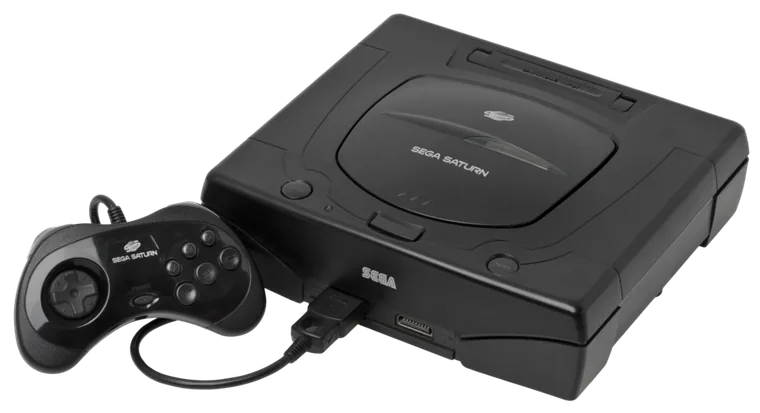
The console went through several redesigns. The original Japanese model was gray, whereas it arrived in the West in a sober black variant. The hardware gradually got cheaper: early boards had a pair of separate chips, later revisions integrated them. The most visible change was the transition from round buttons and an oval connector on the first units to oval/rounded buttons and a cheaper design in later series. A curiosity is the HiSaturn and V-Saturn — licensed variants made by Hitachi and JVC (Victor), which technically matched the Sega and differed only in the brand and the box. Hitachi even went so far as to produce a portable hybrid version with an LCD and car navigation (HiSaturn Navi).
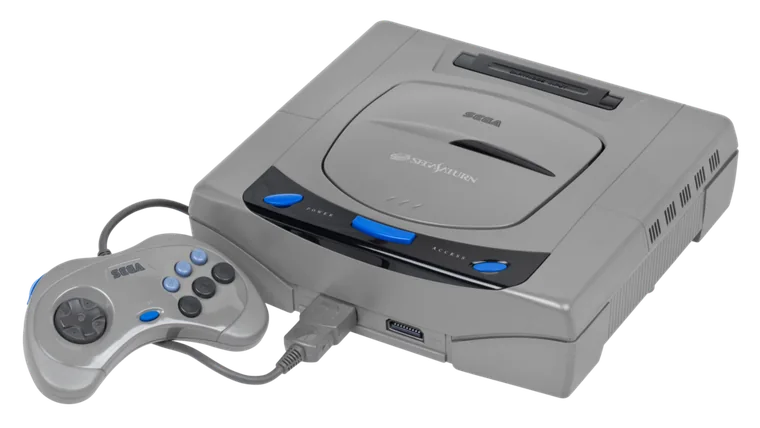
Genuine unofficial clones of the Saturn practically do not exist — the architecture was too complex and expensive for anyone to imitate, unlike the simple NES. In former Czechoslovakia the Saturn was not officially sold and reached the market only through imports, so neither the gray nor the black Saturn was a common part of children's rooms like, say, the Pegasus famiclones among the 8-bit machines. As "variants" we therefore count rather the above-mentioned licensed versions V-Saturn (JVC) and HiSaturn (Hitachi) and the regional editions (Japan, North America, Europe) with different regional locks, because of which switches and modding chips are still used to this day.
Today's scene
Emulation of the Saturn is among the most demanding of all — precisely because of the eight-processor architecture. For years it was inaccurate, but today it is decently handled by emulators such as Mednafen/Beetle Saturn, Yabause and its modern successor Kronos or SSF. On weaker hardware (for example the H700 chips in portable Anbernics) mainly 2D titles run reliably, while demanding 3D games need more powerful devices. The community has also revived thanks to ODE drives (optical drive emulator, e.g. Fenrir or Satiator), which replace the aging CD drive with an SD card. Homebrew and translations of Japanese exclusives into English also flourish, so the treasures the Saturn offers are more accessible today than ever before.
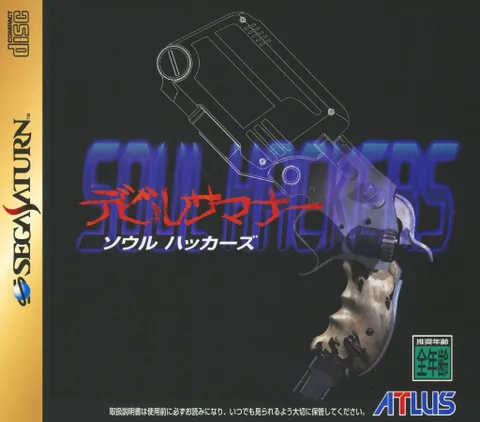
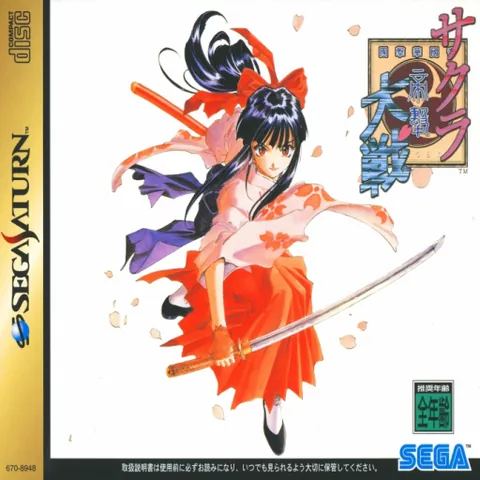
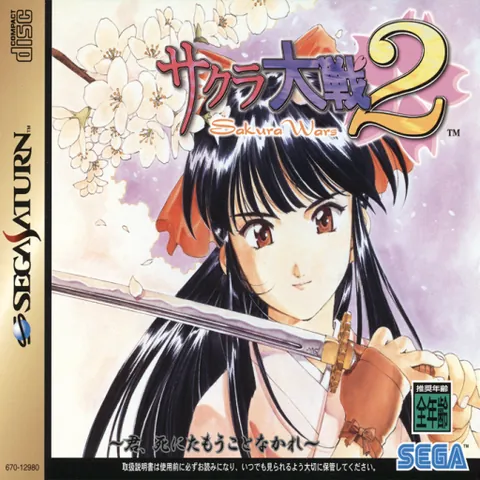
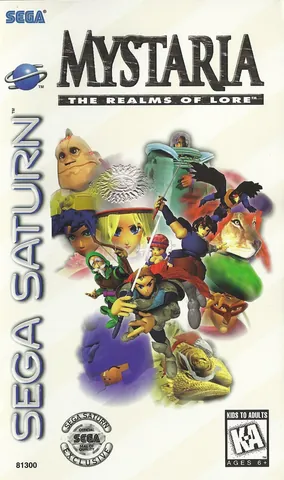
Games on this platform (90)
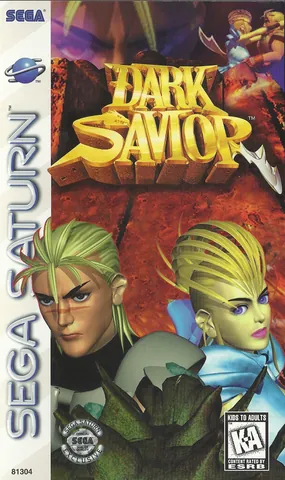
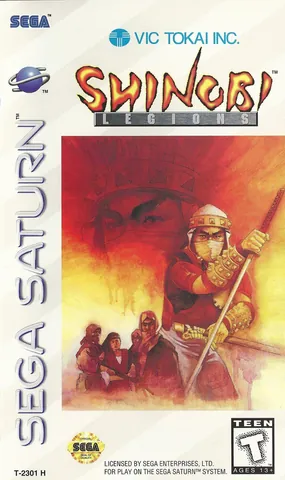
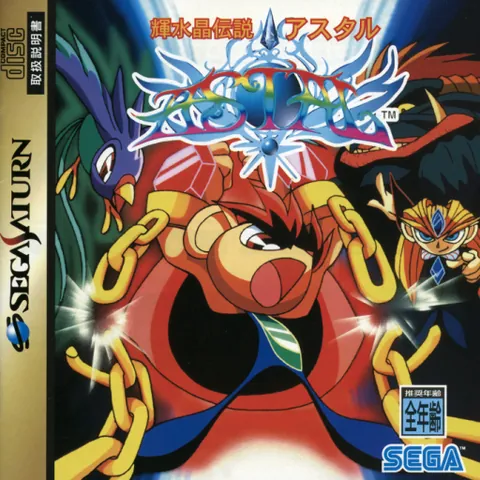
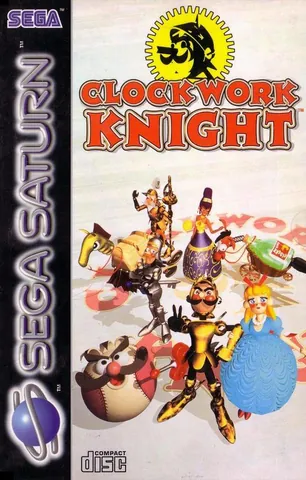
No game in this genre.