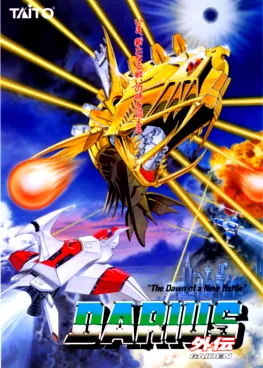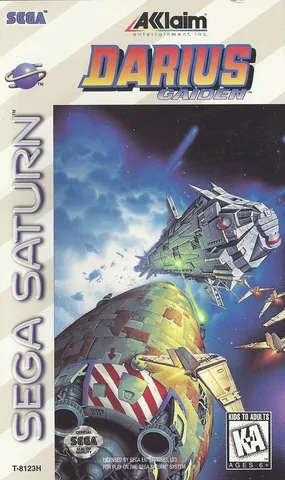
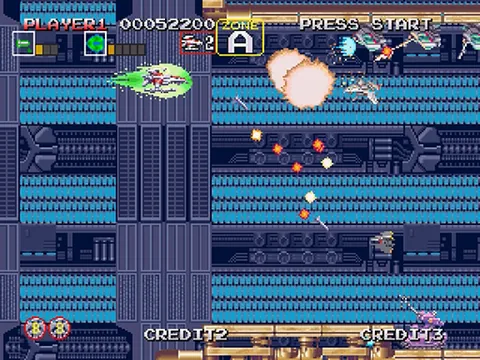
Darius Gaiden is the Saturn port of Taito's mid-nineties arcade hit and another installment in the long-running series about battling giant mechanical fish, which players already know from eighties arcade cabinets. The player pilots the Silver Hawk fighter and works through a branching level structure — after each stage, choosing one of two paths onward, which gives the game solid replayability and the sense that no two playthroughs look quite the same, especially as the paths converge on different final bosses. A defining trait of the series is precisely those giant bosses shaped like sea creatures, which take up almost the entire screen and require memorizing attack patterns and weak points before the player can gradually take them apart piece by piece. Alongside the main weapon, players can collect upgrades for side and rear fire as well as special bombs, allowing the ship to be adapted to different playstyles.
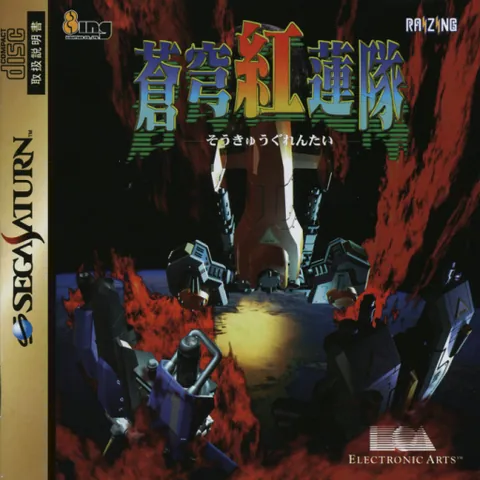
The Saturn port deviates from the arcade original only in minor details and technically ranks among the better conversions of the genre on this platform — the color palette is rich, the sprites large, and the action stays smooth even when the screen fills with enemy fire and several layers of parallax background. The sound side is carried by an electronic soundtrack with distinctive, almost dance-like motifs, which remains a favorite example of nineties game music and regularly turns up on fan remix albums. In Japan, where the game was released, it was received as a worthy continuation of the acclaimed arcade line, and thanks to its branching structure and inventive bosses it still holds respect among players who follow the shmup genre today. It's a title that, even years later, still demonstrates how to make a linear shooter fun through thoughtful combat design rather than just a flood of enemies on screen, and its music remains among the most memorable the genre offered in the nineties.
Why play it: For its faithful arcade conversion with a rich color palette, electronic soundtrack, and a branching structure full of inventive bosses, which will please even players tired of linear shmups.
Game 75 of 90 for SEGA Saturn