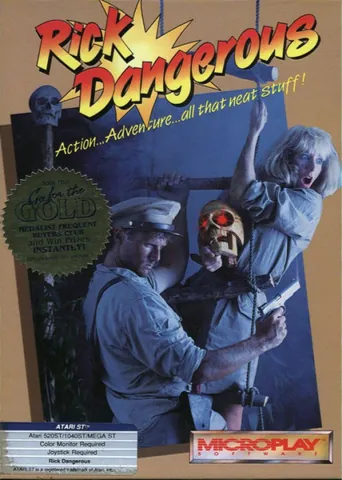
Rick Dangerous
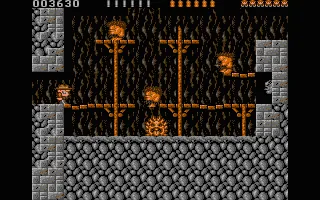
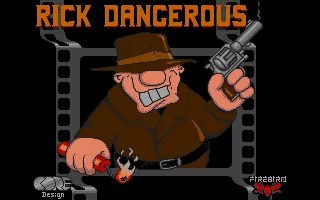
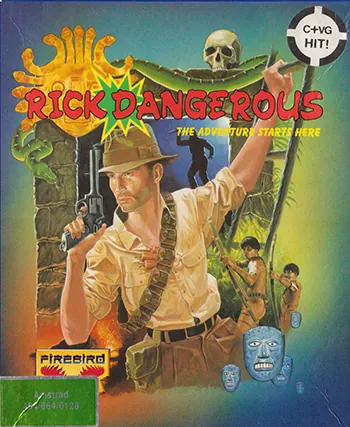
An adventurer with a hat, whip, and pistol crawls through traps full of spikes, falling boulders, and arrows shooting out of the walls. Rick Dangerous is an unmistakably British platformer that cheerfully parodied Indiana Jones while at the same time punishing the player with one of the most insidious collections of hazards in the history of the genre.
The game was created by the studio Core Design and released in 1989, among others precisely on the Atari ST and Amiga. Core Design, later famous for the Tomb Raider series, bet here on the trial-and-error method: moving forward means running into a trap, dying, memorizing its location, and avoiding it next time. Rick defends himself with a pistol, dynamite, and a club with which he can stun enemies.
In terms of gameplay, Rick Dangerous became famous precisely for this merciless, memorization-based difficulty. Traps often come without warning and surviving the first run through a level is almost impossible, which makes the game a test of patience and a sense of humor. It was this combination, however, that made it unforgettable for an entire generation of home computer players.
Culturally, Rick Dangerous became one of the defining platformers of the British computer scene at the turn of the 1980s and 1990s. It got a sequel, Rick Dangerous 2, and to this day is remembered as a symbol of an era when games were made in small studios and when difficulty was considered a virtue, not a flaw.
Anyone who loves an old-fashioned challenge spiced with adventurous atmosphere and a pinch of English humor will find exactly that in Rick. It is a game that will kill you again and again, and you will be smiling all the while.
Why play: For a classic British trap platformer with an Indiana Jones vibe and a difficulty that is a legend in its own right.
Game 22 of 72 for Atari ST
The same title elsewhere (4)
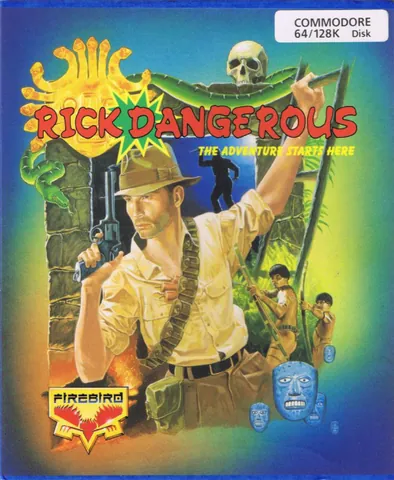
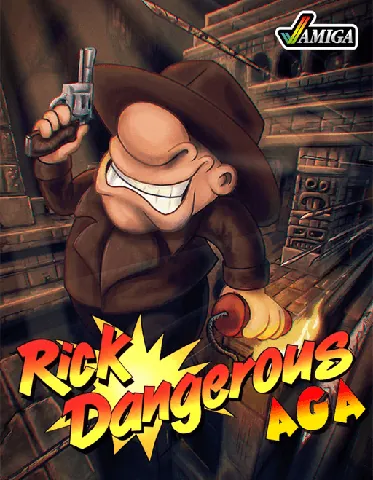
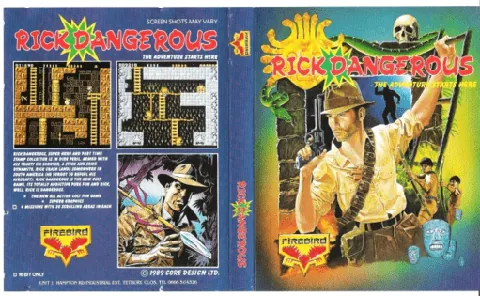
Core Design released Rick Dangerous in 1989 across several platforms at once, and the differences show mainly in sound and smoothness. The Amiga and Atari ST versions offered the most colorful graphics and the smoothest movement, the closest to the creators' original vision. The eight-bit computers had to cut back: the ZX Spectrum has the roughest graphics and sound limited to a simple piezo speaker, while the Amstrad CPC fared somewhat better thanks to its more colorful display. The Commodore 64 stood out for its music thanks to the SID chip, even though its graphics stayed simpler than the sixteen-bit machines.