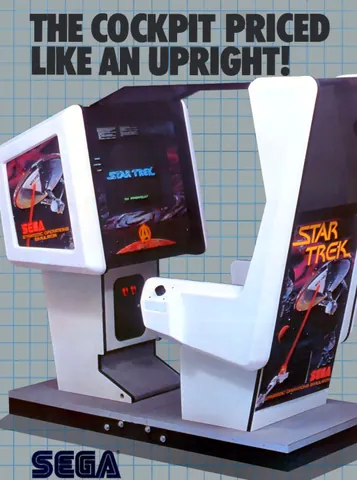
Star Trek: Strategic Operations Simulator (1983)
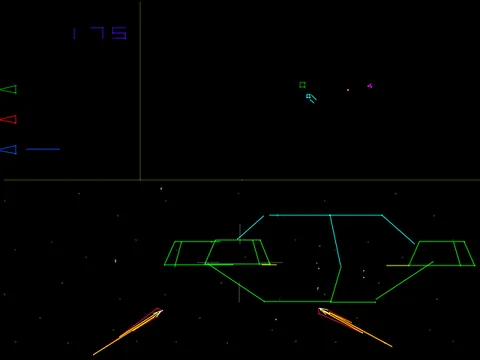
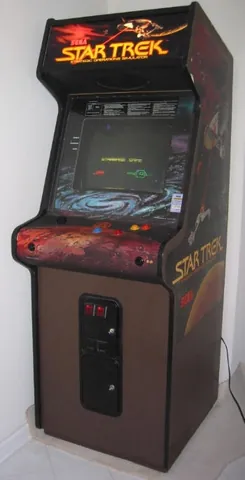
When Star Trek: Strategic Operations Simulator arrived in arcades in 1983, it looked like nothing that had stood there before. Sega bet on vector graphics and a cabinet whose shape resembled the captain's chair from the bridge of the Enterprise, complete with a trigger-style rapid controller. The goal was to create the feeling that you were truly sitting at the helm of a starship, facing wave after wave of Klingons.
The gameplay was built around a first-person view into starry space rendered in clean vector lines. The player rotated the ship a full 360 degrees, fired phasers at incoming Klingon cruisers, and saved photon torpedoes for the menacing Nomad. The key was juggling three resources at once: energy, phaser count, and torpedoes, with supplies replenished by docking at a base. What looked like simple shooting thus became a game about economy and threat prioritization.
The title was developed by Sega at a time when vector graphics were enjoying a brief but dazzling peak thanks to games like Asteroids, Battlezone, or Star Wars. Vector monitors could draw sharp, bright lines and a sense of depth that raster graphics of the era simply could not manage. Strategic Operations Simulator was one of the few games to pair this technology with a major television license.
The game's cultural significance is closely tied to the wave of Star Trek popularity following the success of the films from the early eighties. For fans it was a rare chance to step into the world of the series interactively, at a time when licensed games were still searching for their form. The distinctive high-backed cabinet became iconic and today ranks among prized collector's pieces.
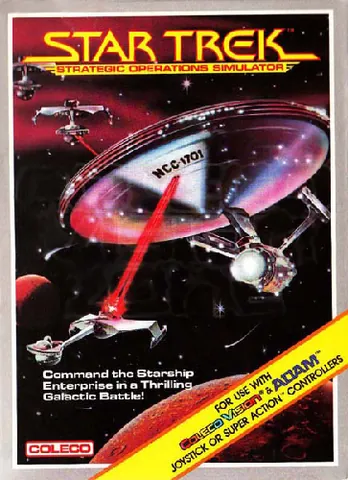
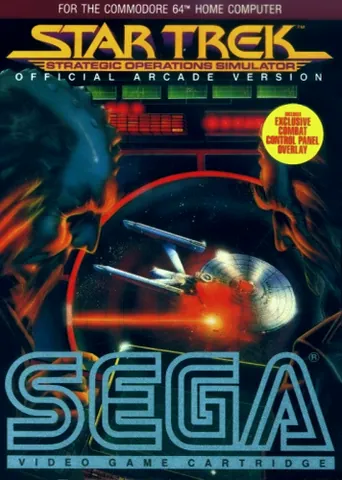
The game also received home ports on the computers and consoles of the era, though none of them could faithfully convey the magic of the vector monitor and the massive cabinet. That is precisely why Strategic Operations Simulator is best enjoyed in its original arcade form or in an emulation that respects the vector lines.
Why play it: For an authentic piece of early gaming history, where vector graphics, resource management, and the captain's chair together created one of the first truly immersive licensed experiences.
Game 21 of 258 for Arcade
The same title elsewhere (4)
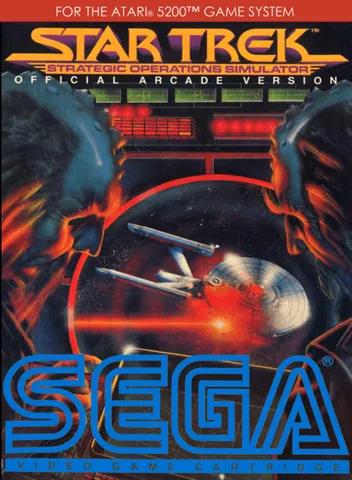
Sega's 1982 arcade original relied on vector graphics with coloured overlay film and a unique cockpit-shaped cabinet with a lever for selecting speed – an experience no home platform could literally reproduce. The conversions for the Atari 8-bit, ColecoVision and Commodore 64 therefore had to replace the vectors with simpler coloured raster shapes, sacrifice some sharpness in the starfield, and settle for an ordinary joystick or keyboard instead of the arcade cabinet's special controls. The differences between the home versions mainly come down to how much detail and smoothness each machine's power allowed – none of them quite matches the performance or atmosphere of the original arcade. Anyone wanting the true shape of the game should reach for an emulation of the arcade cabinet.
From the same series Star Trek →
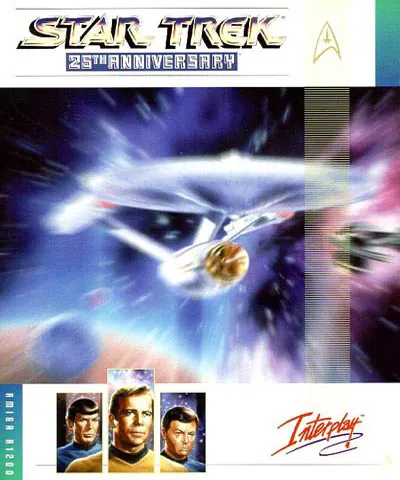 Star Trek: 25th Anniversary Amiga
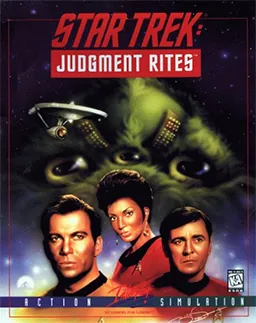 Star Trek: Judgment Rites Amiga
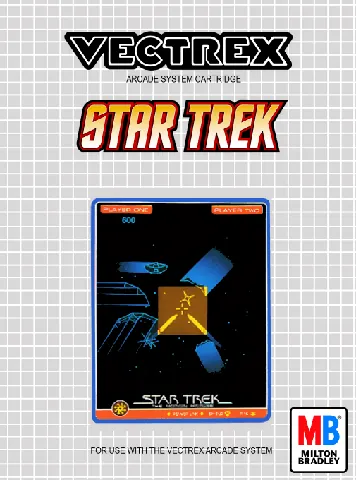 Star Trek: The Motion Picture Vectrex · 1982
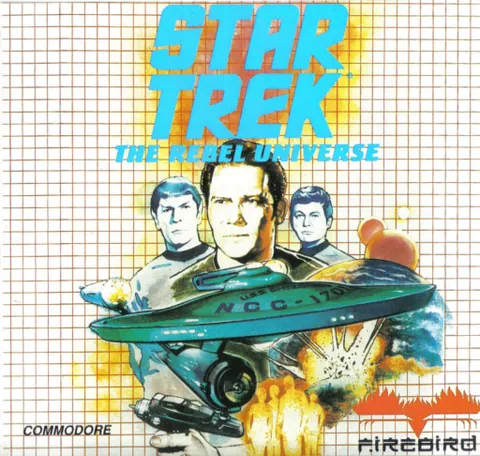 Star Trek: The Rebel Universe C64 · 1987
 Star Trek: Starfleet Academy – Starship Bridge Simulator SNES · 1994
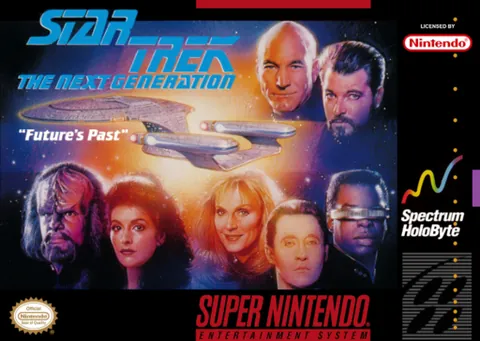 Star Trek: The Next Generation – Future's Past SNES · 1994
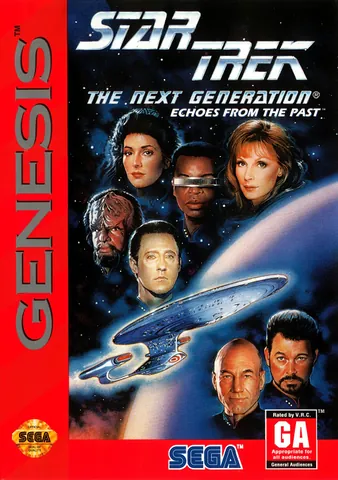 Star Trek: The Next Generation – Echoes from the Past MD · 1994
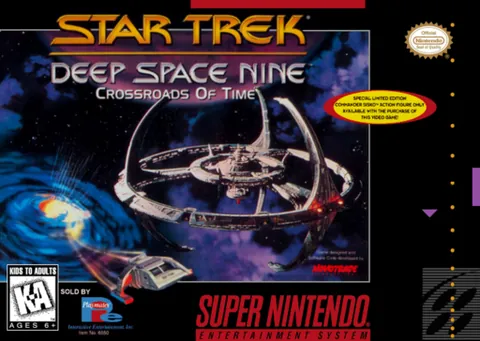 Star Trek: Deep Space Nine – Crossroads of Time SNES · MD · 1995
 Star Trek: Generations – Beyond the Nexus Saturn · 1997
 Star Trek: Starfleet Academy Win9x · 1997
 Star Trek: Deep Space Nine – The Fallen PS1 · 1999
 Star Trek: Starfleet Command Win9x · 1999