Operation Wolf
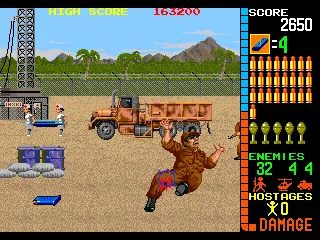
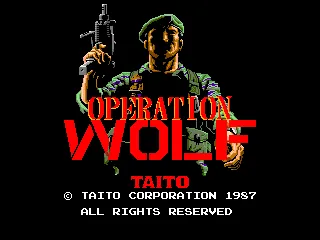
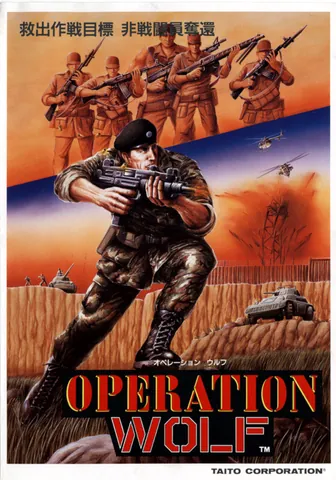
Step up to the machine, grab the heavy machine gun mounted to the cabinet, and within a second you are in the middle of a war mission. Taito's Operation Wolf from 1987 is one of the most iconic arcade shooters of all time, and in the arcade it achieved what home versions only imitated: it put a real weapon in your hands and sent you into a merciless jungle full of enemies and hostages.
The genius lay in the controls. The cabinet was fitted with a so-called positional gun styled after an Uzi machine gun, which, unlike ordinary light guns, did not sense light from the screen but the position of the barrel. Thanks to this you could hold the trigger and hose the screen with a continuous stream, lending an unprecedented feeling of power and chaos. The image scrolls on its own from left to right, enemies rush out of the undergrowth, throw grenades, transports, helicopters, and armored vehicles arrive, and you must instantly determine priorities, whom to take down first and when to grab ammunition supplies.
The game is divided into a series of connected missions, from a communications post through rescuing hostages to a final escape. You must watch out not only for soldiers but also for civilians and hostages, whom you must not shoot, or it costs you valuable points or resources. This small tactical layer set Operation Wolf apart from purely mindless shooting and added tension, because not every movement on screen is a legitimate target.
The context of the era was key. The late eighties lived on action films about lone commandos, and Operation Wolf perfectly translated this militaristic pop culture into an arcade machine. It became a huge commercial hit that drew crowds into arcades, and Taito followed up on the success by betting on the physical weapon as the main draw. In doing so it practically defined the modern subgenre of light-gun and rail shooters, followed up by games like Cabal or the later Beast Busters.
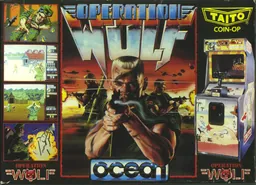
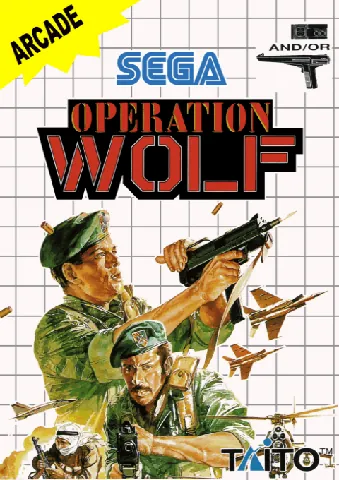
Success in arcades set off a veritable avalanche of home conversions. Operation Wolf appeared on the NES, PC Engine, ZX Spectrum, Commodore 64, Amiga, and other systems, becoming one of the most widespread titles of its generation. None of the ports, however, could fully replace the feeling of the original cabinet with a heavy machine gun in hand, which turned a trip to the arcade into a little action fantasy.
The difficulty was set in a typically arcade manner, that is, with the aim of emptying the player's pocket of coins as quickly as possible. Enemies attack mercilessly, fire comes from all sides, and every loss of health brings you closer to the end of the game. This intense challenge was not annoying, however; on the contrary, it always lured you to drop in another coin and try to get a bit further. It was precisely this cycle of tension and desire for payback that was typical of the arcade era, and Operation Wolf perfected it.
Why play it: For genuine arcade thunder and for the historic experience of a game that unleashed the era of light-gun shooting.
Game 24 of 258 for Arcade
The same title elsewhere (3)
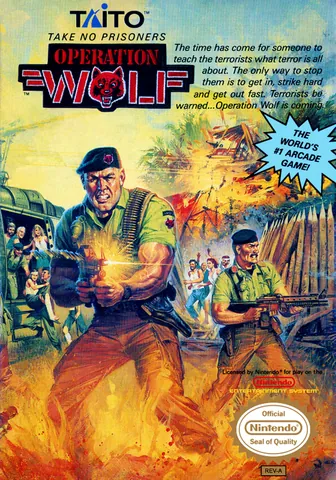
In the arcade, Operation Wolf put a real machine gun bolted to the cabinet in your hands, one you could tilt and swivel, and the game answered with brisk, fluid graphics and plenty of enemies on screen. The home Nintendo NES version, played with a standard pad or the optional Zapper light gun, had to cut enemy counts, simplify backgrounds, and dial back colors and speed due to weaker hardware. Even so, it kept the core adrenaline of the jungle shooting-gallery feel. For the full experience with a real machine gun in hand, the arcade is the one; the NES offers a simplified but still playable home take.