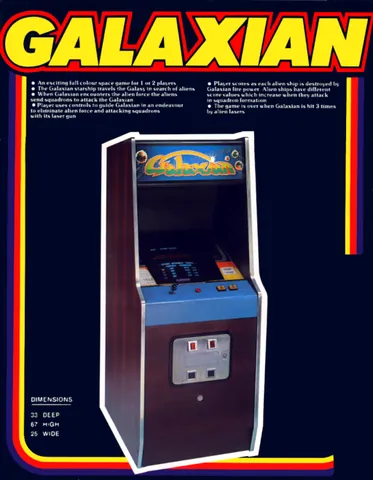
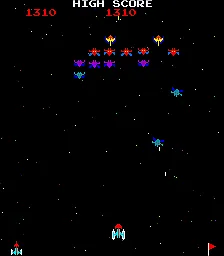
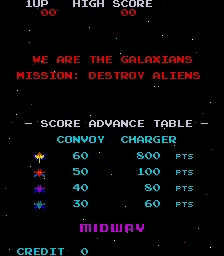
When Japan's Namco unleashed the Galaxian machine into arcades in 1979, it was more than just an attempt to ride the wave that Taito had started a year earlier with its Space Invaders. It was an answer that raised the bar so high that the genre kept climbing toward it for another entire decade. Instead of a rigid row of enemies descending toward the ground, here the attackers came alive for the first time.
The heart of the game is a simple but brilliant mechanic: the aliens no longer wait obediently in a grid but peel off from the formation in irregular waves and hurtle down in arcs, firing as they go. The player, controlling a ship at the bottom edge of the screen, must therefore read the movement, anticipate attack trajectories, and hit targets that constantly change position. This dynamic transformed a static shooting gallery into a tense dance of dodging and precise aim.
Technically it was a small miracle of its time. Galaxian was one of the first machines with full-color RGB graphics; whereas the competition used only cellophane strips glued onto a monochrome monitor, here the enemies glowed in real colors and every type of intruder looked different. The flagship, the so-called Galaxian flagship, additionally offered bonus points if you shot it down at the right moment during its attack.
The development context is crucial here. Namco, under the leadership of Masaji Furukawa and his team, took a step with this title toward becoming one of the giants of the gaming industry. The success of Galaxian directly enabled the creation of its much more famous successor; a year later came Galaga, which perfected the formation, the diving attacks, and the ship-capturing and became one of the most-played arcades of all time.
Culturally, Galaxian embodies the turning point when the shoot 'em up moved from rigidity to liveliness. To this day it ranks among the iconic titles of the golden era of arcades and appears in countless retro compilations and official re-editions from Namco and the later Bandai Namco. For anyone who wants to understand where the modern vertical aerial shmup came from, it is a mandatory stop.
Why play it: Because it is the missing link between the rigid Space Invaders and the perfect Galaga - fast, colorful, and surprisingly addictive even after more than four decades.
Game 28 of 258 for Arcade
The same title elsewhere (1)
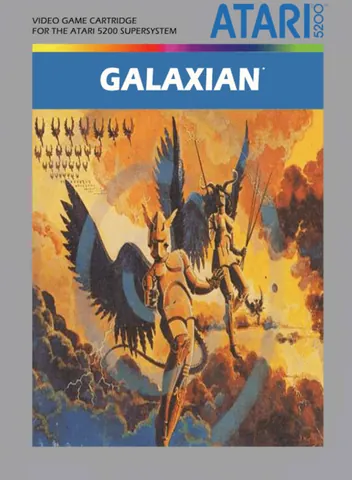
The 1979 arcade original offered sharp colors and precise digital controls, which mattered enormously for a shooter built around tight enemy formations. The Atari 5200 port arrived with simpler graphics and thinner sound, as was typical for home consoles of the era, but the bigger problem lay elsewhere – the console shipped with analog, non-centering joysticks that couldn't match the fine, quick movements of an arcade stick. For a player used to the arcade's precision, the 5200's controls feel noticeably clumsier, even though the core gameplay stays faithful to the original.