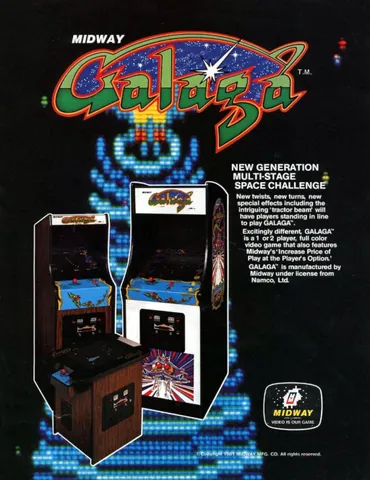
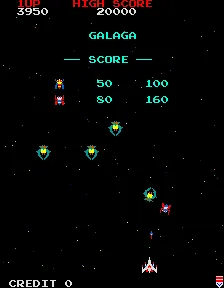
A swarm of alien attackers descends from the top of the screen in elegant loops, and your ship has a single task: keep them in check and survive another wave. Galaga is the supreme representative of the classic fixed-camera space shooter and to this day ranks among the most playable arcade titles of all time.
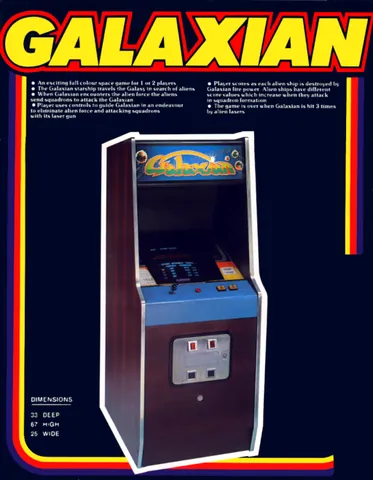
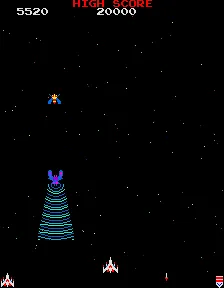
The game builds on the older Galaxian and pushes its idea further. Enemies arrive in choreographed formations and then unfold into attack dives. The genius idea is the mechanic where a boss enemy can capture you in its beam, but if you shoot it down, you get your ship back doubled, and thereby double firepower. Risk versus reward in its purest form.
Galaga was created by the Namco studio and released at the start of the eighties, during the golden era of arcade machines. It became an enormous commercial success and one of the most beloved and most memorable shooters of its time. Its refined controls, clear waves, and addictive scoring made it a fixture of arcades.
Culturally, Galaga joined the ranks of the greatest arcade legends and its name is known even to many people outside the gaming world. It often appears in popular culture, in films and TV series as a symbol of the good old gaming era, and it received countless ports and compilations for home consoles and handheld devices.
Among players there also circulates a famous strategy for forcing the enemies to stop firing, which testifies to the depth the game hides beneath its simple surface. Together with the double-ship gimmick and ever-escalating difficulty, Galaga offers exactly the type of gameplay you want to return to for a better score again and again.
Why play it: Because it is one of the most perfectly tuned space shooters in history, whose double-ship mechanic makes every round a tense decision.
Game 27 of 258 for Arcade
The same title elsewhere (1)
The arcade machine ran on its own dedicated hardware, letting it keep many enemy formations on screen at once without slowdown and with sharp, vivid colors. The Atari 7800 port is generally considered one of the better home conversions of classic arcade shooters from that era – its Maria graphics chip preserved most of the enemy waves and their bright colors, so at first glance the game looks quite close to the original. Even so, the console version can show minor slowdown or sprite flicker during the busiest moments on screen, something the arcade board never suffered from.