 Sony · 2023
Virtual reality
PlayStation VR2
History & context
February 2023 brought a headset that Sony chose to tie exclusively to a single console. PlayStation VR2 didn't just share a name with the original virtual reality device from the PS4 era — it was entirely new hardware, built from the ground up for the PlayStation 5, with no bridge whatsoever to the older games. Anyone coming from the original PSVR started with an empty library and a new headset that also felt completely different on the hands and face.
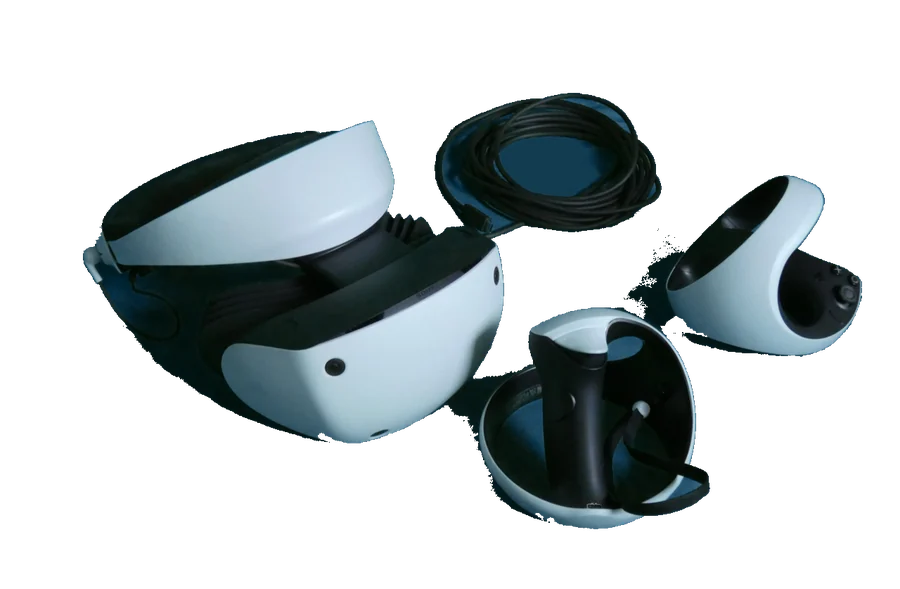
The difference from its predecessor wasn't cosmetic, but a leap forward on every front at once. Where the first PSVR relied on an external camera tracking glowing balls on the headset and controllers, PSVR2 moved all position tracking inside the headset itself. Where the old panel suffered from a visible screen-door pixel grid, OLED displays arrived with a resolution that finally came close to what competing PC headsets could do. And where the Move controllers felt like a leftover from another generation, controllers derived directly from the DualSense took their place.
This gave Sony an unusual position even within its own portfolio: PSVR2 is a peripheral that only works with a single, currently sold console, and so it can't be approached the same way as the retro platforms in this overview. Yet through its story — an ambitious launch, a challenging market reception, and how quickly it became an interesting collector's item — it belongs to the same narrative thread as Sony's other hardware.
Technology: graphics and sound
At the heart of the headset are two OLED displays with a resolution of 2000×2040 pixels per eye, which combined with high brightness and rich colors makes PSVR2 one of the visually most impressive headsets of its time. The key novelty, though, is eye tracking built directly into the headset. This isn't just a gimmick for menus and character selection — the system enables foveated rendering, a technique where full-quality graphics are only computed at the spot the player is actually looking at, while the edges of the field of view are rendered at lower quality. This saves the console processing power without the player noticing any difference, since the human eye only perceives sharpness in a limited way outside the center of its gaze.
The displays are paired with a wider field of view and a smoother image than the first PSVR offered, which together reduce one of virtual reality's biggest problems — the feeling of nausea during fast movement. The audio side builds on spatial audio similar to what Sony introduced with the PS5, this time heard through built-in speakers or headphone jacks located directly on the headset.
An interesting detail is the haptics built into the headset itself — a gentle vibration motor in the headband can simulate, for example, a weapon's recoil or an impact, so the sensation isn't limited to the controllers alone.
Connectivity and peripherals
The major technical leap concerns how the headset sees the world around it. PSVR2 uses inside-out tracking — four cameras built directly into the headset map the surrounding space and the controllers' position, eliminating the need for the external camera the first PSVR required placing in front of the player. This also did away with the separate processor unit the original headset needed to connect to the console. The new PSVR2 only needs a single USB-C cable to connect to the PS5, which greatly simplified the setup and freed the headset from the tangle of cables the first PSVR was notorious for.
The PlayStation VR2 Sense controllers take over key features from the DualSense — adaptive triggers with variable resistance and haptic feedback in the controller itself — and add finger touch detection, which lets the game tell whether the player is gripping a weapon firmly or just lightly resting a finger on the trigger. The controllers are held around the wrist with straps and, in shape, resemble rings more than classic joysticks.
Because of this type of position tracking, gameplay is tied to a limited space visible from the headset itself, so Sony recommends playing seated or within a defined area without a lot of sideways movement, where the cameras could lose sight of the controllers.
Models and revisions
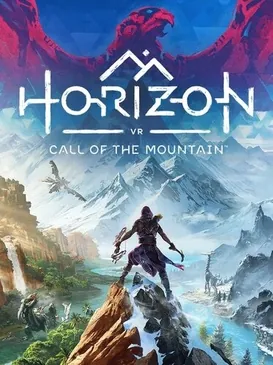
PSVR2 launched in a single hardware configuration, with no parallel variants sold side by side the way Sony does with consoles. The only choice was in the bundle — the headset on its own, or a set with the game Horizon Call of the Mountain, which served as the flagship title and a technology showcase for what the new hardware could do.
The one real revision that came later was a PC adapter — a small device allowing PSVR2 to also be connected to a personal computer and used outside the PlayStation ecosystem. This turned a headset tied exclusively to one console into at least a partially more universal piece of hardware, although not all features (eye tracking above all) were as fully supported on PC as on the PS5.
The scene today
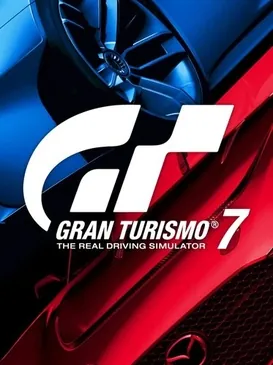
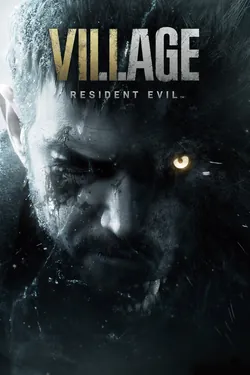
PSVR2 is not backward compatible with games for the original PlayStation VR — it's a completely separate library of titles, which limited the selection at launch and was among reviewers' most common complaints. The catalog gradually grew with titles like Gran Turismo 7, which Sony later equipped with full VR support across the entire game, along with Resident Evil Village and Resident Evil 4 in their VR versions, or the original Synapse, which bets specifically on the combination of eye tracking and fast-paced shooting.
As a current peripheral for a current console, PSVR2 has no place in this overview among emulatable retro hardware — you won't be playing with it on Batocera or any other emulation system, and games for it are bought just like regular PS5 games, through the PlayStation Store or on disc. It's worth watching how the headset's market price develops over time: virtual reality remains a niche concern for much of the player base, and headsets tied to a single specific console tend to share the fate of earlier peripherals — either they become a long-supported platform, or they end up as an interesting but narrow chapter in Sony's history. For PSVR2, only time will tell, along with how many more big games decide to be made for it.
Games on this platform (15)




No game in this genre.