 Lexaloffle (fantasy konzole) · 2015
Fantasy consoles
PICO-8
History & context
PICO-8 is something of an intruder in this whole retro hardware guide — because there is no hardware. It is a so-called fantasy console: a software environment from the New Zealand studio Lexaloffle (author Joseph White, alias zep), which came out in 2015. Instead of simulating some specific period machine, it invented its own, deliberately strict rules — few colors, low resolution, tiny memory — and thereby imitated the feeling of programming and playing on the 8-bits of the 1980s. But with modern comfort: you have the editor for code, graphics, sound and maps all in one window, and to run a game you just type run.
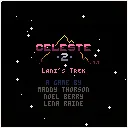
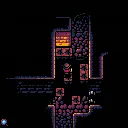
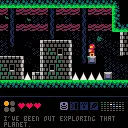
The magic lies precisely in those limitations. When you cannot have everything, you have to be inventive — and because it is so easy to start, an enormous and active community grew up around PICO-8. The most famous story is Celeste: it arose as a four-day project at a game jam in PICO-8 (under the name Celeste Classic) and later became one of the most acclaimed modern platformer hits. The original PICO-8 version is still playable for free today. This perfectly captures what PICO-8 is: nostalgia for an era that younger creators often did not even experience, recast into a creative playground.
Technology: graphics and sound
Lexaloffle set the specifications firmly and programs cannot get around them. The image has a resolution of 128×128 pixels and a fixed 16-color palette. That palette is iconic — shades such as dark blue, salmon, yellow-green or light beige give games an instantly recognizable "pico" look. Newer versions added a so-called hidden palette of a further 16 colors, from which the basic sixteen can be remapped, so creators have a wider register at their disposal, albeit still only 16 colors at once.
Graphics are based on 8×8 pixel sprites: there are 256 of them in the sprite sheet (plus another 128 shared with the map). The map for levels has a size of 128×32 tiles. Rendering runs at 30 or 60 frames per second depending on whether you use the _update() or _update60() function.
Sound is handled by a 4-channel synthesizer. The creator has 64 sound patterns at their disposal and can compose melodies and effects using several basic wave shapes (square, sawtooth, triangle, noise and others), which corresponds sonically to the era of chip music. The whole program — code in the Lua language, graphics, map and music — must fit within the limits of the "cartridge": around 32 kB of compressed data for the code and fixed slots for graphics and sound. The cartridge itself is a technical treat: it is an ordinary PNG file of 160×205 pixels, in whose data the game is hidden. The image thus serves at once as an icon and as the carrier of the game.
Connectivity and peripherals
Because it is software, the "peripherals" are control schemes, not physical boxes. PICO-8 reckons with two virtual gamepads, each with six buttons: a four-way cross plus two action buttons (internally marked O and X). This is deliberately minimalist — it maps easily onto a keyboard, a game pad and the buttons of retro handhelds. Some games also use a mouse and keyboard, if the author allows it in the cartridge.
An interesting feature is the so-called splore — a built-in browser through which you download and run cartridges directly in PICO-8 from the online BBS database. Games can also be exported as standalone HTML5 versions for a web browser, or as executable files for Windows, macOS and Linux. For local multiplayer, sharing gamepads on one machine is available.
Clones and variants
Fantasy consoles have meanwhile grown into a whole genre, and PICO-8 is its flagship. The most significant relative is TIC-80 (author Vadim Grigoruk, 2017) — open-source and free. It has a somewhat larger resolution of 240×136 pixels, a full 16-color palette, supports more programming languages (Lua, JavaScript, MoonScript, Wren and others), and you browse games in it with the surf command. The library is smaller than PICO-8's, but the philosophy is identical.
Besides PICO-8, Lexaloffle also released Voxatron (a 3D fantasy console with voxels) and a standalone music instrument. Other projects in the genre include, for example, LIKO-12 or WASM-4. Do not look here for a direct "Czech trace" — unlike the ZX Spectrum with the Didaktik or the NES with the Pegasus: fantasy consoles are a purely internet, global phenomenon of the last decade, and no period Eastern European clone of them exists.
Today's scene
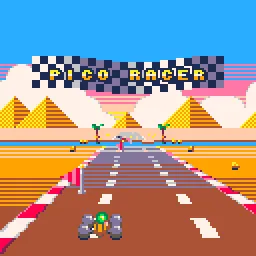
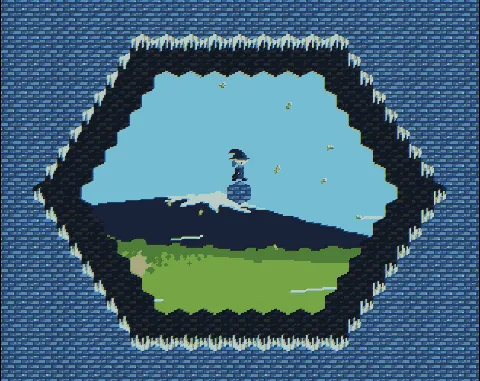
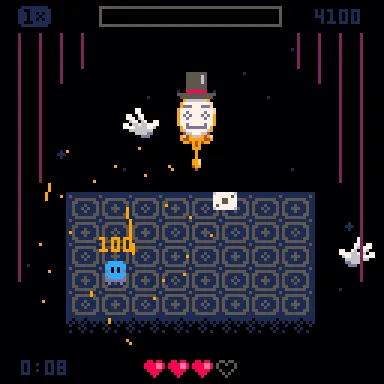
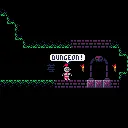
Here the situation is the reverse of the old classics — no emulation of the past, but living creation of the present. PICO-8 is a paid tool, but the resulting games are often free, and the community has produced thousands of them: from miniature metroidvanias through logic games to shooters. Besides Celeste Classic, it is worth trying, for example, Dank Tomb, Just One Boss, Hexagravity, Subsurface or Pico Racer.
For retro gamers with handhelds, the good news is that on Anbernics with the H700 chip (and similar), PICO-8 runs via its own core and TIC-80 natively, though graphically more demanding cartridges may slow down a little on weaker cards. It is "new retro" in its purest form — games made today, but with the soul of the eighties. An ideal choice when you want to discover something beyond the period classics.
Games on this platform (29)




No game in this genre.