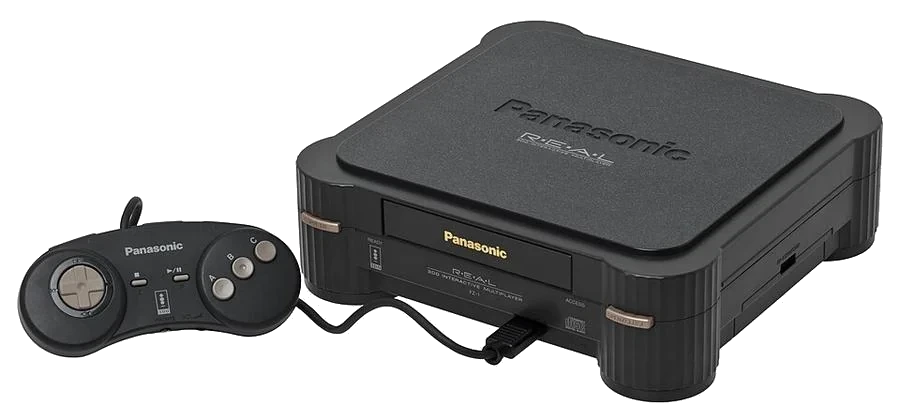
 Panasonic / 3DO · 1993
Game consoles
3DO Interactive Multiplayer
History & context
The 3DO Interactive Multiplayer is a console that arrived too early and at too high a price. When The 3DO Company, led by Trip Hawkins, founder of Electronic Arts, launched it in the fall of 1993, it was the most powerful gaming machine an ordinary person could put under their TV. Except the word "ordinary" didn't quite fit: the launch price of $699 was simply out of touch with reality at a time when the SNES and Mega Drive sold for a fraction of that. The console thus became famous more as an expensive technological marvel from advertisements than as a machine anyone actually had at home.
More interesting than the hardware, though, was the business model. 3DO wasn't a single company's console — the company itself made no boxes at all. Instead, it licensed its design to electronics manufacturers, exactly the way the VHS standard worked for video recorders. The console was thus built by Panasonic, Sanyo, and GoldStar, and in theory competition was supposed to drive prices down. In practice that didn't happen: manufacturers made no money on the hardware (3DO took a fee on every pressed disc, not on the consoles), and before prices could fall, PlayStation and Sega Saturn arrived on the market at half the price, and that was that.
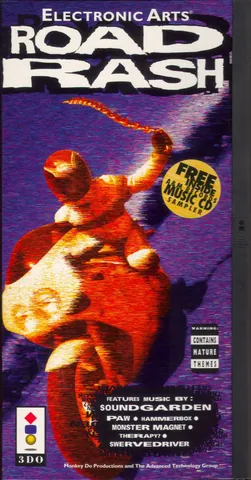
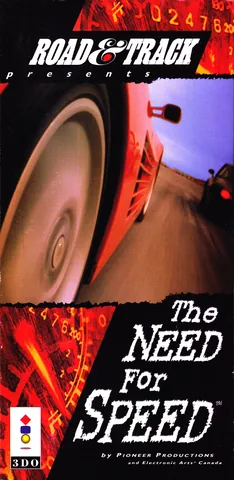
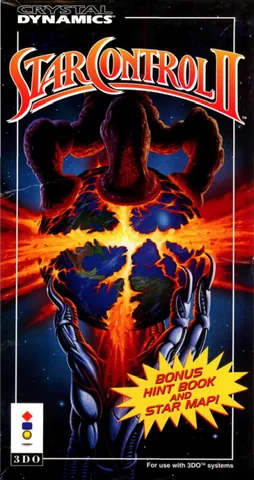
Still, 3DO remains one of the most fascinating dead ends of the 1990s. It was the console where the very first Need for Speed came out, where Road Rash was born in a version with digitized rock music, and where the legendary Star Control II has its home.
Technology: graphics and sound
At its base is a 32-bit ARM60 processor clocked at 12.5 MHz, paired with two graphics coprocessors (so-called cel engines) and a math accelerator. This pair was what made the 3DO fast: it could churn out huge numbers of smoothly scaled and rotated sprites and warp them into arbitrary quadrilaterals. That's exactly where the typical 3D scenes of the era came from — textured surfaces built from stretched bitmaps, unthinkable on rival sixteen-bit consoles.
A CD-ROM drive (double-speed) was standard, along with 2 MB of working memory and separate video memory. The standard resolution was 320×240 pixels, but the machine also handled an interlaced higher-resolution mode for static screens and text. Sound was handled by its own digital signal processor with 16-bit stereo output at CD quality, so games commonly used voiced dialogue and recorded music instead of chip synthesis.
The combination of a large disc and decent power had a dark side too: the library was flooded with FMV, games built on filmed video sequences. Interactive film was then hailed as the future of gaming, and 3DO became its flagship — with all the enthusiasm and the subsequent disillusionment that came with it.
Connectivity and peripherals
The console has an unusual controller solution: instead of a row of ports, it has a single connector, and controllers chain together. A second gamepad plugs into the first, a third into the second, and so on up to eight players — hence the "Multiplayer" in the name. Each controller also carried its own headphone jack with a volume wheel, a very elegant idea for its time.
The rear expansion port mainly served the MPEG decoder, which once connected let the console play Video CD and offered much smoother video in games that supported it. Steering wheels, arcade sticks, and light guns were also made. Save games were handled by built-in battery-backed memory, so players couldn't avoid deleting old saves eventually. Video-wise, 3DO offers composite and S-Video, and European and Japanese units can also access RGB.
Models and revisions
The best known is the Panasonic FZ-1 REAL 3DO, a hefty black box with a sliding disc tray that looked more like an expensive CD player than a toy. Its successor was the noticeably smaller, lighter, and cheaper Panasonic FZ-10, which replaced the tray with a flip-up lid — mechanically simpler, and therefore a more reliable choice for collectors today.
Alongside Panasonic, GoldStar (today's LG) built its own model, whose version was among the most affordable, and in Japan Sanyo sold its variant under the name TRY. All the machines are essentially identical inside, and games run on any of them without difference — that was the whole point of the standard. The planned successor platform M2 never sold as a console at all: Matsushita bought the technology, and it ended up mainly in arcade machines.
Clones and variants
3DO has no unofficial clones; the platform was too expensive and too short-lived for that. The most interesting variant is arguably the 3DO Blaster from Creative Labs — a plug-in ISA card that turned a DOS PC into a full-fledged 3DO, complete with its own drive and output into a window in Windows. It was a curiosity for enthusiasts with very deep pockets.
In the former Czechoslovakia, the console was never officially sold at all, and given the prices of the time there was no demand for it either. Anyone who knew about it knew it from magazines and stunning screenshots that looked like they came from another planet. That's exactly why 3DO carries an aura here today of an exotic device that almost nobody ever saw in person.
Today's scene
Emulation of the 3DO is in good shape today. The most common route is the Opera core (descended from the FreeDO and 4DO projects) in RetroArch, included in Batocera, RetroPie, and most portable Linux consoles. A key requirement is a BIOS file — without it nothing launches and the emulator just stays silent, usually the most common reason beginners think 3DO "doesn't work." The BIOS from the Panasonic FZ-10 or FZ-1 model is used most often.
Performance-wise, 3DO sits somewhere between PlayStation and more demanding systems: it stutters on weaker handhelds, but generally runs at full speed on H700-class chips and above. The legal route to the games runs through original discs, or through PC versions of some titles still sold today in digital stores. A lovely exception is Star Control II, whose 3DO-version source code its authors released, giving rise to the freely available project The Ur-Quan Masters. Anyone wanting a picture of what the gaming future looked like through the eyes of 1993 has everything they need at hand today.
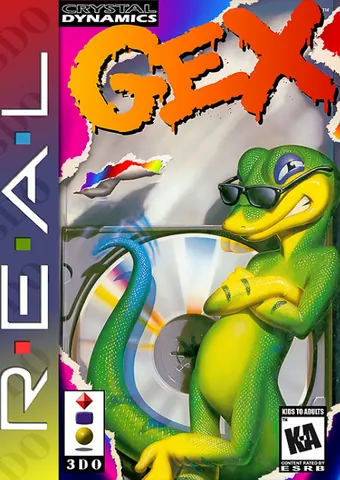
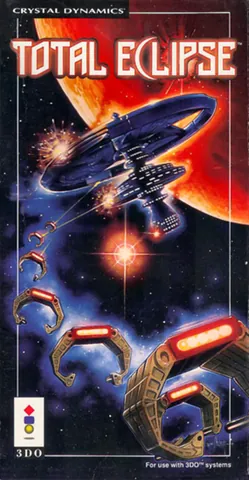
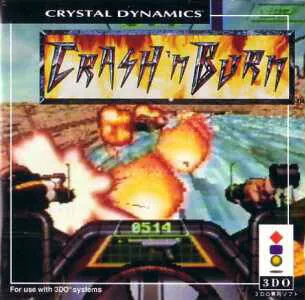
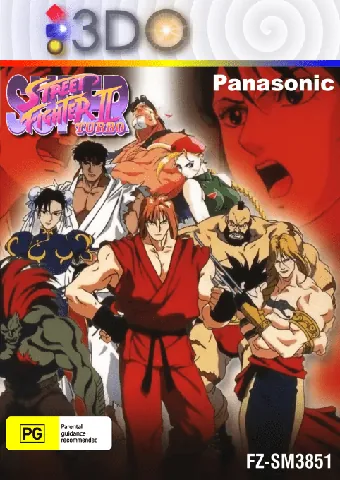
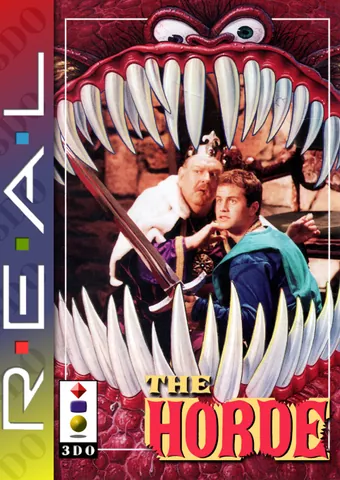
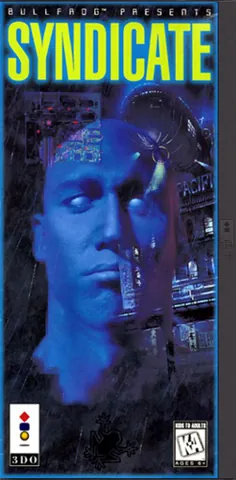
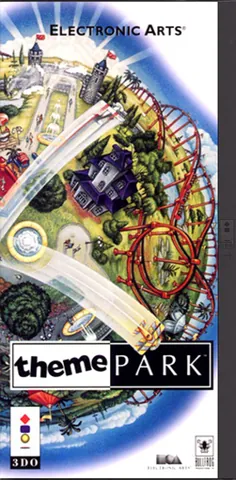
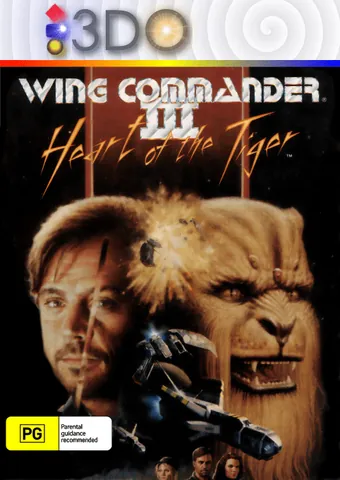
Games on this platform (27)
No game in this genre.