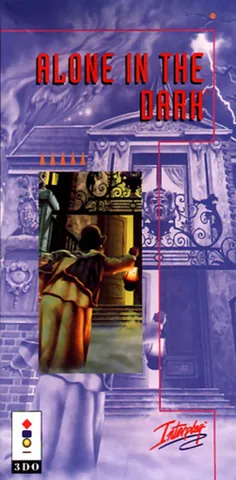
Alone in the Dark
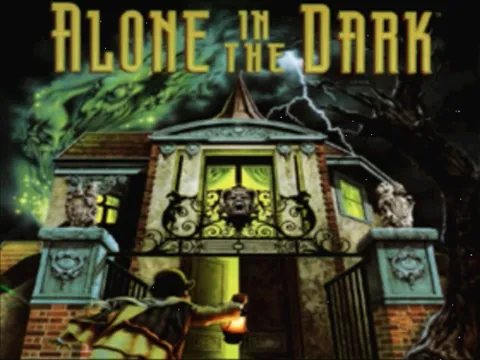
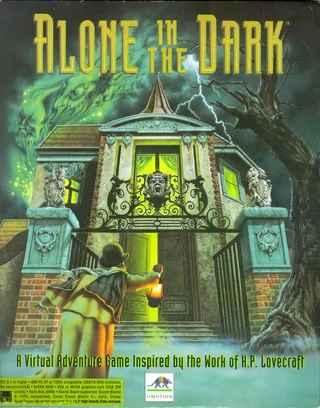
Alone in the Dark brought to the 3DO in 1994 a game that a few years earlier had practically invented survival horror on computers. The player enters as either private detective Edward Carnby or Emily Hartwood into the Louisiana mansion of Derceto, meant only to look into the estate of its deceased owner — and within minutes discovers that the house is full of something that can't be beaten down with fists or shot away. The mansion quickly turns from a place to explore into a trap, with the only way out leading forward, through the attic, the cellar, and a library full of unpleasant answers.
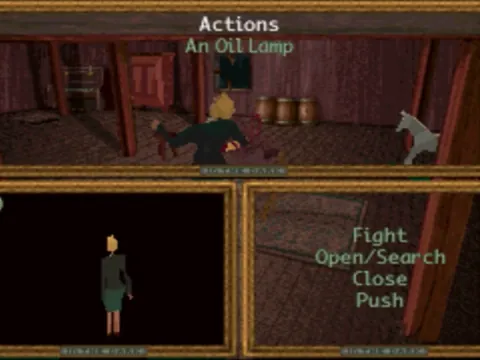
The key lies in the technical approach: polygonal characters move across hand-painted backgrounds, and the camera is fixed, set up like a film shot. This gives the game its unease, because you often see what's coming before you know how to avoid it — or, conversely, you just hear footsteps offscreen. The inventory is limited, ammunition scarce, and the best strategy is often to flee, barricade a door, or use an entirely different trick than shooting. Books and journals scattered around the rooms aren't decoration: they carry instructions on how to defeat a specific monster and reference the Lovecraftian mythology the game openly draws from. Reading, then, isn't a delay but a full-fledged game mechanic.
The 3DO version benefited from the console handling smoother playback and better sound than typical computers of the time, so the deep tones and the silence between them came through in full. At the time, the game was praised as a breakthrough in telling horror stories in real time, and its influence can be seen across a whole line of later series, where a fixed camera, scarce ammunition, and a hostile environment remained the genre's basic grammar. Today the stiff controls are a tough nut to crack and the character models look like blocky puppets, but the tight design of the house and the feeling that the mansion is slowly swallowing you endure. Anyone with patience for the period interface will get one of the most important horror games in gaming history.
Game 17 of 27 for 3DO Interactive Multiplayer
The same title elsewhere (1)
The 1992 PC original ran on computers ranging from XT to 486 and was the first to combine polygonal characters with hand-drawn backgrounds, controlled via keyboard, with graphics limited to the resolution and colour depth the graphics cards of the day allowed. The 1994 3DO version carried the same visual style onto a console with its own CD drive, which allowed for richer audio, but controls had to be adapted from keyboard to gamepad, and the console's weaker processing power compared with contemporary PCs occasionally showed in the smoothness of play. Anyone wanting to experience the historically first version should go for the PC original.