 Atari · 1993
Game consoles
Atari Jaguar
History & context
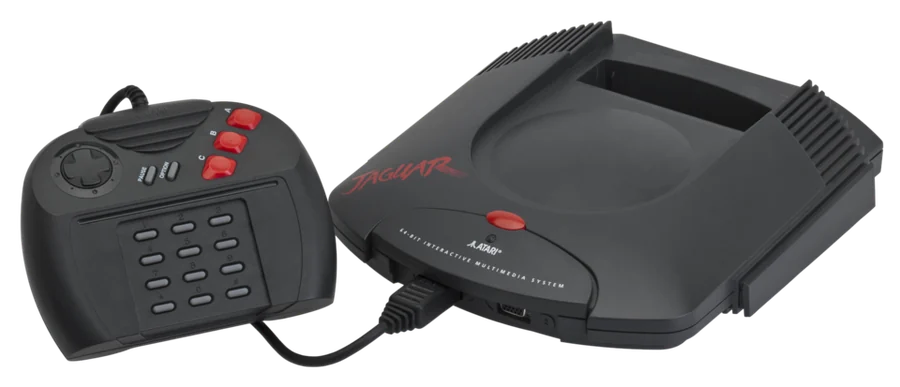
When Atari unveiled the Jaguar in the autumn of 1993, it bet everything on one bold number: 64 bits. At a time when the world was ruled by the sixteen-bit duo of the Super Nintendo and the Sega Mega Drive, this angular black box, advertised with the slogan „Do the Math“, was supposed to leap over an entire generation and shame the competition before it could even get going. The Jaguar was the last home console Atari ever made, and it became a symbol of ambitions that outgrew the company itself. It was a commercial flop, with only around 150,000 units sold, and yet it still holds cult status to this day: it was a machine that could do things for which it lacked the games, the documentation and the time.
Technology: graphics and sound
At the heart of the Jaguar sat a pair of custom chips code-named Tom and Jerry. Tom contained the graphics processor (GPU), an object processor for rendering sprites, and a blitter for fast data transfers; Jerry handled sound and contained a second programmable processor (DSP). Together they formed the backbone of an architecture built around a 64-bit data bus to memory — that is exactly where the marketing „64-bit“ came from. The reality, however, was more prosaic: the main control processor remained the aging 16/32-bit Motorola 68000 at 13.3 MHz, which many developers used out of convenience for the game logic itself, instead of harnessing the faster and harder-to-program RISC cores. This was one of the main reasons why a number of games looked more like enhanced sixteen-bit titles.
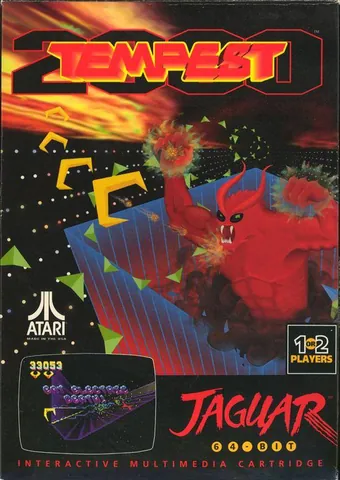
But when a team mastered the whole architecture, the results were impressive: the Jaguar could handle thousands of colors from a palette of up to 16.7 million, smooth scrolling, sprite scaling and rotation, and in games like Tempest 2000 it delivered effects the contemporary competition could not manage. The Jerry sound chip offered multichannel synthesis as well as playback of digitized samples in stereo, and the music for Tempest 2000 remains to this day one of the legends of game soundtracks.
Connectivity and peripherals
The console output a composite and RF signal to the television and had an unusual controller with a numeric keypad of twelve buttons, over which paper overlays with per-game functions were laid — a solution inherited from the era of Atari home computers. A later expanded Pro Controller was released, with six action buttons and shoulder buttons, better suited to fighting games.
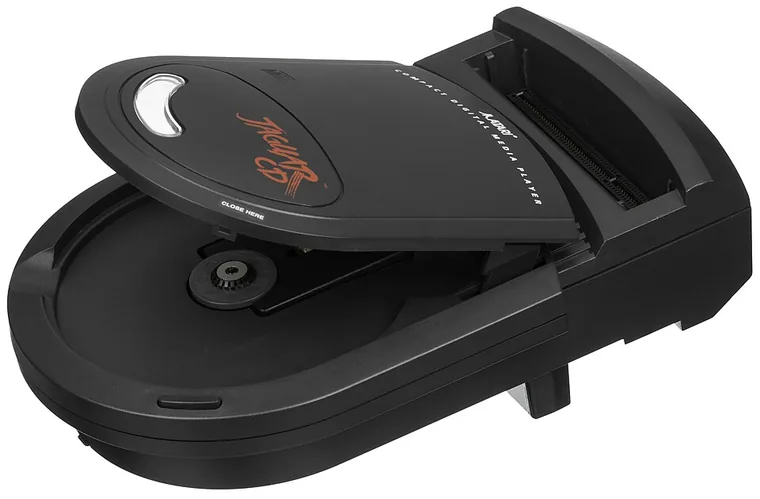
The most important accessory was the Atari Jaguar CD unit, which mounted on top of the console and added a CD-ROM drive. It came out in 1995, sold miserably, and today it is a collector's item because of its rarity and unreliability. Further peripherals were also planned, among them a modem and Jaguar VR virtual-reality goggles, but most of them never got past the prototype stage.
Models and revisions
There were few hardware variants of the console itself — it was a single basic version. The essential expansion was the aforementioned Jaguar CD add-on, which effectively turned the console into a two-part assembly. In parallel, Atari was developing a successor under the working name Jaguar II and a professional arcade board, but none of these devices reached the market because of the company's collapse. In 1996 Atari merged with the disk maker JT Storage, and development of both games and hardware effectively came to an end.
Clones and variants
Genuine period clones of the Jaguar essentially do not exist — it was too complex and commercially marginal a platform for anyone to imitate, unlike, say, the NES with its famiclones. The rights to the hardware were later acquired by Hasbro Interactive, which in the late 1990s officially released the Jaguar as an open platform and gave up enforcing licenses, thereby stirring up homebrew development. In more recent times a curiosity has appeared — the Atari Jaguar GameDrive and similar flash cartridges, which allow ROM images to be run from a memory card. In the Czech and Czechoslovak setting the Jaguar left no clone trail of its own; it reached the region only in small numbers as an expensive imported piece, which makes it a sought-after rarity here more today than back then.
Today's scene
Today the Jaguar lives on mainly thanks to emulation — the Virtual Jaguar core (also available within RetroArch) handles most commercial titles, though accurate emulation of the demanding Tom and Jerry chips remains difficult. The homebrew community is remarkably alive: new games, conversions and demos are being made that only now are drawing out of the hardware what studios of the day lacked. Collectors hunt for original cartridges and the rare CD unit, and so, after years, the Jaguar has earned itself the position of a beloved flop — a machine that was ahead of its time more in its ambitions than in reality.
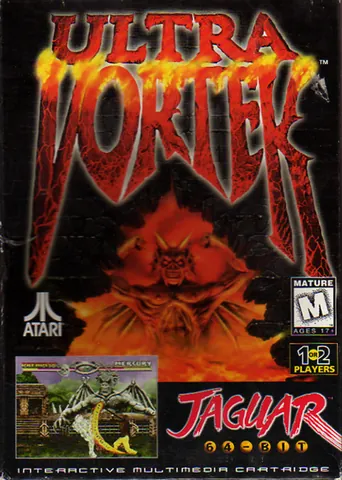
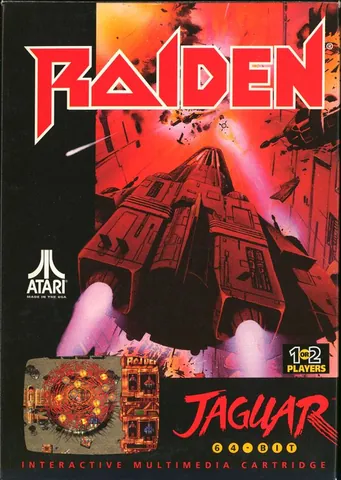
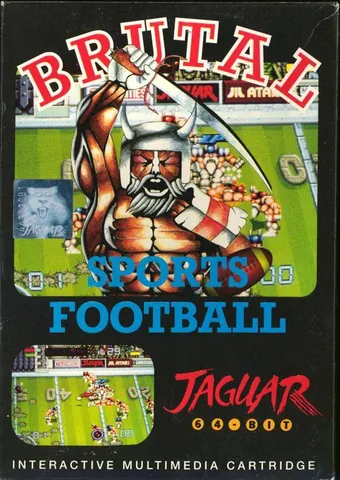
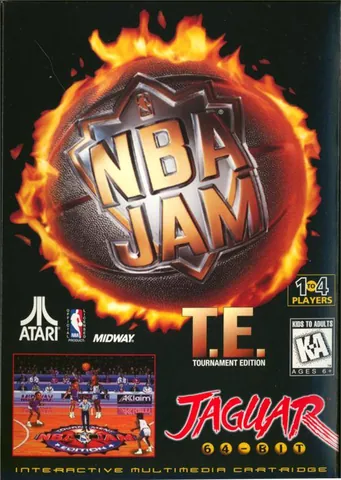
Games on this platform (14)
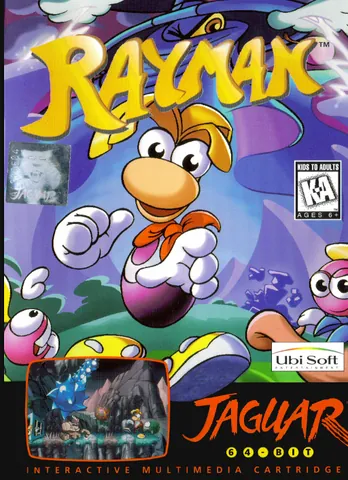
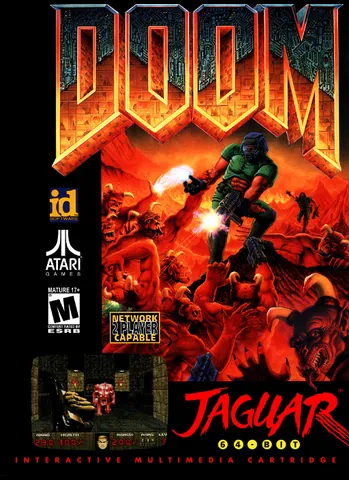
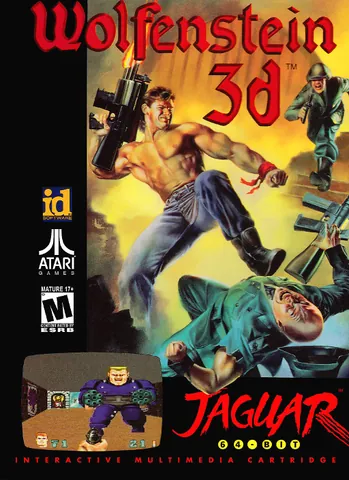
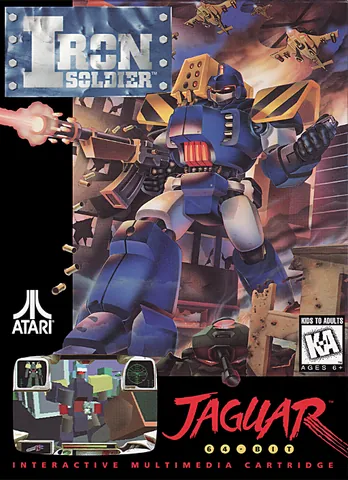
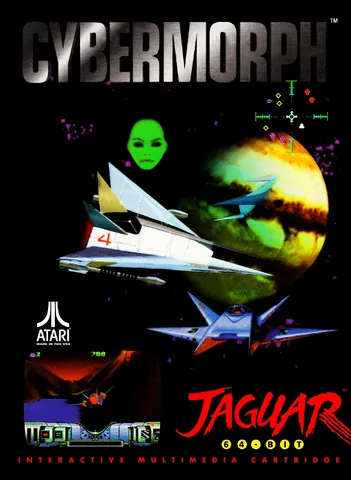
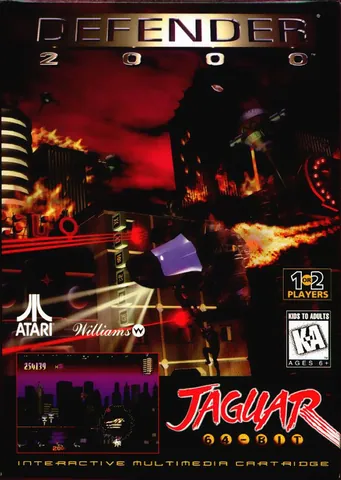
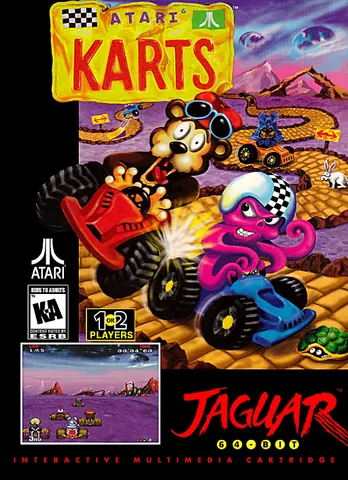
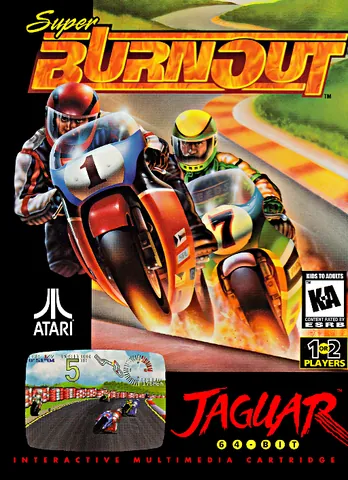
No game in this genre.