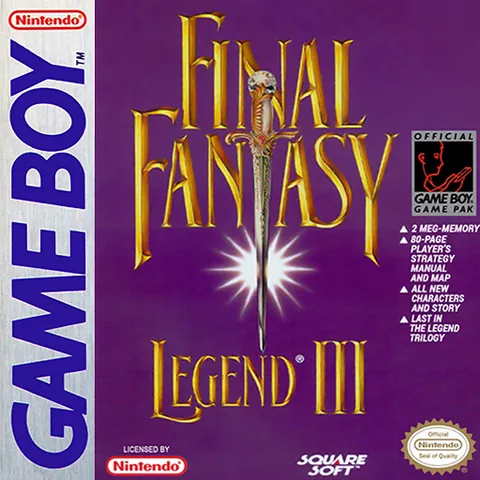
Final Fantasy Legend III
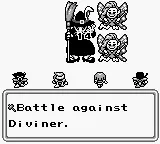
Final Fantasy Legend III belongs to the SaGa series, which Square sold in the West under the Final Fantasy Legend name, and on the Game Boy it forms the final chapter of this loosely connected trilogy. The game offers a system of multiple playable characters and worlds, between which the main hero travels via special gates, and combines classic turn-based battles with an unconventional character growth system – fighters don't improve simply by gaining experience, but through the types of attacks and equipment they use, or rather, the form (human, monster, or mecha) they choose. The party can be freely reshuffled throughout the game, and different combinations of characters and forms open up distinct tactical options both in battle and while making one's way through the individual worlds.
The graphics and sound on the monochrome display are handled economically but effectively – battle screens are legible, enemy sprites are sufficiently varied, and the music manages to conjure the melancholic atmosphere typical of the SaGa series even on the Game Boy's limited chip. The pacing is slower and more demanding than in the main Final Fantasy line, which may have felt unusual in the nineties to players expecting a classic linear JRPG, but it's precisely this unconventional approach to character development and the more open world structure that make the game one of the more ambitious RPGs on this platform. Progression through the individual worlds is also not strictly linear, so the player has considerable freedom in which direction the story and character development take.
Today, Final Fantasy Legend III is prized above all among fans of the SaGa series and collectors seeking less linear design and experimental mechanics that rarely appeared in mainstream JRPGs of the era. For its time it was a technically and conceptually demanding project that showed the Game Boy could host more complex RPG systems than were usual on the handheld, and it paved the way for later SaGa entries on other platforms. Even decades later, the game remains interesting as proof of its creators' willingness to experiment with genre conventions at a time when the market for portable RPGs was still in its infancy.
Why play it: For fans of the SaGa series and collectors seeking non-linear design and experimental mechanics, this is a bold project that showed the Game Boy could carry more complex RPG systems.
Game 70 of 147 for Nintendo Game Boy
From the same series Final Fantasy →
 Final Fantasy: The 4 Heroes of Light DS
 Final Fantasy NES · WS · 1987 (JP) / 1990 (US)
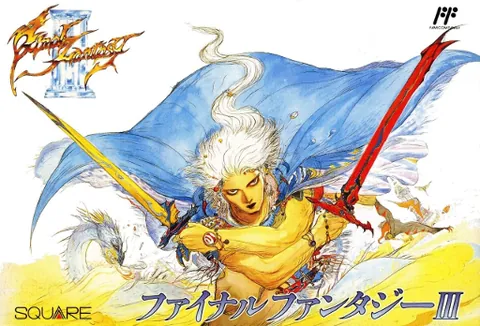 Final Fantasy III NES · DS · 1990
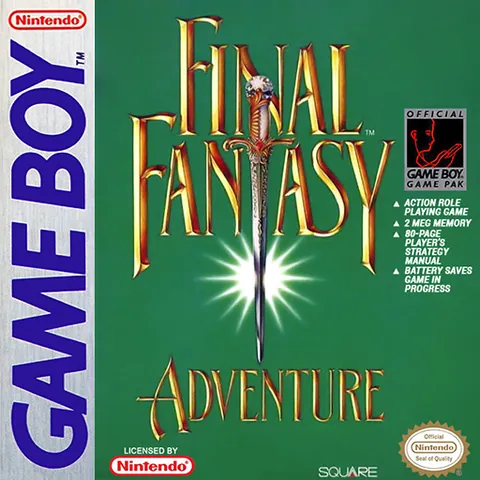 Final Fantasy Adventure GB · 1991
 Final Fantasy IV / V SNES · 1991 / 1992 (JP)
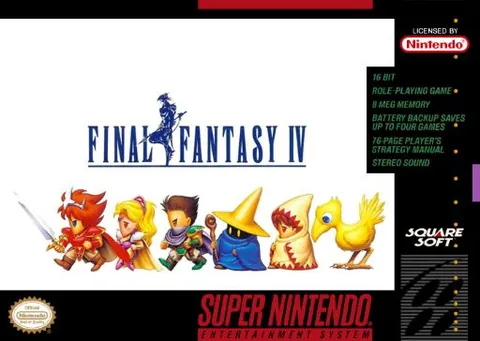 Final Fantasy IV SNES · WS · DS · 1991
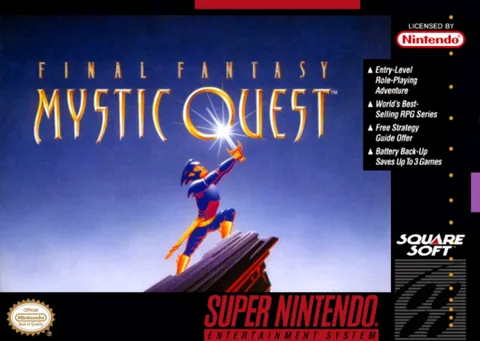 Final Fantasy: Mystic Quest SNES · 1992
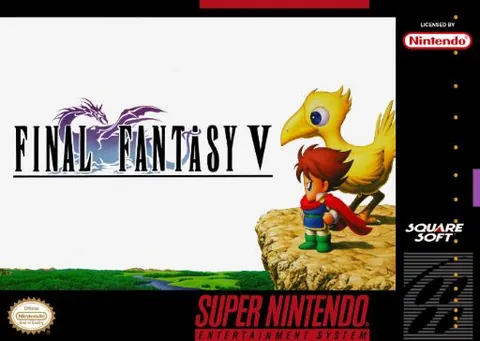 Final Fantasy V SNES · PS1 · 1992
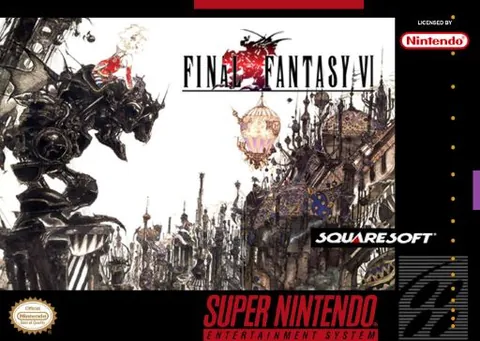 Final Fantasy VI (FFIII US) SNES · PS1 · 1994 (JP) / 1994 (US jako FF III)
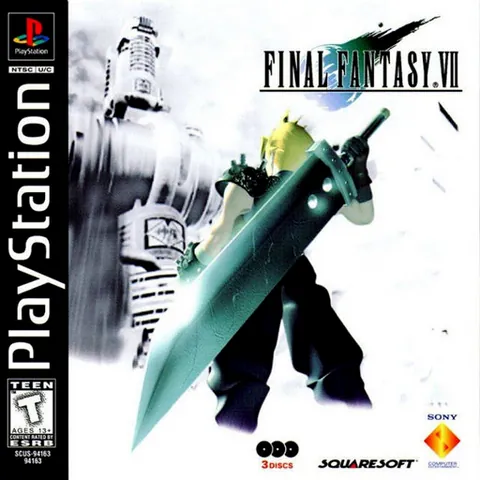 Final Fantasy VII PS1 · Win9x · Mobil · 1997
 Final Fantasy Tactics PS1 · 1998
 Final Fantasy VIII PS1 · Win9x · Mobil · 1999