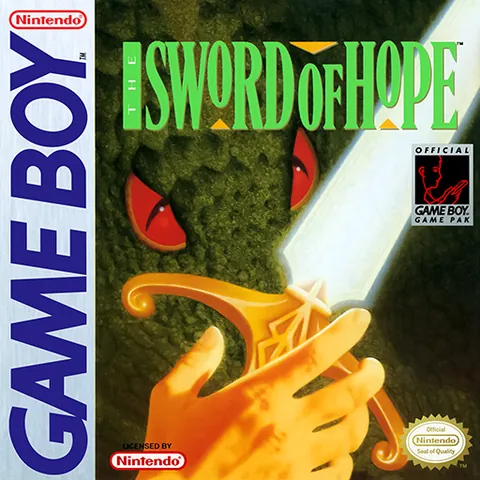
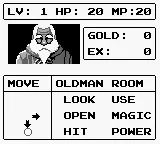
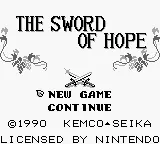
The Sword of Hope is an RPG from Kemco that combines classic turn-based combat with an adventure-style interface reminiscent of point-and-click games – the player selects actions from a menu, such as moving, talking, or examining, and progresses through the story and fights enemies this way. It was one of the first attempts to bring a more deeply developed RPG system to the Game Boy, with its own world, characters, and dialogue, rather than just simplified action with item-collecting elements. Progressing through the game requires carefully exploring the surroundings and talking to characters, since key information needed for further progress isn't always obvious at first glance.
The story follows a hero setting out to rescue a princess and fight against dark forces, and the game uses simple but functional graphics with hand-drawn character portraits that, even on a monochrome display, give the story personality and help distinguish the characters from one another. The pace of the game is slower, with an emphasis on reading text and gradually uncovering the world, which sets it apart from more action-oriented RPGs of the time and brings it closer to a text-adventure genre with a combat system rather than the faster action games on the same platform. The musical themes accompanying each location help distinguish the atmosphere of villages from the more dangerous areas the player must fight through, and together with the hand-drawn portraits create a surprisingly cohesive overall impression.
The Sword of Hope became the foundation for sequels and further entries in the series, which Kemco continued to develop on the Game Boy for the rest of the generation, and among collectors it's valued as one of the first true RPG titles on a handheld, one that didn't just try to imitate action games from other genres but offered its own, text-based approach to storytelling. Today it works more as a historical curiosity for genre fans who want to see how RPG mechanics adapted to the technical limitations of the early Game Boy and its small, monochrome screen.
Game 78 of 147 for Nintendo Game Boy