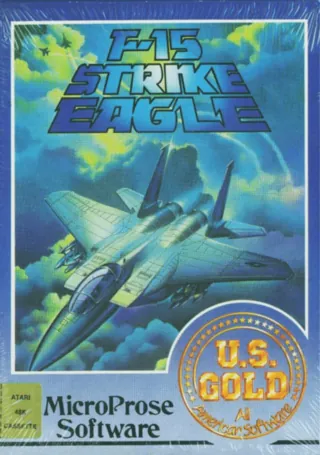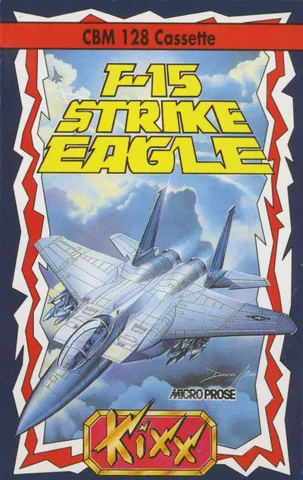
F-15 Strike Eagle
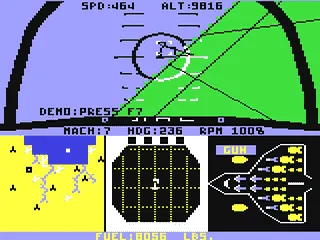
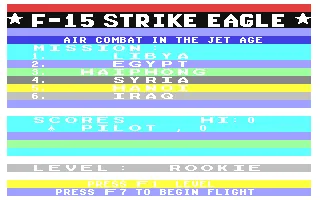
A fighter cockpit, the roar of the engine, and enemy targets on the horizon — F-15 Strike Eagle puts you in one of the most famous combat aircraft and lets you feel what aerial combat entails. And on the eight-bit Commodore 64 it offers surprisingly great depth.
The game is a flight simulator by the MicroProse studio, on whose design Sid Meier himself collaborated. Instead of a dry technical simulation, a clever balance between accessibility and believability works here: you operate the radar, switch between air-to-air and air-to-ground missiles, keep an eye on fuel and the supply of countermeasures against guided missiles. You carry out specific combat missions with defined objectives, so you always have a clear task and the tension of whether you'll make it back to base.
It was precisely this combination that characterized the early MicroProse era. The studio, founded by Sid Meier and former military pilot Bill Stealey, specialized in military simulations that were realistic enough to feel serious but playable enough that even an enthusiast without flight training could stick with them. F-15 Strike Eagle became one of their flagship titles and helped establish MicroProse as a brand that would later give the world the Civilization series.
Culturally, the game fits into the eighties' enthusiasm for military technology and fighter pilots, fueled by films and the tense atmosphere of the Cold War. Sitting down at the computer and heading into action with the most modern aircraft was a form of escape for the player of the time that had previously been offered by hardly anything but expensive military trainers.
On the C64 it is a showcase of how, even on modest hardware, a game with layers of systems that communicate meaningfully with each other could be built. It is not a photorealistic simulation, but as a gateway into the world of flight sims it still works to this day.
Why play: For the adventure of a fighter pilot with Sid Meier's signature — realistic enough to draw you in, playable enough not to let you go.
Game 24 of 121 for Commodore 64
The same title elsewhere (1)
Both home versions came from MicroProse in the same year and had to work within the limits of mid-1980s 8-bit machines — blocky graphics, only a handful of colors on screen, and a noticeably lower frame rate than later flight sims. The difference between the Atari 800 and Commodore 64 lies mainly in sound and smoothness: the Commodore drew on its SID sound chip for atmospheric tones in the menus and takeoff sequence, while the Atari relied on its own graphics chips to scroll the terrain beneath the wings a touch more smoothly. Cockpit, radar and weapons controls stayed essentially identical on both machines, so today the choice mostly comes down to taste in period sound versus visuals.