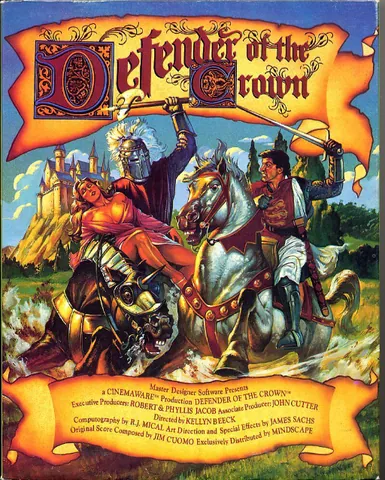
Defender of the Crown
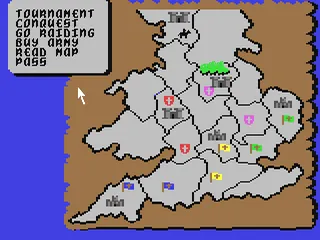
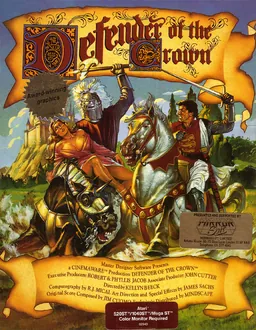
Medieval England torn by chaos, a crown without a master, and you as a Saxon nobleman longing to unite the land under your rule. Defender of the Crown on the Commodore 64 draws you in with its cinematic presentation and the promise of turning the game into your own knightly saga.
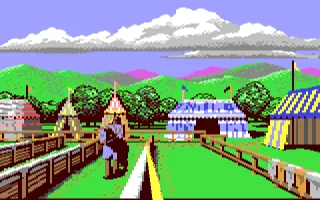
In terms of gameplay, it is a blend of strategy and action mini-sequences. On the map you expand territory, collect taxes, hire troops, and forge alliances, while tense moments are decided by fights: jousting tournaments with a lance, castle sieges with catapults, or sword duels. This alternation of planning and direct action gave the game a dynamism that the purely turn-based strategies of the time often lacked.
The game was created at the Cinemaware studio, whose stated goal was to bring video games closer to film. Defender of the Crown was their pioneering title, and its emphasis on flashy screens, dramatic situations, and "interactive film" was remarkable for its time. The version for the more powerful Amiga became famous for its visual splendor, but even the conversions to eight-bit computers like the C64 carried over the ambition and atmosphere of the original vision.
Culturally, the game joined the titles that showed video games could tell stories and evoke a mood similarly to film. The romantic image of the Middle Ages, knightly virtues, and the struggle for the throne resonated with the era's fascination with historical epics.
Defender of the Crown became one of Cinemaware's best-known brands and, in later years, received remakes and ports to newer platforms. For many players it was their first contact with the idea that strategy and story could go hand in hand with a visual spectacle.
Why play: For a cinematically styled strategy about uniting England, where planning alternates with tournaments, sieges, and battles for the crown.
Game 26 of 121 for Commodore 64
The same title elsewhere (1)
Defender of the Crown made its name above all through the 1986 Commodore Amiga version — painted screens of castles, jousts and duels showed off what 16-bit graphics hardware could do at the time, turning the game into a showcase for Cinemaware's idea of an 'interactive movie'. Conversions to 8-bit machines like the Commodore 64 inevitably had to cut back on colors, resolution and animation smoothness, resulting in simpler, less detailed screens, even though the core game — duels, jousts, castle sieges — stayed intact. If you want to see the title in the form that once wowed audiences, that's the 16-bit Amiga version; the 8-bit ports are more of a modest echo of the same game.