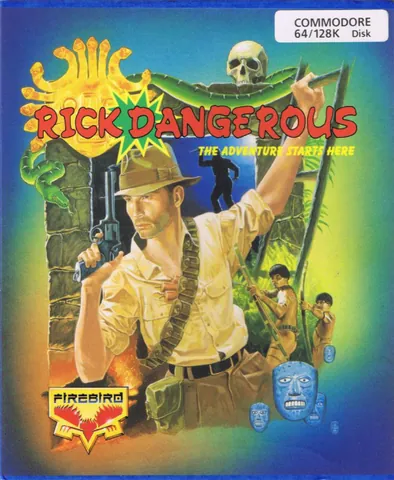
Rick Dangerous
A temple full of deadly traps, a rolling boulder at your back, and a hero in a hat who resembles a certain film archaeologist — Rick Dangerous is a fun and devilishly demanding tribute to the adventure genre. On the Commodore 64 of 1989 it ranks among the titles at which you'll be laughing and grinding your teeth at the same time.
In terms of gameplay, it is a platform adventure where you gnaw your way through a series of environments from a South American temple to enemy bases. You have a pistol and a limited supply of dynamite at your disposal, but the real challenge is not the enemies — it's the traps. Spikes jumping out of the floor, falling boulders, hidden mechanisms. The game is built on the principle of learning by heart: the first time you will almost certainly die, but thanks to that you learn where everything lurks, and you gradually beat your path by trial and error.
It is precisely this merciless but fair difficulty that makes Rick Dangerous an addictive affair. Trap after trap, death after death — and yet you keep coming back, because each time you advance a little further. The visual style with its cute hero contrasts with the cruelty of the challenges and gives the game a distinctive humor.
The game was created at the Core Design studio, a British team that a few years later gained worldwide fame with the Tomb Raider series. Rick Dangerous is thus in a certain sense a spiritual predecessor of Lara Croft — here too it is about an adventurer exploring dangerous temples full of traps and puzzles. The inspiration from the film Indiana Jones is unmistakable and was very popular at the time.
On both eight-bit and sixteen-bit computers, Rick Dangerous became a beloved piece and even received a sequel. For old-timers it remains a symbol of an era when difficulty was part of the fun and every victory tasted all the sweeter for it.
Why play: For an addictively cruel trap-laden challenge with humor and the spirit of Indiana Jones — from the studio that later created Tomb Raider.
Game 30 of 121 for Commodore 64
The same title elsewhere (4)
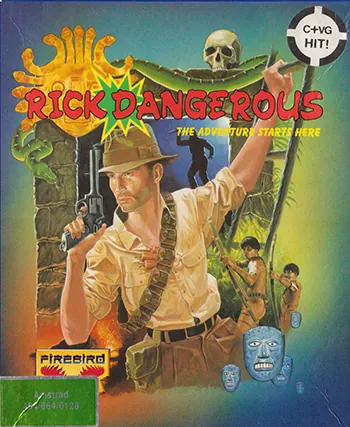
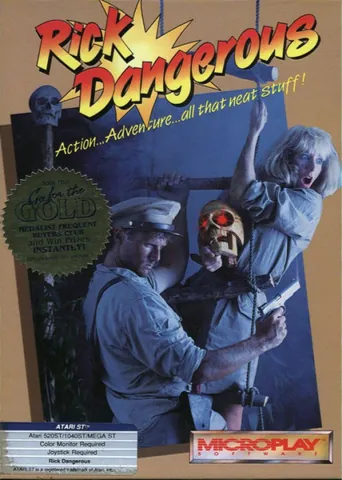
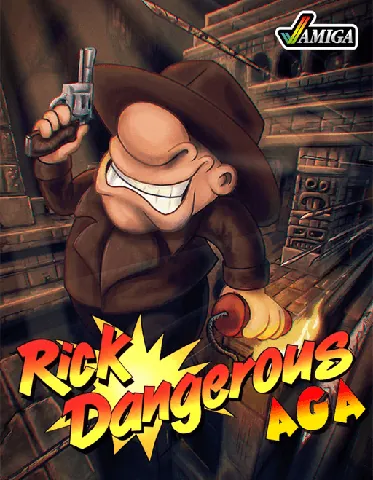
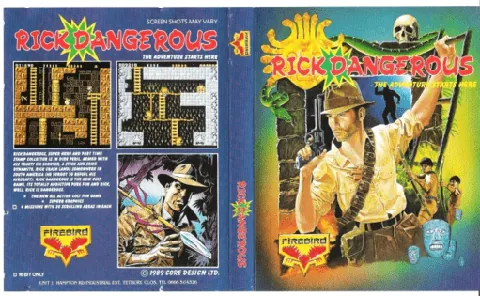
Core Design released Rick Dangerous in 1989 across several platforms at once, and the differences show mainly in sound and smoothness. The Amiga and Atari ST versions offered the most colorful graphics and the smoothest movement, the closest to the creators' original vision. The eight-bit computers had to cut back: the ZX Spectrum has the roughest graphics and sound limited to a simple piezo speaker, while the Amstrad CPC fared somewhat better thanks to its more colorful display. The Commodore 64 stood out for its music thanks to the SID chip, even though its graphics stayed simpler than the sixteen-bit machines.