 Nintendo · 1996
Game consoles
Nintendo 64
History & context
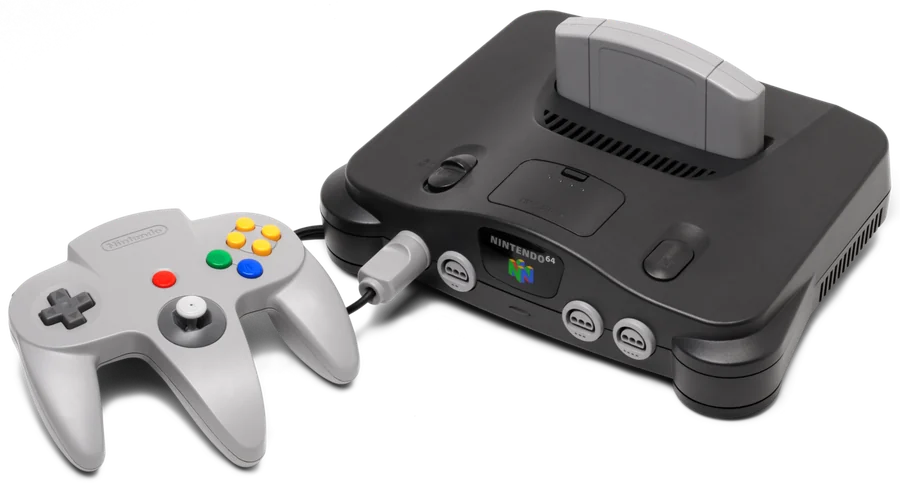
The Nintendo 64 hit the market in 1996 as a console full of contradictions. Technically it was in some respects ahead of the competition — it handled smooth 3D, perspective-correct texturing and hardware antialiasing, something neither the PlayStation nor the Saturn could attempt. But Nintendo made a fateful decision: to stick with cartridges at the very moment the rest of the industry moved to CDs. Cartridges ran without loading times and were hard to pirate, but they were expensive and limited in capacity. That put off many publishers, who left for Sony — the most famous example being Square, which, thanks to the space on a CD, moved Final Fantasy VII from the N64 to the PlayStation.
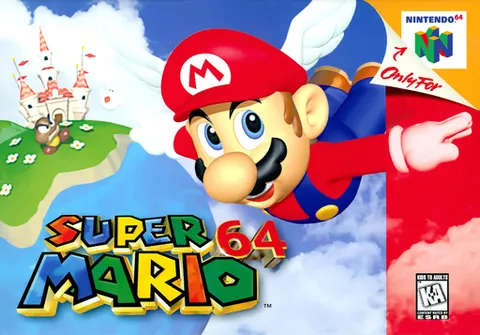
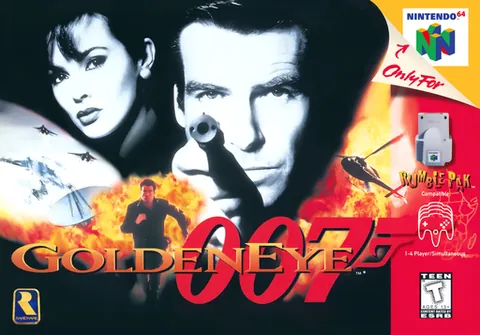
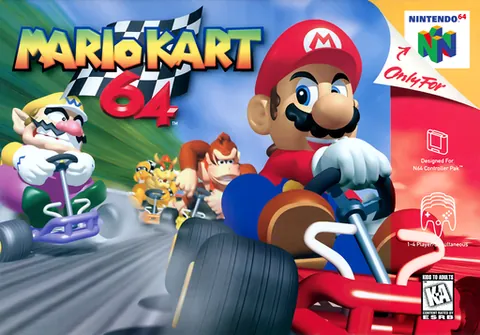
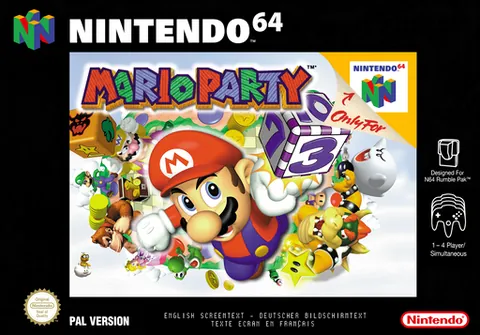
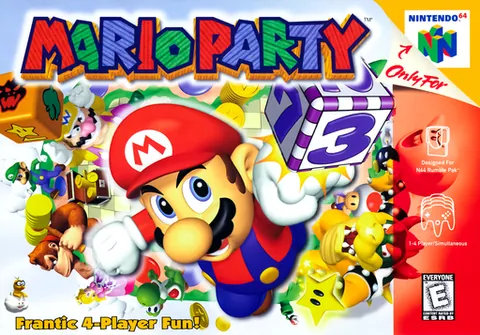
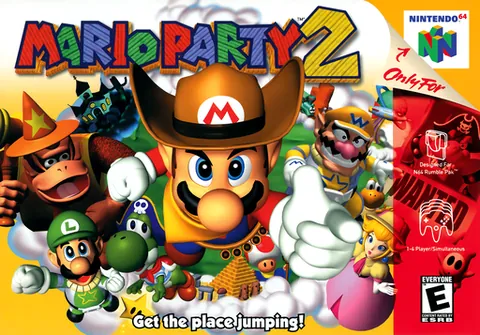
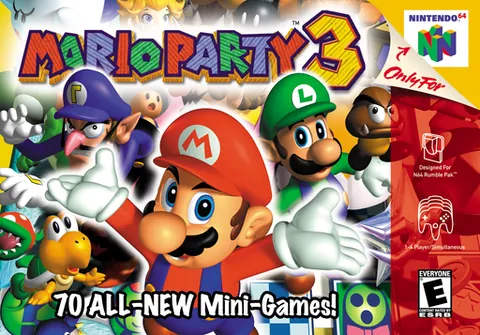
Even so, the N64 brought innovations we still use today. Its controller was the first with an analog stick designed specifically for movement in 3D space — which only seemed obvious once Super Mario 64 had demonstrated it to perfection. And it had four controller ports right in the body of the console, making the N64 the king of local four-player multiplayer: GoldenEye 007, Mario Kart 64 and the Mario Party series defined an entire era of couch gaming.
Technology: graphics and sound
The heart of the console is the 64-bit NEC VR4300 processor (a variant of the MIPS R4300i) clocked at 93.75 MHz and the Reality Coprocessor (RCP) from SGI at 62.5 MHz, which handles both geometry and rasterization. The console carries 4 MB of shared Rambus RDRAM memory, expandable to 8 MB via the Expansion Pak.
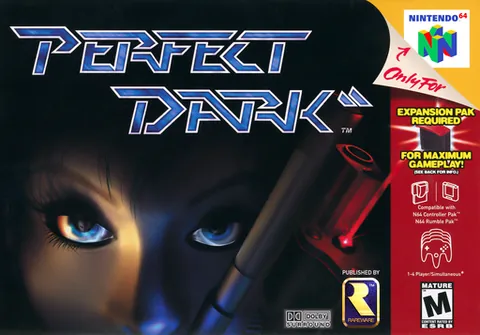
The N64 handled perspective-correct texture mapping, a Z-buffer, fog and, above all, trilinear filtering and full-screen antialiasing. That is precisely what gives the N64 its characteristic "soft", almost hazy look — the opposite of the sharp but jittery textures of the PS1. You either love the blurry aesthetic or you don't, but it is unmistakable. The price for ambitious 3D was often a low frame rate and the small texture cache of the RCP (only around 4 KB), because of which textures in some games looked blurry and repetitive. Resolution ranged from roughly 320×240 up to 640×480 in high mode (typically with the Expansion Pak, e.g. in Perfect Dark).
Sound was not handled by a separate chip in the classic sense — synthesis was done by the RCP in software, so audio quality depended on how much computing power developers allocated to it. This allowed high-quality streamed sequences and spatial sound, but it ate into the power available for graphics.
Connectivity and peripherals
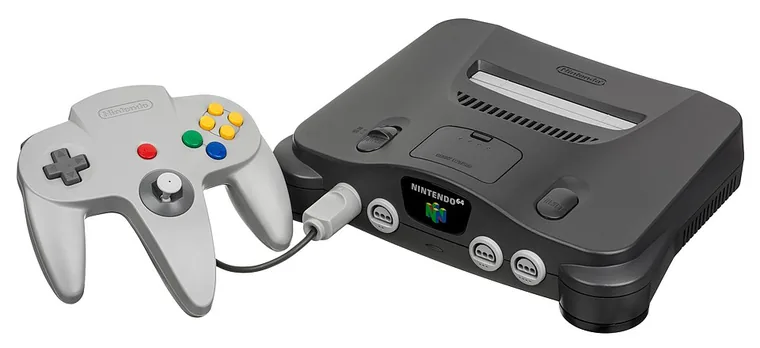
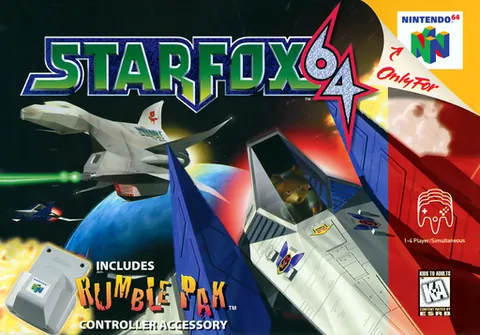
A key peripheral was the Rumble Pak — a vibration module for the controller, popularized by Star Fox 64 (Lylat Wars in Europe). The same slot on the back of the controller also accepted the Controller Pak, a memory card for saving game progress in games that did not have battery-backed memory in the cartridge.
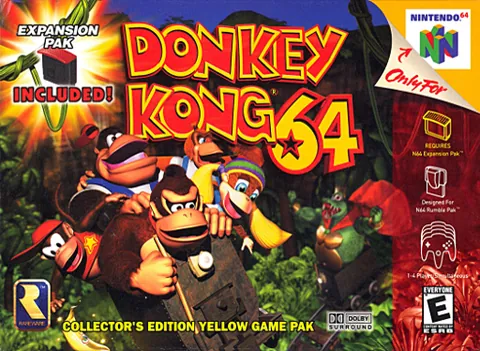
The Expansion Pak doubled the RAM to 8 MB and was mandatory for Donkey Kong 64 and the high mode of Perfect Dark. A special chapter is the 64DD — a magneto-optical disk drive attached from below, which, however, was released only in Japan and flopped commercially. The N64 offered both composite and S-Video output; NTSC versions also supported RGB, whereas PAL units usually did not.
Models and revisions
Alongside the standard grey console came a range of colored variants and transparent editions (Funtastic Series, Jusco). Three main regional versions were sold around the world — NTSC-U, NTSC-J and PAL. In Japan there was a Pikachu N64 with a built-in Pokémon design.
The later redesign, the iQue Player (2003), was intended exclusively for the Chinese market: it was an N64 built directly into the controller, with games loaded onto a memory card. Related technology was also used by the betting arcade board Aleck 64.
Clones and variants
Official N64 clones practically did not exist — the cartridge architecture and Nintendo's guarded lockout complicated the manufacture of imitations, unlike with the NES. In Czechoslovakia and the Eastern Bloc, the N64 (which arrived only after the Velvet Revolution) was therefore sold rather marginally and expensively; the 8-bit and 16-bit era here was defined by other machines — famiclones like the Pegasus for the NES or the domestic Didaktik as a ZX Spectrum clone. With the N64 a similar domestic trace is missing, because by the mid-1990s the age of cloning cheap hardware was already on the decline.
Today's scene
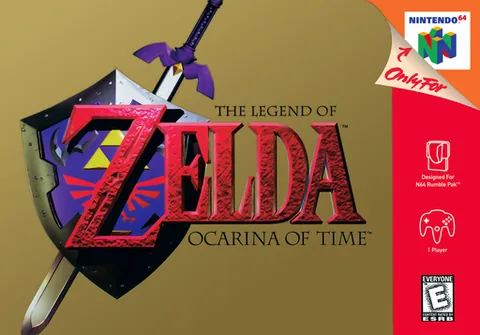
The N64 is the trickiest of the popular consoles for retro gamers. Emulation is notoriously inaccurate — because of the unusual RCP architecture, every game behaves a little differently and no universal solution exists. On the PC, Mupen64Plus, Project64 or the more accurate but demanding Ares serve well. On powerful machines, the popularity of "native" ports such as Ship of Harkinian (Ocarina of Time), built on decompilation of the original code, is growing.
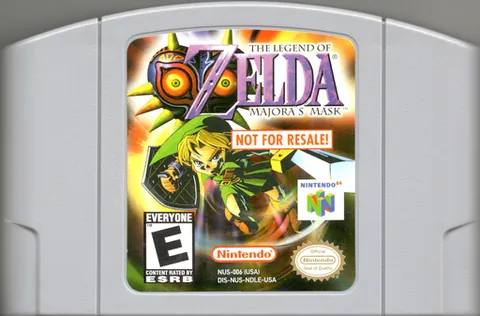
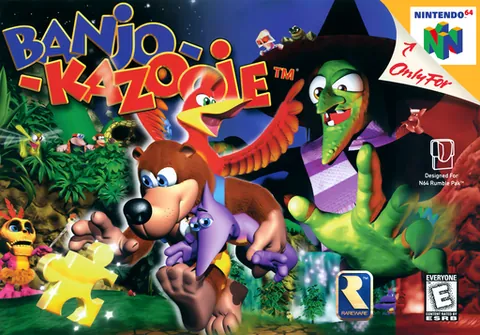
On handhelds with the H700 chip (better on the RG40XX/RG46R than on the weaker RG35XX Pro) a number of titles run, but expect to test them one by one and to accept that not everything will run perfectly. The reward, though, is 3D classics like Super Mario 64, Ocarina of Time, Banjo-Kazooie or Mario Kart 64 — experiences you won't find anywhere else and which regularly top the lists of the best games of all time.
Games on this platform (77)
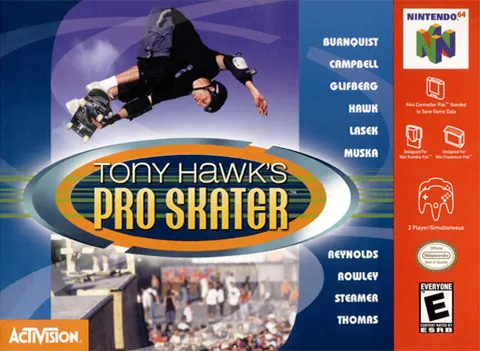
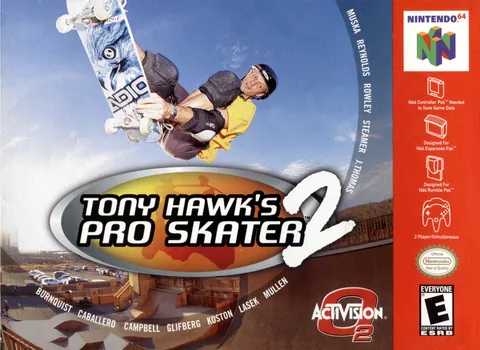
Tony Hawk's Pro Skater
A port by a studio specializing in transfers between different architectures.
No game in this genre.