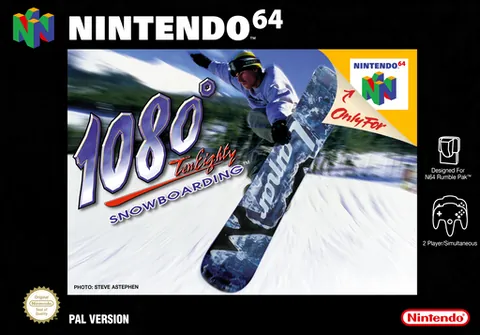
1080° Snowboarding
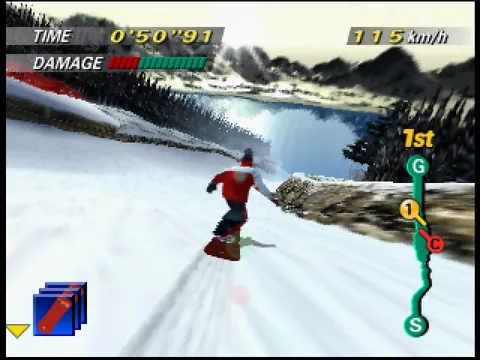
When 1080° Snowboarding landed on the Nintendo 64 in 1998, it was a small miracle in a world where snowboarding on consoles was still finding its feet. Instead of over-the-top arcade action, Nintendo bet on something unusual at the time: the feel of physics. The rider behaved like a real mass on the slope, the board carved, sliced through powder and, on a bad landing, mercilessly sent you to the ground. The game asked you to learn to read the terrain and time your tricks, not just mash buttons.
Development was handled by Nintendo's internal Nintendo EAD division, the same environment from which Mario and Zelda emerged, and it showed in the craftsmanship. The 1080° in the name refers to three full spins in the air, the peak trick that became the game's symbol. There was a handful of riders and boards, time trials, a half-pipe and head-to-head races, but the heart of the experience remained that tangible weight of movement.
Graphically the game benefited from fantastic work with light and snow texture; by N64 standards the slopes looked extraordinarily convincing. The soundtrack of a band and electronic loops rounded out the cold, focused atmosphere of a winter sport. This was no garish party but a zen-like ride in which you felt every arc.
Culturally, 1080° Snowboarding showed that a Nintendo sports game did not have to be mere family fun but could be an unexpectedly demanding discipline for players who wanted to master the slope down to the last detail. The game received a sequel, 1080°: Avalanche on the GameCube, and remains one of the dignified proofs that snowboarding could be handled with respect on the sixty-four.
Thanks to its combination of a realistic ride model, tuned controls and typical Nintendo care, it has aged surprisingly well. Anyone who picks up the controller today quickly understands why this game built a devoted following.
Why play: For the unexpectedly honest feel of the ride and that sweet frustration when you finally pull off a trick that eluded you for so long.
Game 41 of 77 for Nintendo 64