 Nintendo · 1995
Game consoles
Nintendo Virtual Boy
History & context
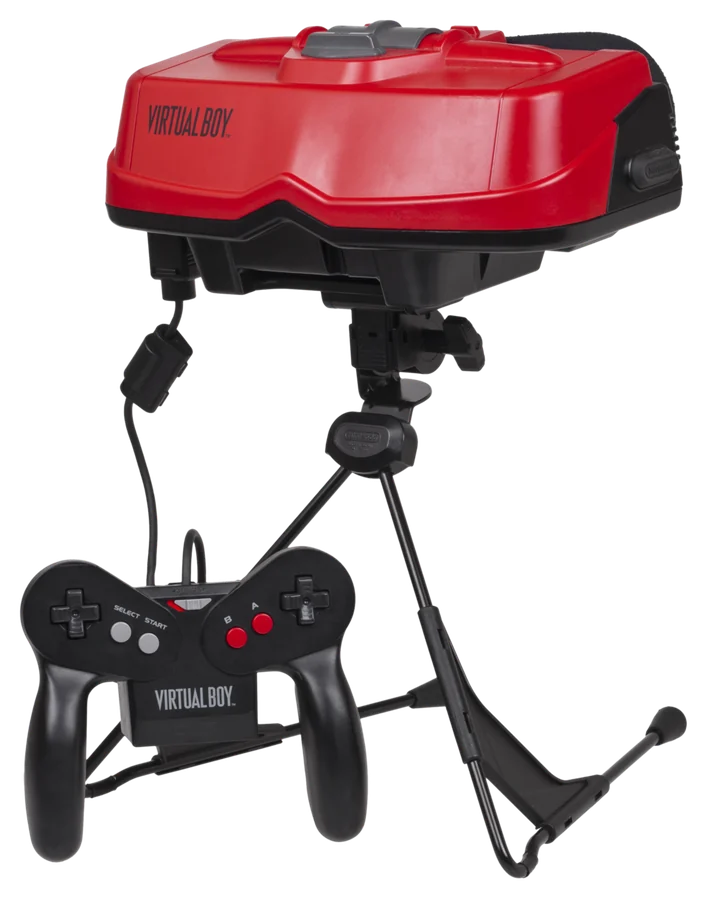
The year 1995 was obsessed with virtual reality. The word "VR" was popping up in movies, in magazines and in press releases from manufacturers who promised that players would soon step directly inside a game. Nintendo sent Virtual Boy into that wave — a strange tabletop device on a tripod that you had to bury your face into like a binocular. Inside awaited a richly red monochrome world built from LEDs and oscillating mirrors. Nothing like it existed on the market, and as it turned out, there was a reason for that.
Behind the design stood Gunpei Yokoi, the engineer behind Game & Watch and the Game Boy, a man whose philosophy of "lateral thinking with withered technology" had worked flawlessly for a decade. This time, though, it failed him. Cheap red LEDs allowed for a sharp, high-contrast image at an affordable price, but the result was visually exhausting. The device couldn't be worn, couldn't be shared with a friend, and after half an hour of play many people got headaches. On top of that, Nintendo gave it only lukewarm marketing support — all its energy at the time was aimed at the upcoming Nintendo 64.
The result was an unambiguous flop. Fewer than a million units sold, the console never officially reached Europe at all, and Nintendo pulled it from the market roughly a year after launch. Yokoi left the company shortly afterward and tragically died in a traffic accident in 1997. Yet Virtual Boy hasn't disappeared from memory — quite the opposite. Today it's one of the most collectible pieces of gaming history, and several of its games rank among the best Nintendo published in the mid-1990s.
Tech: graphics and sound
Inside Virtual Boy beats a surprisingly modern heart: a 32-bit RISC NEC V810 processor clocked at around 20 MHz. On paper, that made it the most powerful Nintendo console of its time — more than the SNES, though less than the sixty-four then in the works.
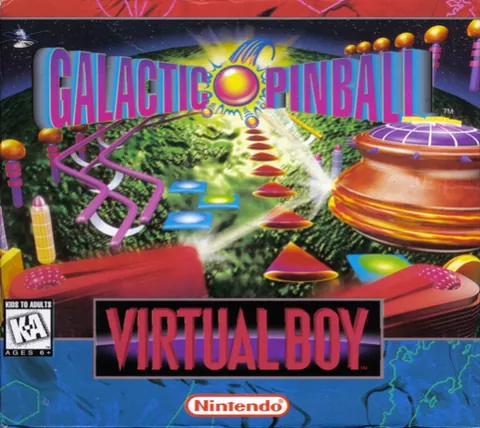
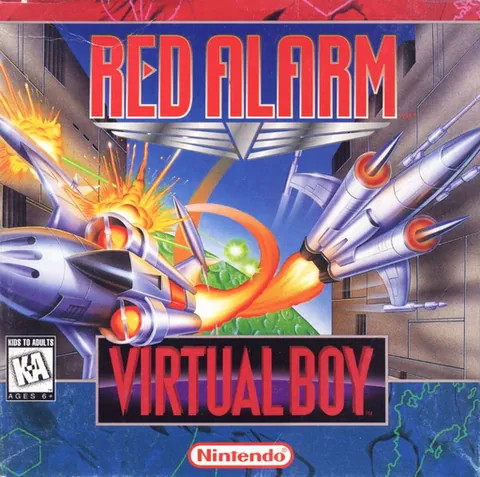
The display side, however, was a whole different league of strangeness. No screen existed in the usual sense: each eye received a single vertical row of red LEDs, whose image was spread across a plane by a rapidly oscillating mirror. The resulting resolution was 384 × 224 dots per eye, with a color depth of a mere four shades of red. Two independent "screens" with slightly different viewing angles created genuine stereoscopic 3D — and it worked remarkably convincingly. The depth in Red Alarm or in Galactic Pinball's pinball tables was something a flat television simply couldn't reproduce.
Sound was handled by the VSU chip with six channels — five wavetable channels plus one noise channel — with stereo output to the built-in headphone speakers. Sonically, Virtual Boy sounded cleaner and fuller than the Game Boy and often held its own against the SNES.
Connectivity and peripherals
The Virtual Boy controller was prophetic for its time: two D-pads side by side, A and B buttons, two shoulder triggers, and a removable battery module for six AA batteries that could be swapped for a power adapter. The pair of D-pads allowed movement and aiming to be controlled separately — a principle that, a few years later in the form of two analog sticks, came to dominate action games.
The device also had a link port for connecting two units, but the corresponding cable never actually made it to retail, and no released game used it. Nintendo did include something else instead: the system had a built-in automatic break reminder hard-wired into it, which paused the game after a set time and prompted the player to rest. The box and manual both warned that the device wasn't suitable for children under seven.
Models and revisions
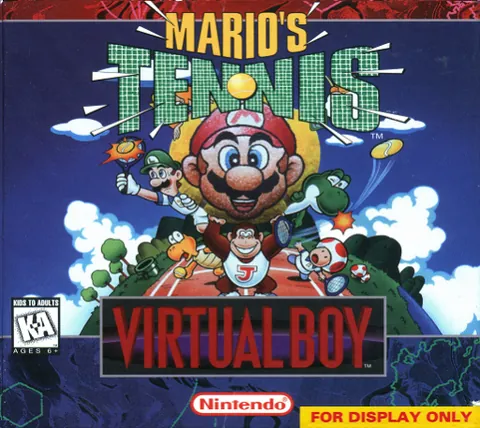
Here the story is short. Virtual Boy saw only a single hardware version — between the Japanese and American releases, practically only the packaging and bundled game differed (in North America, Mario's Tennis). No slim model, no color variant, no successor. A European or Australian version never came out at all.
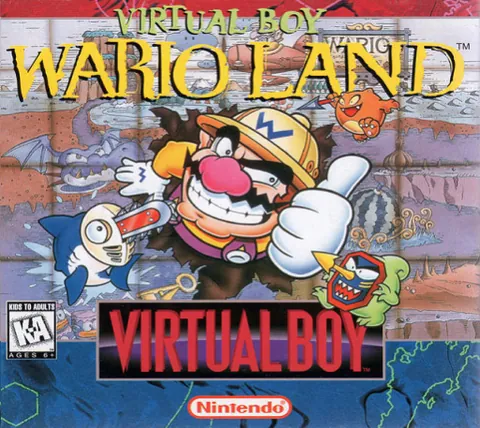
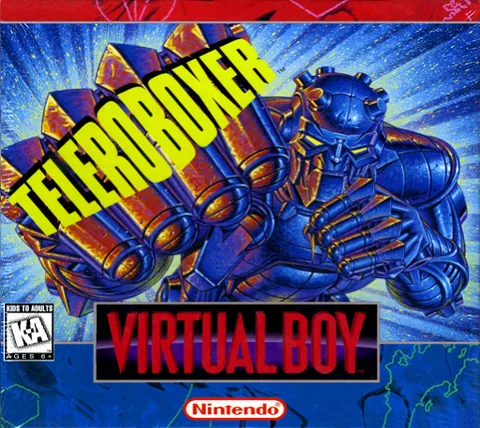
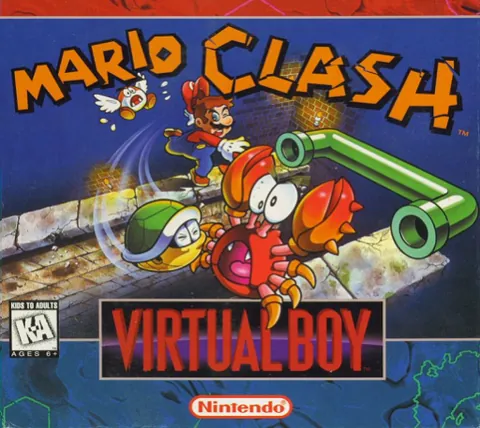
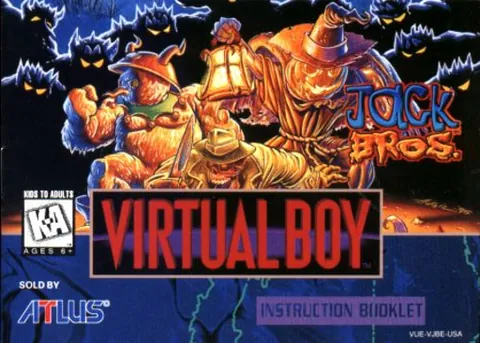
The library remained equally modest: 22 released games in total, some of which appeared only in Japan. The undisputed highlight is Virtual Boy Wario Land, a full-fledged platformer that uses the 3D effect to shift between foreground and background and would easily hold its own on the SNES. Also aging gracefully are the robot duel game Teleroboxer, Atlus's dungeon crawler Jack Bros., the arcade-style Mario Clash, and the fast-paced shooter Red Alarm. The rest of the catalog is, unfortunately, more a collection of experiments and quick cash-ins.
Clones and variants
Virtual Boy clones practically don't exist — the device was too strange, too expensive and too unsuccessful for anyone to bother imitating it. Indirect successors, however, are plentiful: Sega never finished its Sega VR headset, Virtuality arcade systems rode the same wave in arcades, and the idea of glasses-free stereoscopic 3D returned to Nintendo only in 2011 with the Nintendo 3DS, this time with a considerably better result.
For Czech players, Virtual Boy is a strange chapter: it officially never reached here, so most people know it only from photos and videos. The units circulating here today arrived via import.
Today's scene
Emulation is today the only realistic way to try out the Virtual Boy. The standard is the Beetle VB core (derived from Mednafen), available in both RetroArch and Batocera, and it runs fine even on a cheap retro handheld. The emulator offers several display modes: classic red-and-black 2D, side-by-side images for VR headsets, and above all an anaglyph mode — with ordinary red-blue paper glasses you can try the stereoscopic effect at home for pocket change. There's also a well-regarded emulator for the Nintendo 3DS, where the 3D effect can be reproduced without any glasses at all.
The community around the platform is alive too. Homebrew games and translations of Japanese titles are being made, flashcarts exist that let you run your own code on real hardware, and enthusiasts fix the typical defect of aging units — the detaching display ribbon cable that causes one eye's image to drop out. Nintendo itself eventually returned to Virtual Boy, making part of its catalog available to subscribers of its retro service on the Switch, including an add-on that reproduces the stereoscopic effect. The console once regarded as a symbol of failure has thus, three decades later, earned something like a rehabilitation.
Games on this platform (13)
No game in this genre.