 Capcom · 1988
Arcades
Capcom CPS
History & context
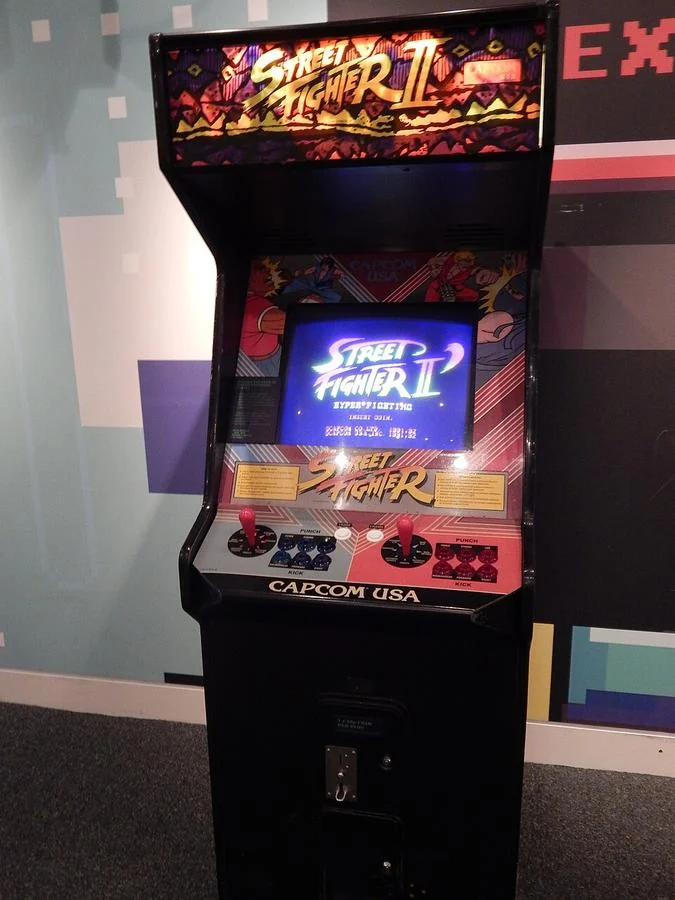
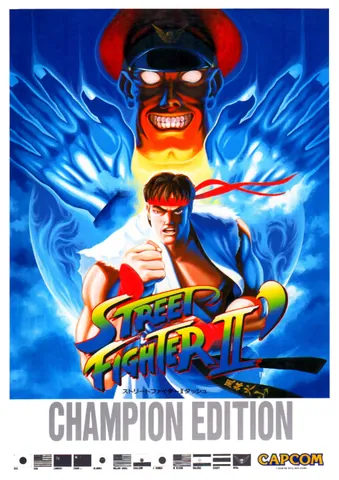
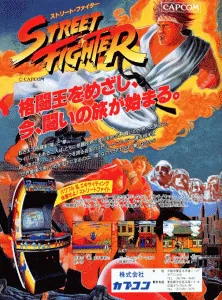
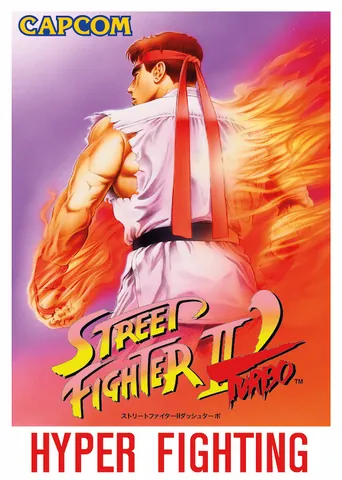
When the first arcade machine built on the CP System board (abbreviated CPS, often nicknamed "CPS-1") appeared in arcades in 1988, it marked for Capcom the beginning of an era that moved the company into the absolute top tier of the arcade industry for the next decade. CPS was not a console or a computer in the home sense of the word, but a family of arcade boards (PCBs) on which arcade cabinets for game halls ran. And it was right here that the games that defined entire genres were born — from fighting games to beat 'em ups. Without CPS there would be no phenomenon of Street Fighter II, which in 1991 literally flooded the arcades of the whole world and kicked off the golden era of Japanese fighting games.
Capcom gradually released three generations: CP System (CPS-1, 1988), CP System II (CPS-2, 1993) and the technically distinct CP System III (CPS-3, 1996). Each raised the bar for graphics and anti-piracy protection, and together they form one of the most influential pieces of gaming hardware of all.
Technology: graphics and sound
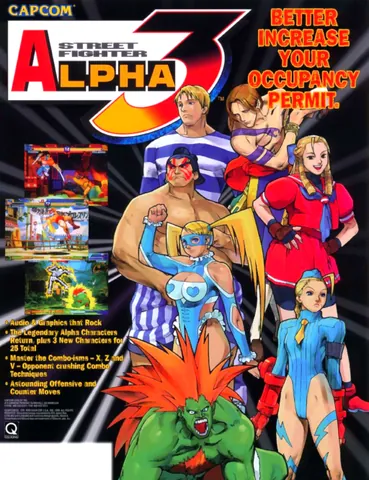
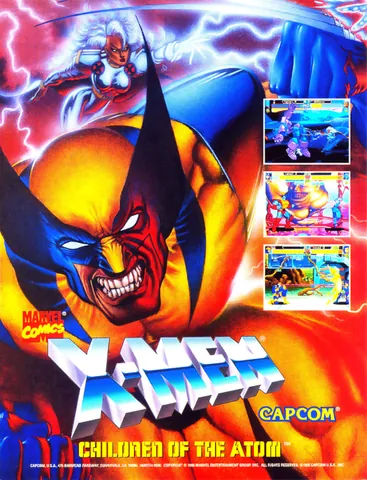
The heart of both CPS-1 and CPS-2 was the 16-bit Motorola 68000 processor. CPS-1 clocked it at around 10 MHz, CPS-2 at 16 MHz, which brought snappier logic and a greater volume of data on screen. The picture had the typical arcade resolution of 384×224 pixels. The key to the fabled "Capcom" look was the work with sprites — the boards could handle large, multi-part characters composed of many tiles, smooth animation, and multi-layered backgrounds with independent scrolling. While CPS-1 offered a palette in the order of thousands of colors, CPS-2 significantly expanded it (on the order of thousands of colors on screen at once) and enabled richer shading and transparencies, thanks to which games like Street Fighter Alpha 3 or X-Men: Children of the Atom looked noticeably richer than the older generation.
Sound was handled by a separate Zilog Z80 as the sound processor, in combination with Yamaha YM2151 FM synthesis and the OKI MSM6295 PCM chip for samples. This combination gave the characteristic mix of melodic FM lines and sampled effects and voice clips. CPS-3 went a completely different way: it was built on the Hitachi SH-2 processor, used data on CD-ROM that was loaded into memory after startup, and excelled with huge, smoothly animated sprites of hand-drawn quality — the pinnacle being Street Fighter III: 3rd Strike with its breathtaking animation.
Connectivity and peripherals
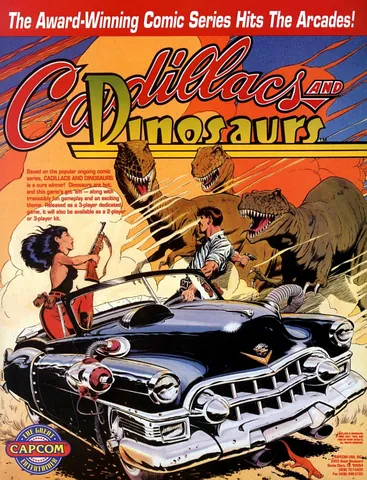
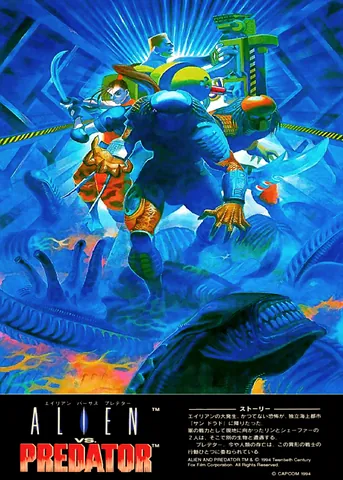
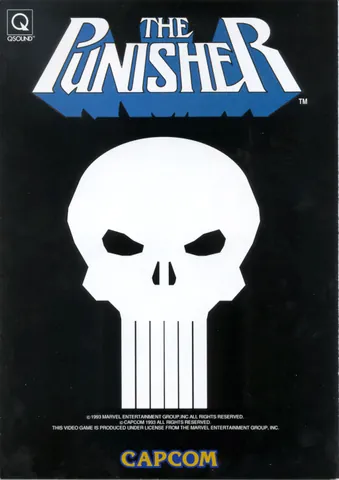
As arcade hardware, the CPS boards plugged into cabinets of the JAMMA standard (with CPS-2 it was a two-part cartridge: an "A-board" with the base and an interchangeable "B-board" with the game). Controls consisted of a joystick and buttons — typically six buttons on fighting games, fewer on action games. Most titles supported two players at once; beat 'em ups like Cadillacs and Dinosaurs, The Punisher or Alien vs. Predator could even do three-player cooperation on specially equipped boards. The picture went over an analog RGB signal to the cabinet monitor. No memory cards or modems were used here — progress and high scores lived within the machine as long as it was powered.
Models and revisions
Development took place across three main generations. CPS-1 went through several board revisions and even got a split version, CPS-1.5 (CPS Dash), on which, for example, Cadillacs and Dinosaurs or The Punisher ran and which lay on the boundary between the first and second generation. CPS-2 brought a fundamental novelty — strong encryption of the program code stored in the cartridge, backed up by a battery. This was meant to stop piracy, but it had an insidious side effect: after the battery ran out, the board "died" (the so-called suicide battery), because it lost the decryption keys. CPS-3 used encrypted content from a CD loaded into battery-backed memory with the same risk; only a few games were released on it, including Warzard/Red Earth and the Street Fighter III series.
Clones and variants
Capcom did not license the original CPS hardware for the manufacture of clones, so no official imitations in the spirit of the "Pegasus" or the Didaktik exist here. What did accompany both CPS-1 and CPS-2 practically from the start, however, were pirate copies and bootlegs — illegally copied fighting-game boards (especially Street Fighter II and its countless "turbo" and "hyper" hacks), which flooded the gray market even in Europe and in the countries of the former Eastern Bloc, where they made their way into arcades and pubs outside official distribution. The value of these boards, conversely, is today being raised by the collector scene, which carefully distinguishes originals from bootlegs.
Today's scene
CPS today belongs among the best-covered arcade platforms. The MAME emulator (and its offshoot FinalBurn Neo) reliably runs the vast majority of CPS-1, CPS-2 and CPS-3 games, and the community long ago cracked the encryption of both CPS-2 and CPS-3, so "dead" boards can be revived (the so-called phoenix editions of ROMs with burned-in keys). Many titles were also released legally in modern compilations — for example the Capcom Arcade Stadium range or the Street Fighter 30th Anniversary Collection. For fans of real iron there exist consolization kits and speaker cabinets, thanks to which an original board can be connected to a modern display. CPS thus remains alive not only in the arcades of memory, but also on the screens of today's players.
Games on this platform (29)
No game in this genre.