Final Fight
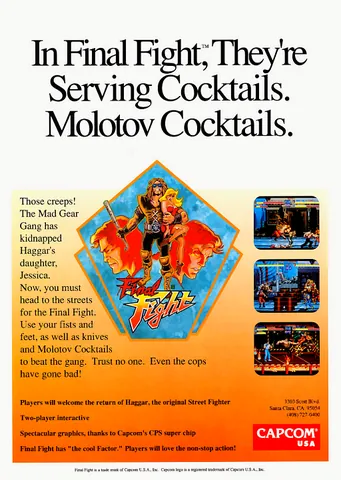
The slums of Metro City cry out for justice and you deal it out with your bare hands. Final Fight from 1989 is the forefather of modern beat 'em ups, a title that literally defined the template of the entire genre: a band of heroes fights through the streets and clears the city of a criminal gang. With this concept Capcom created a model that countless later games merely imitated.
The game's origin is already intriguing. Final Fight was originally meant to be Street Fighter '89, that is, a sequel to the famous fighter. In the end, though, it became a standalone brand that steered the development of street brawlers for a decade to come. The story of the kidnapping of Jessie, daughter of the mayor and former wrestler Mike Haggar, by the criminal gang Mad Gear gave players clear and juicy motivation to join the fight.
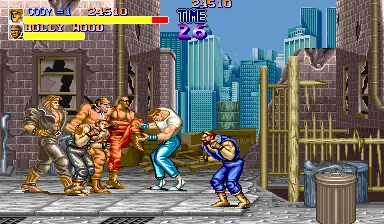
The player chooses from three characters: the burly mayor Haggar, who relies on brute strength and grapples, the nimble Cody with a balanced combat style and the fast fighter Guy. Each offers a different feel of play and a different approach to crowds of enemies. The fights rest on tangible blows, grapples and the ability to grab weapons or smash objects in the environment for bonuses.
Visually the game impressed for its time with large sprites, striking characters and a lively rendering of a decaying metropolis. A varied gallery of opponents and bosses and imaginative bonus stages, where you demolish a car, for example, make playing a brisk and enjoyable ride that you can still enjoy in two-player today.
The historical significance of Final Fight is enormous. It became the benchmark of the genre, received many ports, sequels and references in other games (characters like Haggar and Guy appeared in the world of Street Fighter). Even after decades it remains superbly playable and reminds us where the roots of street brawlers lie.
Why play: Because this is the source from which the entire beat 'em up genre grew, and at the same time a still-entertaining and tangibly satisfying street brawl for one or two players.
Game 25 of 29 for Capcom CPS
The same title elsewhere (2)
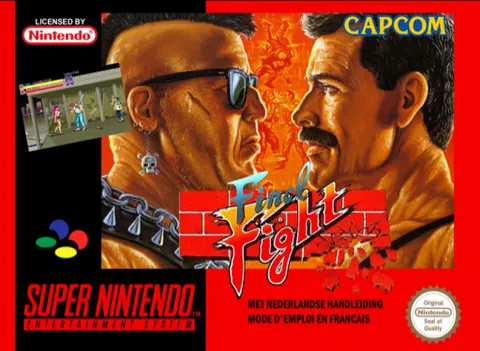
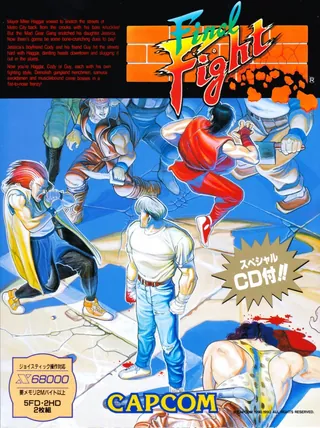
In arcades, Final Fight ran on Capcom's powerful CPS hardware, offering a full colour count, smooth scrolling and, crucially, simultaneous two-player action. The 1991 Super Nintendo conversion, held back by cartridge space and weaker hardware, had to sacrifice exactly that co-op mode and drop one of the playable fighters, Guy, entirely (he returned only in a later sequel), and it also suffers occasional slowdown when many enemies crowd the screen. The 1992 Sharp X68000 port, on the other hand, ranks among the most faithful home conversions of its era — it kept both remaining heroes' full simultaneous co-op and came remarkably close to the arcade original in both colour and smoothness.