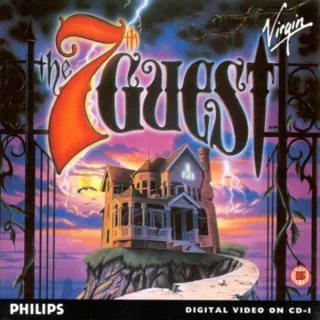
The 7th Guest
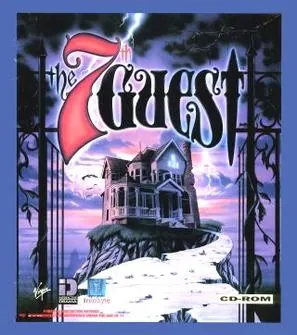
The 7th Guest arrived on the Philips CD-i as a port of one of the most celebrated titles of the early CD-ROM era, and it stands among the strongest entries in the platform's catalog. The player wanders the abandoned mansion of toymaker Henry Stauf, where six guests gathered years ago and none of them ever left. The whole house is a connected set of puzzles: chess variants, piece-sliding challenges, mazes, word games, and logic puzzles that must be solved to unlock further rooms. Between them, the ghosts of the original guests appear in the air, gradually revealing what happened in the house.
The game was a technical sensation in its day, combining pre-rendered three-dimensional environments with smooth movement through the corridors and live actors inserted directly into the scenes. That is exactly what made it a showcase title for CD drives, and porting it to CD-i made sense: the platform was built around video played from disc and a home setup connected to a television. Cursor control via the controller is slower than a mouse, but for a game built on calm reasoning that hardly matters. The sound and music, including the famous theme and the eerie whispered voices, rank among the best the genre has ever produced.
The success of The 7th Guest fundamentally shaped what games looked like in the mid-nineties and kicked off a wave of titles built around live actors and extensive video sequences. Contemporary critics praised the inventiveness of the puzzles and the atmosphere, with complaints mostly aimed at the story being little more than window dressing between riddles. Today the game still works as a beautifully tuned horror experience for patient players: the puzzles have aged well because they are built on pure logic, and the empty house with its creaking wood and indistinct voices still creates unpleasant tension. Anyone wanting to try what games boasted about when CD media first arrived will find here one of the few titles that holds up as full-fledged entertainment, not merely as a technical demo.
Game 6 of 13 for Philips CD-i
The same title elsewhere (1)
Both console versions had to bring across the PC CD-ROM original's demanding mix of video sequences and pre-rendered graphics onto home hardware, and both had to work around the limitations of the CD drives of the time. The 1994 3DO version benefited from a console built with video playback in mind, so the puzzles and clips with Stauff come across fairly faithfully, if with loading pauses. The Philips CD-i version from the same year runs on somewhat weaker hardware, and its compressed video tends to look a touch softer, placing it among the more modest ports of the game.