Final Fight
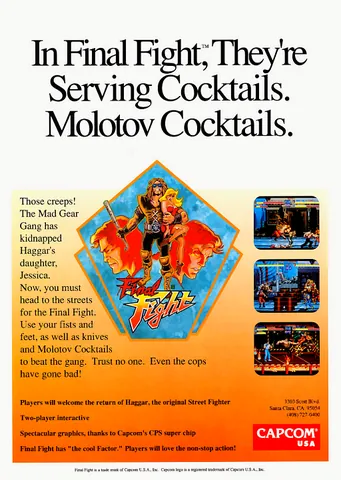
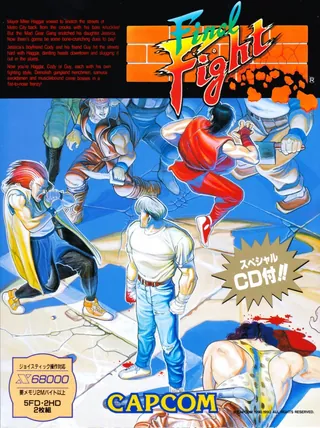
Final Fight is one of the most iconic beat-'em-ups of the late eighties and early nineties, and its conversion for the Sharp X68000 still stands as a showcase of what a Japanese home computer could achieve once Capcom itself took the job in hand. Mayor Mike Haggar, street brawler Cody, and ninja Guy set out to clean the streets of Metro City of the Mad Gear gang and rescue the kidnapped Jessica. The whole game rests on a simple yet remarkably satisfying combat system where a few buttons and precise timing are all it takes. Each character, however, plays quite differently: Haggar relies on raw strength and wrestling throws, Cody on balance and work with a knife or pipe, and Guy on speed and jumping kicks. The progression is linear, but the levels are packed with detail, breakable barrels, food hidden in crates, and enemies arriving in increasingly nasty combinations.
Technically, the X68000 version is exactly the reason enthusiasts bought this computer. A machine built around the Motorola 68000 processor with hardware support for sprites and several scrolling layers managed to bring the arcade original across with minimal compromise, including large animated characters, smoothly moving backgrounds, and a color palette the consoles of the time couldn't match. Sound comes courtesy of a Yamaha FM synthesis chip supplemented by sampled drums and voice clips, so the rhythmic tunes accompanying each district of Metro City sound full-blooded and hits land with proper weight. Loading from floppy disks was the price paid for that fidelity.
At the time, this conversion was seen as one of the arguments for why the X68000 was the best home arcade machine in Japan, especially compared to the trimmed-down console version, which lost a character and an entire level. Final Fight's own influence on the genre is significant: it defined the pacing, the structure of enemy waves, and the bonus stages that dozens of later games would copy. Today the game feels short and to the point, which only makes it easier to return to, especially in two-player mode on a single monitor, where it turns into a classic half-hour ride full of disarming violence and eighties aesthetics.
Game 1 of 25 for Sharp X68000
The same title elsewhere (2)
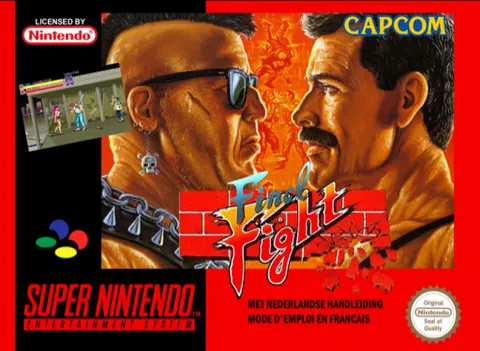
In arcades, Final Fight ran on Capcom's powerful CPS hardware, offering a full colour count, smooth scrolling and, crucially, simultaneous two-player action. The 1991 Super Nintendo conversion, held back by cartridge space and weaker hardware, had to sacrifice exactly that co-op mode and drop one of the playable fighters, Guy, entirely (he returned only in a later sequel), and it also suffers occasional slowdown when many enemies crowd the screen. The 1992 Sharp X68000 port, on the other hand, ranks among the most faithful home conversions of its era — it kept both remaining heroes' full simultaneous co-op and came remarkably close to the arcade original in both colour and smoothness.