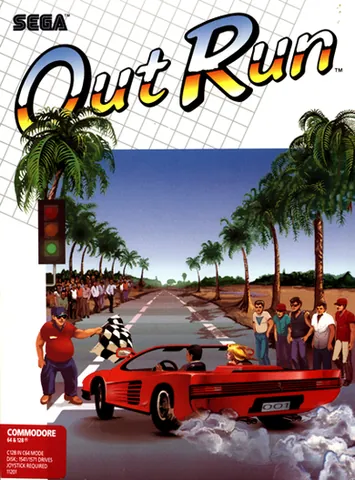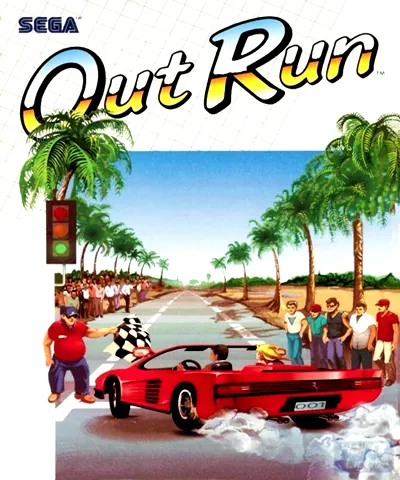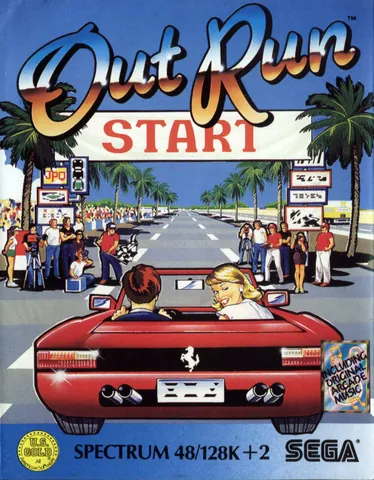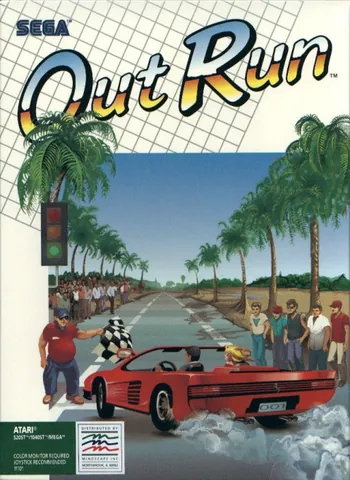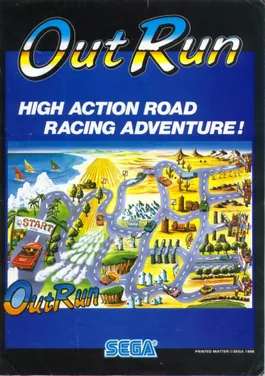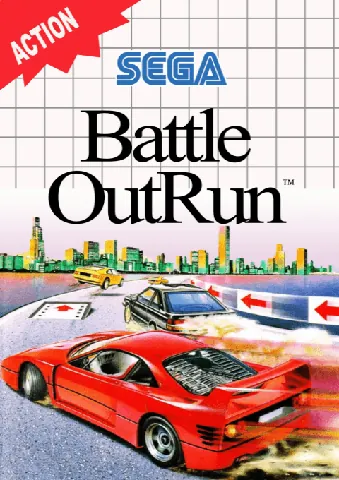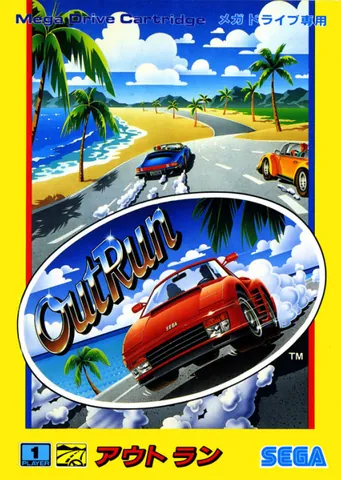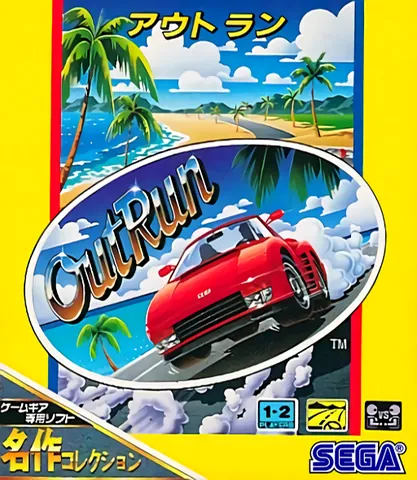
An open convertible, a blonde in the passenger seat, a sun-drenched coastline, and at every fork you choose for yourself which way to go - Out Run isn't just a racing game, it's the feeling of freedom cast in pixels. And SEGA managed to cram a piece of this joy even into the pocket Game Gear console.
Unlike ordinary races, this isn't about battling rivals for first place. You tear down the highway against the clock, weaving between slower cars, and above all trying to reach the checkpoint before time runs out. The branching route is a stroke of genius: at the end of each section you decide whether to turn left or right, assembling your own path out of variously difficult stages leading to different goals. This choice and the emphasis on the pure joy of driving set Out Run apart from the competition.
The 1986 arcade original is the work of legendary game designer Yu Suzuki and the SEGA AM2 studio. In the arcades it was famous for its luxurious sit-down cabinet that tilted with the steering, and for music the player could pick from the car radio. Melodies like Magical Sound Shower are among the best-known game tunes of all time and have become forever linked with the feeling of a summer drive.
Culturally, Out Run defined a whole style. Its aesthetic - pastel sunsets, a sports car and a laid-back mood - returned decades later as inspiration for the musical and visual wave known as synthwave and outrun. Few games of the eighties have such a strong and still-living visual legacy.
The Game Gear version naturally couldn't offer the hydraulics or the fluidity of the arcade machine, but on the small color screen it nonetheless pulled off a decent illusion of fast driving and, most importantly, preserved that signature laid-back mood. For players on the go it was the perfect way to sneak in a short drive toward the sun anytime.
Why play it: For the timeless feeling of freedom behind the wheel, the freedom to choose your own route, and the atmosphere of an eternal summer that no other game has captured better.
Game 25 of 39 for SEGA Game Gear
The same title elsewhere (9)
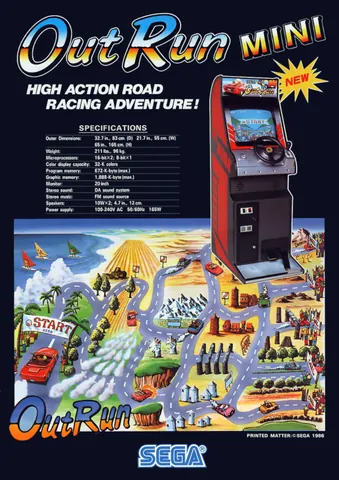
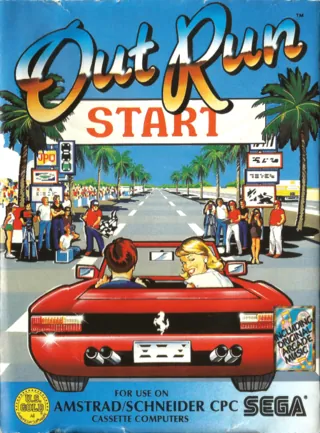
Sega's 1986 arcade original ran on special Super Scaler hardware that let the road scale smoothly into the distance, with three selectable tunes playing from the cabinet's speakers. Home computers could not fully recreate that illusion of speed: the Commodore 64, Amstrad CPC, and Atari ST versions all show noticeably choppier road scrolling and less track detail. The Amiga kept decent smoothness and nicer visuals despite the limitations, while the Master System surprised with fairly faithful graphics and music for an eight-bit console. For the real arcade feeling, the original remains unmatched.