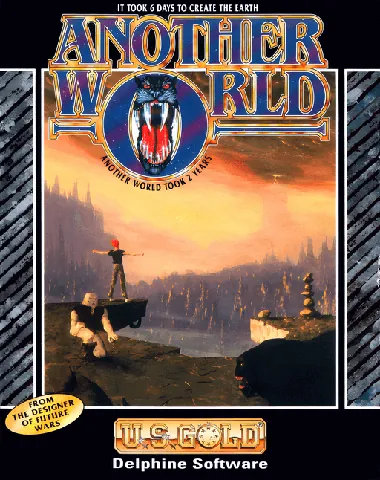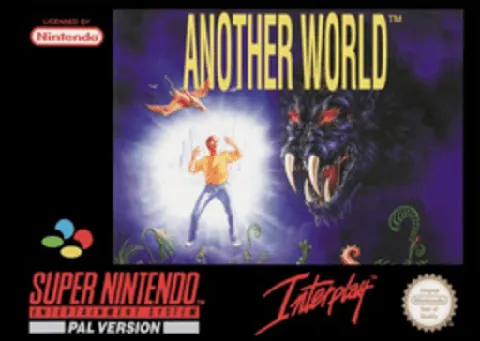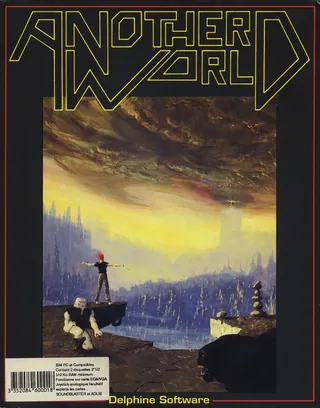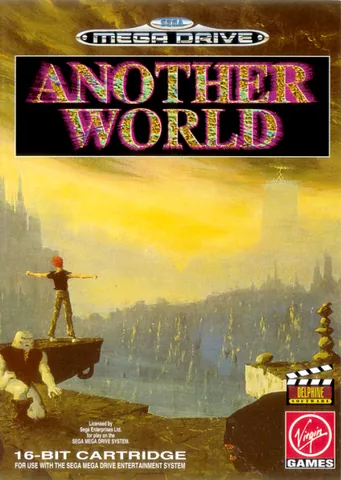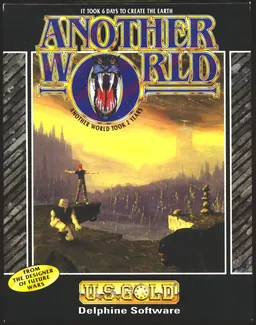
Another World
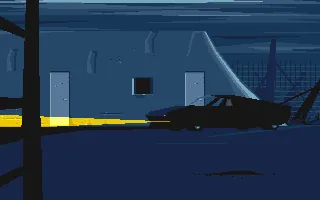
You open your eyes in a laboratory, a particle accelerator discharge flashes and your character finds itself beneath the surface of an alien planet. No menus, no tutorials, no HUD. Another World throws you into a hostile world from the very first second and lets you die as many times as it takes before you grasp its rules. This opening scene is among the most famous openers in the history of games and can still draw you in to this day.
The Frenchman Éric Chahi created the game practically alone: he programmed, animated and designed it. He used his own technique of polygon vector graphics, thanks to which the characters and environments looked fluid and cinematic at a time when most games relied on pixel sprites. The movement animations of the hero Lester and his alien ally were unprecedentedly realistic for their time, and the whole game ran without a single word of text, told purely through image and situation.
Mechanically it is a cinematic platformer and an adventure at once. You run, jump, pick up a laser weapon capable of firing, creating shields and breaking through walls, and above all you solve the environment by trial and error. Death here is constant and often brutal, but the checkpoints are generous and every failure moves you closer to understanding what the world requires. The relationship between Lester and the prisoner you meet creates an emotional arc without a single line of dialogue.
The game came out in 1991, originally on the Amiga and Atari ST, and became an immediate critical success. Under the name Out of This World it also made its mark in North America and saw dozens of ports across generations of consoles and computers, including modern 20th anniversary remasters. Its influence is unmistakable: it openly inspired creators such as Hideo Kojima or the studio Playdead (Limbo, Inside).
Another World remains a textbook example of the fact that a game can be art. It is short, uncompromising and at times frustrating, but the experience of gradually uncovering its world is unforgettable. The Atari ST version was one of the first, and the Atari home computers gave it a dignified stage.
Why play: For the timeless, wordlessly told story and an atmosphere that defined an entire genre of cinematic games.
Game 7 of 72 for Atari ST
The same title elsewhere (4)
Éric Chahi's 1991 original was built for the Amiga and Atari ST, and its vector-based, polygon graphics came remarkably close to film animation for its time. Because it wasn't built from classic pixel sprites, the game translated to other platforms with surprising fidelity. The Amiga and Atari ST versions did have floppy-disk loading pauses between scenes, which the cartridge-based Mega Drive and Super Nintendo ports removed. The sound differed, though: the Amiga used sampled music, while the Mega Drive relied on its FM chip for a rawer tone. The SNES port is generally seen as one of the best-balanced versions.