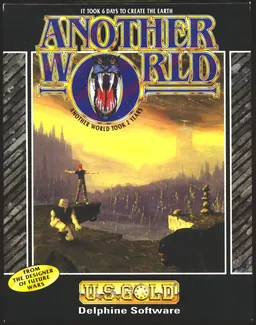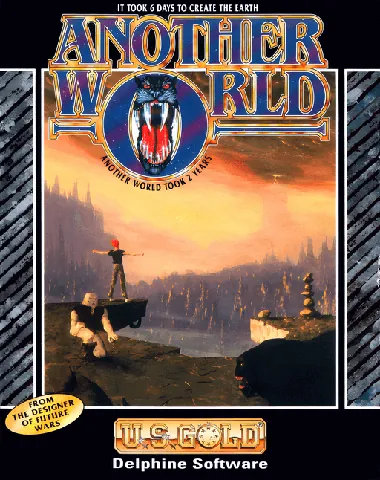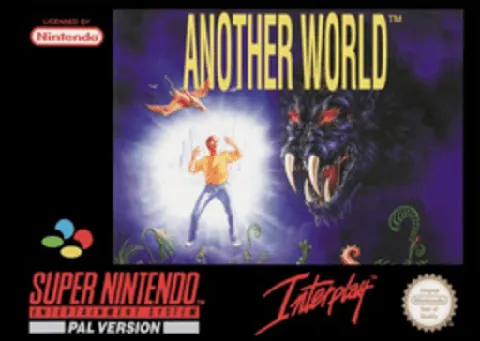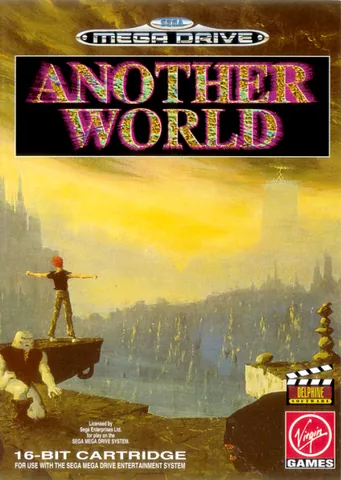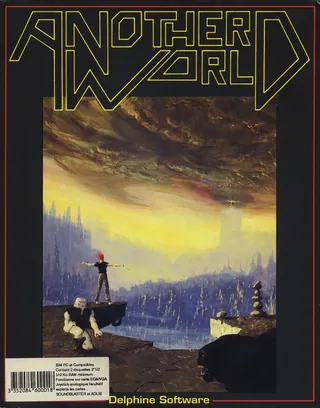
Another World
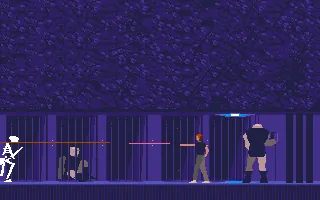
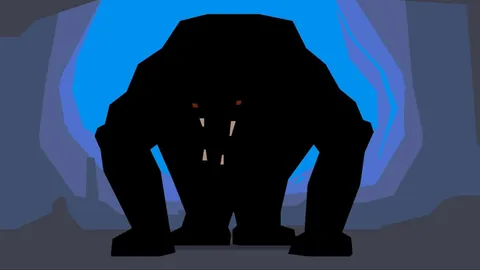
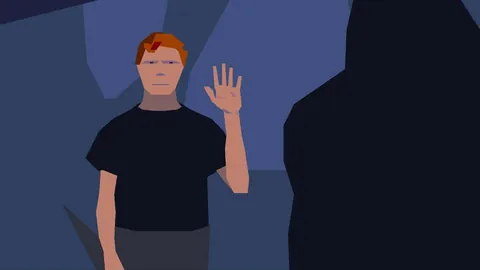
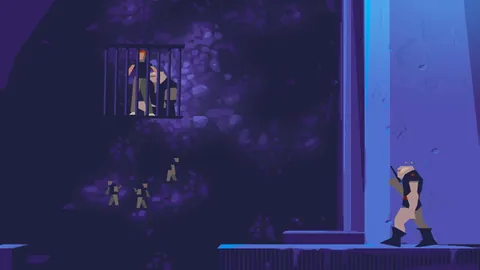
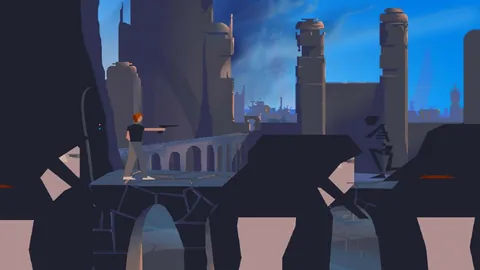
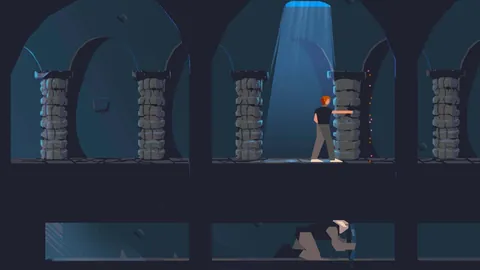
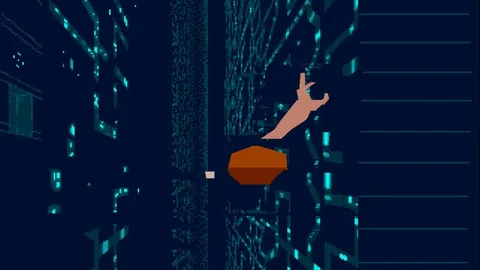
Another World begins unusually: a young scientist is struck by lightning during a nighttime particle accelerator experiment and finds himself in a foreign world full of hostile creatures and unknown machines. The game has no introductory text, no tutorial, no indicators — all the storytelling happens through imagery, and the player learns through his own death. The core of the gameplay consists of running, jumping, kicking, and later an energy weapon that can shoot, build a protective barrier, and blast obstacles, turning every encounter into a small tactical puzzle. Progress happens through trial and error, with the player repeating a short section until they understand its correct solution and can execute it precisely.
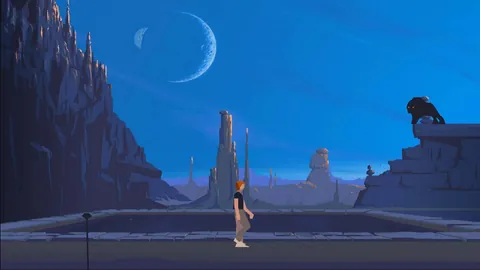
Visually, this was an utterly exceptional title. Instead of the usual sprites, the game uses vector polygons, so characters and environments are made of shapes that can be smoothly animated and resized. The result feels like a moving comic-book illustration, and despite a very limited color count it manages to convey space, depth, and mood. The animation of the main character is remarkably convincing, and cinematic cuts flow seamlessly into playable sections without any pause. The sound is sparse, often leaving nothing but silence broken by footsteps or a distant roar, which only amplifies the foreignness of the whole world.
Contemporary critics received the game as proof that a video game could tell a mature story without a single word, and its influence is visible throughout the entire line of so-called cinematic platformers, as well as in later games built on atmosphere and wordless storytelling. It's also a title that essentially originated as the work of a single author, which made it a frequently cited example of an auteur game. Today it can be finished within a few hours, and its harsh trial-and-error schooling will put plenty of players off, but its visual power and the boldness of telling a story entirely without dialogue remain extraordinary even decades later. That's exactly why it still appears in surveys of games that pushed the medium forward, and its newer remakes keep arriving on further platforms even after all these years.
Game 8 of 204 for PC / DOS (XT až 486)
The same title elsewhere (4)
Éric Chahi's 1991 original was built for the Amiga and Atari ST, and its vector-based, polygon graphics came remarkably close to film animation for its time. Because it wasn't built from classic pixel sprites, the game translated to other platforms with surprising fidelity. The Amiga and Atari ST versions did have floppy-disk loading pauses between scenes, which the cartridge-based Mega Drive and Super Nintendo ports removed. The sound differed, though: the Amiga used sampled music, while the Mega Drive relied on its FM chip for a rawer tone. The SNES port is generally seen as one of the best-balanced versions.