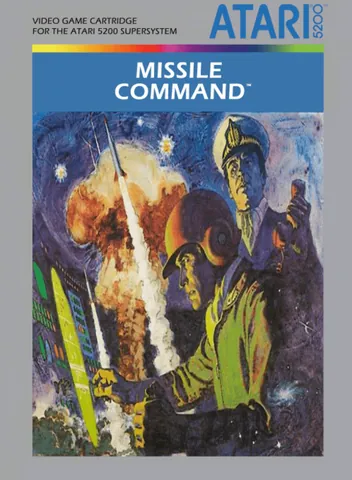
Missile Command
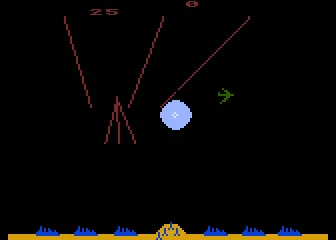
The trails of incoming missiles light up in the night sky, and your only task is to protect six cities from destruction. Missile Command is a game that managed to turn the cold threat of nuclear war into a thrilling and still-working arcade experience, and on the Atari 5200 players could enjoy it at home.
The principle is clean and relentless. From anti-missile bases you launch projectiles that you must time and aim so they explode directly in the path of enemy missiles. These descend from above in ever-denser waves, and you protect your cities and batteries. The key is anticipation and managing limited ammunition, because once you run out of projectiles you are defenseless. The game has no winning ending; sooner or later you will lose, so the point is to hold out as long as possible.
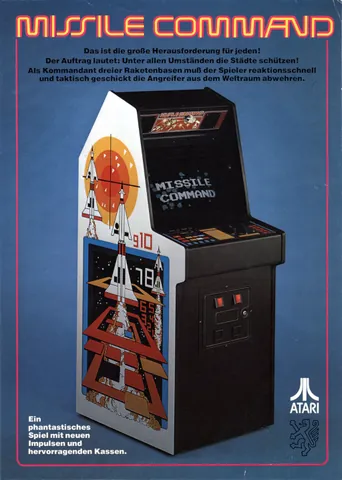
Missile Command was created at the Atari studio, and its arcade version, worked on by Dave Theurer, became one of the defining titles of the era. The game strongly resonated with the period atmosphere of the Cold War and the fear of nuclear conflict, which gave it an unusual emotional depth for a game primarily about reflexes. The port to the Atari 5200 brought this experience to a more powerful home console.
The game's cultural significance transcends its mechanics. Missile Command is often cited as an example of a video game that carried a certain message about the futility of war, because the cities always fall in the end. This undertone made it an unusually reflective title that people still talk about today.
For the contemporary player, Missile Command remains a model of tension and concentration. It is a race against time and your own nerves that forces you to make decisions in fractions of a second and watch the sky with growing anxiety.
Why play: Missile Command is a timeless showcase of thrilling arcade design with a surprisingly strong subtext, where you defend your screens against inevitable destruction.
Game 4 of 41 for Atari 5200
The same title elsewhere (3)
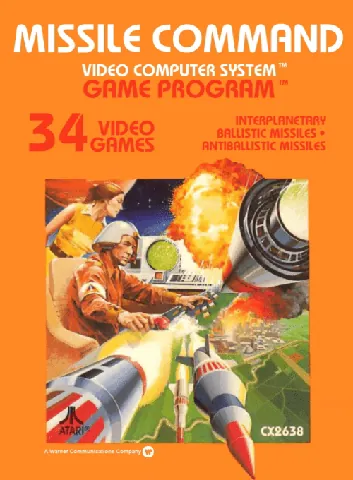
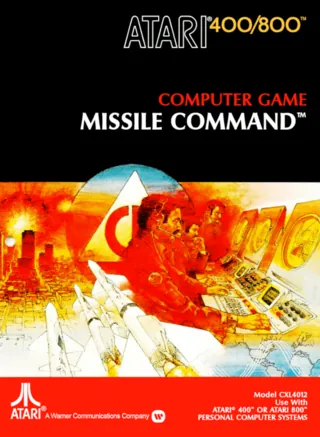
The 1980 arcade original was controlled with a precise trackball that let players sweep and fine-aim across the whole screen in an instant — which is why it's still regarded as the smoothest and best-looking version. The Atari 2600 port had to replace the trackball with a joystick, making aiming noticeably slower and coarser, and the graphics lost color and detail due to the console's weaker hardware. The Atari 5200, on the other hand, offered an analog controller whose range came much closer to the trackball, so its controls felt far closer to the arcade original than the 2600's did, and many players rank it among the best home ports ever, even though its colors and smoothness still fall short of the arcade.