Missile Command
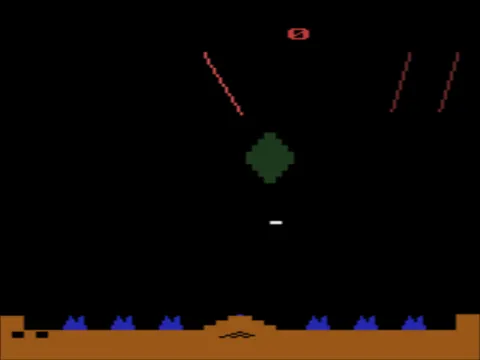
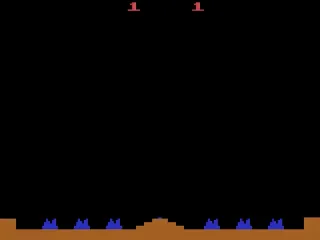
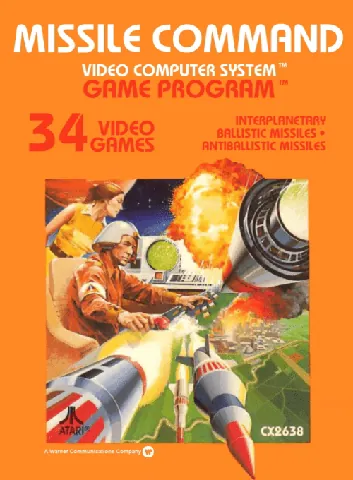
Few games captured the anxiety of their era as perfectly as Missile Command. It was created in 1980, at the height of the Cold War, and its premise was chillingly simple: a rain of nuclear missiles is descending on your cities and your only task is to keep them from landing. No wonder Atari's arcade machine became an instant cultural phenomenon.
Unlike most shooters of the time, here you don't aim at the enemy directly — instead you control a crosshair and fire counter-missiles whose explosions you must time so that they destroy the incoming missiles while still in the air. The game demands foresight, a cool head and the ability to split your attention among several threats at once. Ammunition is limited and the cities you protect gradually dwindle.
The home port on the Atari 2600 from 1981 had to give up the precision of the arcade trackball, yet it retained the tension and strategic depth of the original. It was among the very successful conversions and helped define the fortress-defense genre long before it became a category of its own.
The game's cultural significance goes beyond gameplay itself. Missile Command was a direct reflection of the fear of nuclear apocalypse, and its relentless ending — the game never ends in victory, only in delaying the inevitable — makes it one of the first titles with a consciously fatalistic tone. The player cannot win, only survive a little longer.
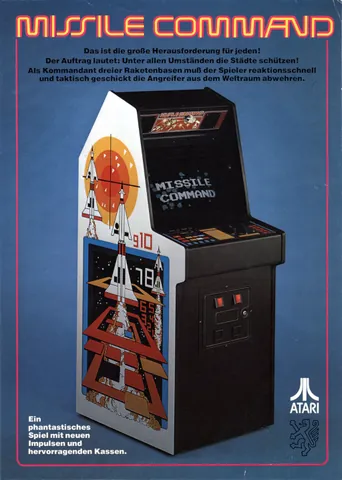
Legendary too is the arcade machine's very design and its influence on pop culture; the game appeared in books about media history as an example of how video games can mirror social moods. To this day it counts as one of the most important games of the golden age of arcades.
Why play: A strategic shooter with a chilling subtext, where you play not for victory but for time — timeless tension that forces you to think under pressure.
Game 14 of 69 for Atari 2600
The same title elsewhere (3)
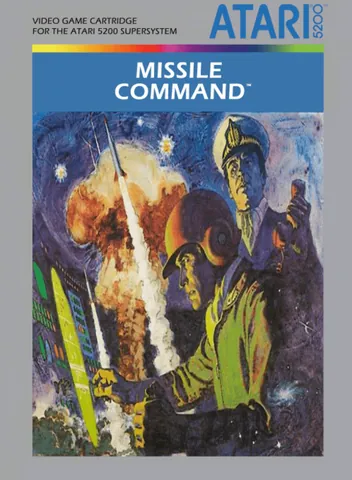
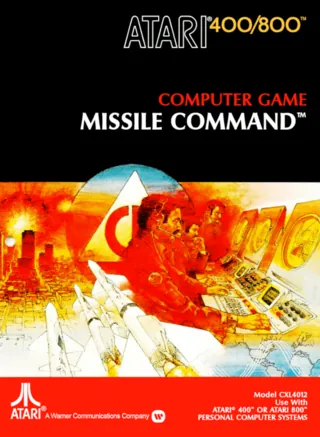
The 1980 arcade original was controlled with a precise trackball that let players sweep and fine-aim across the whole screen in an instant — which is why it's still regarded as the smoothest and best-looking version. The Atari 2600 port had to replace the trackball with a joystick, making aiming noticeably slower and coarser, and the graphics lost color and detail due to the console's weaker hardware. The Atari 5200, on the other hand, offered an analog controller whose range came much closer to the trackball, so its controls felt far closer to the arcade original than the 2600's did, and many players rank it among the best home ports ever, even though its colors and smoothness still fall short of the arcade.