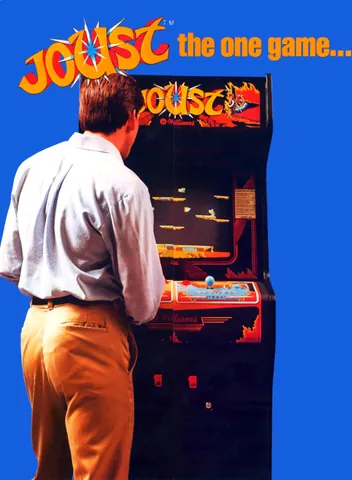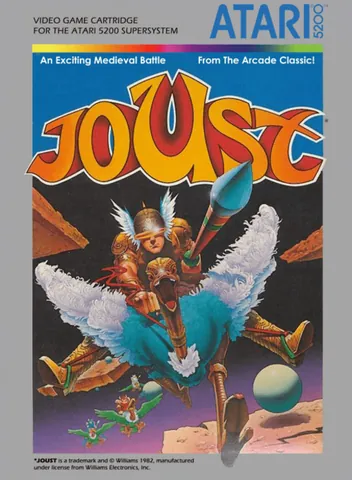
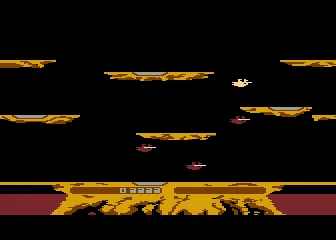
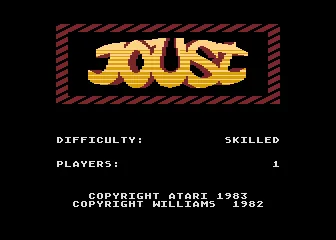
You hover on an ostrich, your lance thrust forward, and below you only an abyss and flocks of enemies on storks. A few seconds later, the arena decides who stays in the air and who plunges down. Joust is one of those titles that you master within a moment and then can't put down.
The original arcade Joust from the Williams Electronics workshop, from 1982, was designed by Bill Pfutzenreuter together with the team around John Newcomer and became one of the legends of the golden era of arcades. The port for the Atari 5200 brought to the home console the essential thing: a fight for altitude superiority, in which the player on a flying ostrich collides with opponents on storks. Whoever is higher at the moment of the clash wins; the loser turns into an egg, which must be collected before a new opponent hatches from it.
The control mechanic is ingeniously simple and at the same time demanding to master. The flapping of wings is controlled by repeatedly pressing a button, so keeping the ostrich at the right height requires feel and rhythm. Joust was also famous as one of the first arcade machines to offer cooperative play for two players simultaneously, which opened up space both for cooperation and for mutual treacherous betrayals.
The Atari 5200 was a console that tried to bring arcade experiences into living rooms, and Joust was an ideal flagship for this ambition. The console's characteristic analog stick did divide players into two camps, but the game itself benefited from a simplicity that made it work on various hardware.
Joust earned a permanent place in the history of game design thanks to an original concept that resembled nothing else on the market. Its influence is felt to this day, and the game has seen a number of re-releases in retro compilations.
Why play: For the unmistakable fight in the air, which you learn to control in a second but take hours to master.
Game 11 of 41 for Atari 5200
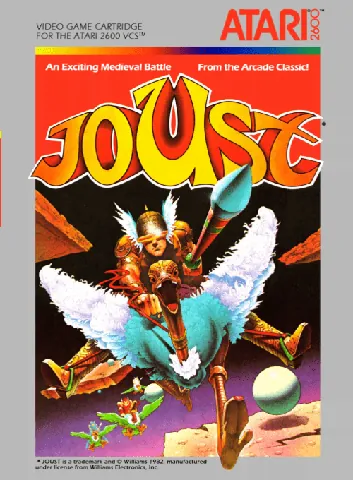
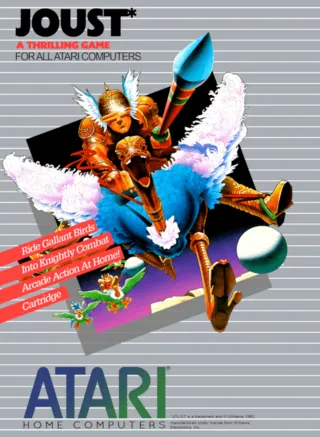
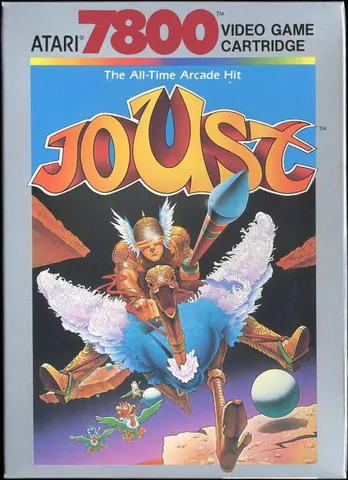
The same title elsewhere (4)
The arcade machine offered smooth animation of the flying ostriches and buzzards along with a vivid color palette that home consoles of the era tried to match with mixed success. The weaker Atari 2600 hardware forced blockier graphics, a more limited color range and simpler sound, which slowed the game down and drained some atmosphere compared to the arcade cabinet. The Atari 5200 ran on a more powerful chipset than the 2600, so its version offered smoother flight and more colorful surroundings closer to the arcade original. Anyone wanting Joust at its best should go for the arcade version, while those after a solid early-1980s home experience will prefer the Atari 5200 over the older 2600.