Ms. Pac-Man
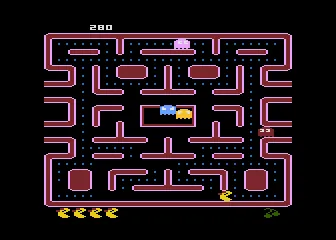
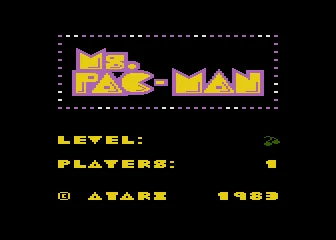
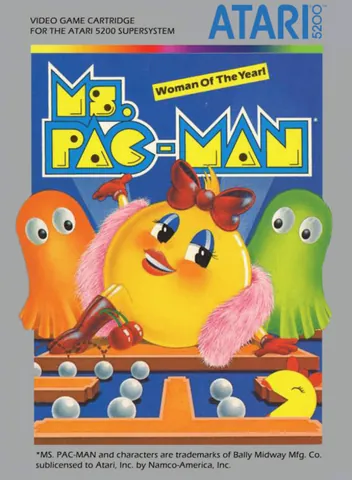
A yellow heroine with a bow who flees the maze from a foursome of colorful ghosts and swallows dots and fruit — Ms. Pac-Man took the phenomenal success of its predecessor and improved on it in almost every respect. The version for the Atari 5200 brought home one of the best and most beloved arcade games of all time.
Compared to the original Pac-Man, Ms. Pac-Man added several fundamental improvements: it offered more different mazes, moving fruit bonuses that roamed across the playing field, and more sophisticated ghost behavior, thanks to which the game became less predictable and more exciting. These changes, in the eyes of many players, made it a better title than the original — brisker, more varied, and fairer in its randomness. The basic principle remained: clear out the maze, avoid the ghosts, and after eating the energizer, hunt them down instead.
The development story of Ms. Pac-Man is legendary in itself. The game was built on the foundations of the original Pac-Man from the Japanese company Namco and was brought into official form by an American publisher associated with the Midway brand. It became one of the commercially most successful arcade machines ever made in North America.
The cultural significance of Ms. Pac-Man is enormous. It was one of the first iconic female game characters, and its likeness penetrated deep into pop culture. Together with the original Pac-Man it defined the era when video games became a mass phenomenon, and its popularity endures in countless re-releases and compilations.
The Atari 5200, as the successor to the Atari 2600, offered hardware capable of more faithful ports of popular arcade games. Ms. Pac-Man was among the titles for which players bought the console. Today it is an immortal classic that proves how timeless a perfectly tuned game design can be.
Why play: Ms. Pac-Man is an improvement on one of the most famous games in history — more varied mazes, smarter ghosts, and timeless fun that anyone dares to take on.
Game 10 of 41 for Atari 5200
The same title elsewhere (3)
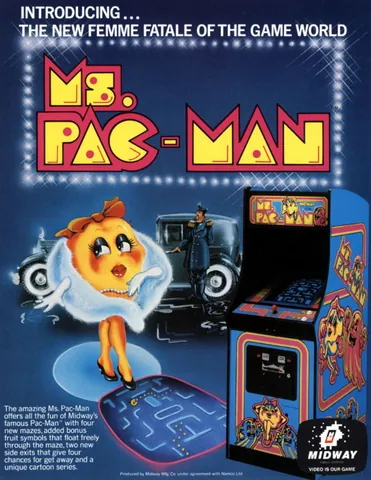
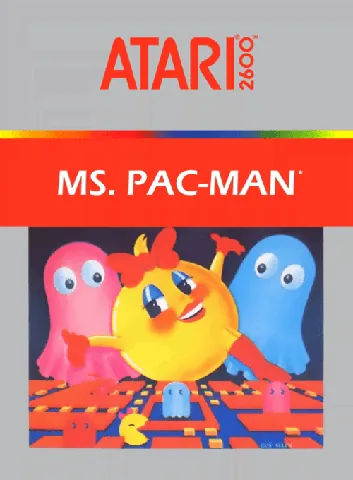
The arcade original offers four distinct mazes, a richer palette and smoothly animated ghosts, which is why it's often called the most complete version of the game. The Atari 2600 port counts among that machine's surprisingly good conversions — unlike the infamously botched Pac-Man port, developers here managed to preserve the gameplay and pace despite blockier graphics and a limited color range. The Atari 5200 had more powerful hardware than the 2600, so its version delivered smoother ghost movement and colors closer to the arcade look, placing it among the best home conversions of its time. Anyone wanting the experience closest to the original should reach for the arcade version; anyone after a solid early-1980s home release will appreciate the Atari 5200.