Joust
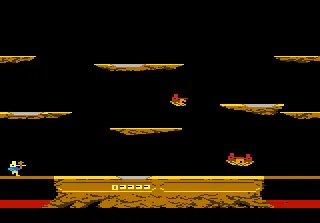
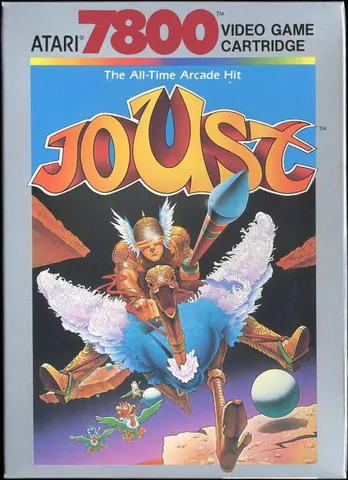
Two enormous flying bird mounts, lance-bearing riders, and an endless sky where only one thing decides it all: who is higher. Joust is one of those ideas that are so simple and yet so original that they still work today - and on the Atari 7800, players got a version that did the arcade original justice.
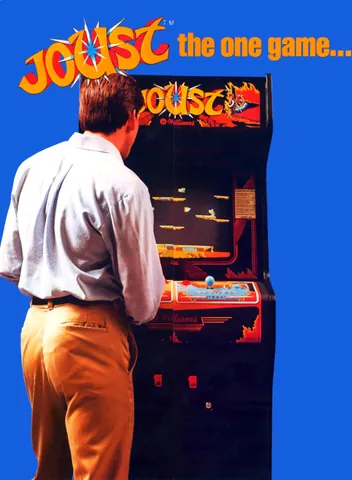
The original Joust arcade machine was created by Williams Electronics in 1982, with John Newcomer behind the design. The game put the player on the back of an ostrich (the second player got a stork) and sent them into duels with enemies riding buzzards. The principle of the clash is brilliantly simple: whoever has the higher-positioned lance at the moment of contact wins, and the opponent turns into an egg, which must be collected before a new adversary hatches from it.
Control consists of flapping wings - repeatedly tapping the button keeps you in the air, and fighting against gravity is a challenge in itself. Added to this is a brilliant cooperative-competitive dimension for two players: you can cooperate, but nothing stops you from knocking your buddy down, and so an endless number of treacherously friendly skirmishes arose.
The Atari 7800 version was released among the console's launch and early-availability titles and profited from its more powerful hardware compared to the older 2600. Smooth movement and fidelity to the arcade original made it one of the showcase games with which the 7800 demonstrated why it was meant to be a worthy successor.
Joust wrote itself into history as one of the first machines with cooperative two-player gameplay, and its bird duels became iconic. The game saw many ports and a later sequel, and to this day it remains among the most frequently cited classics of the golden age of arcade machines.
Why play: One of the most original arcade ideas ever, whose duels on the backs of flying birds are just as much fun in a pair today as they were forty years ago.
Game 4 of 37 for Atari 7800
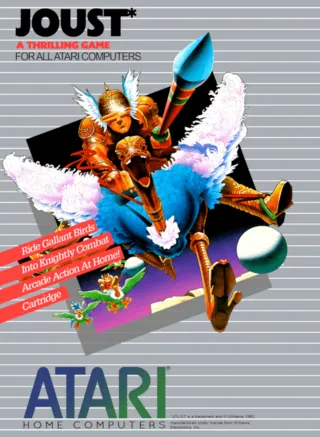
The same title elsewhere (4)
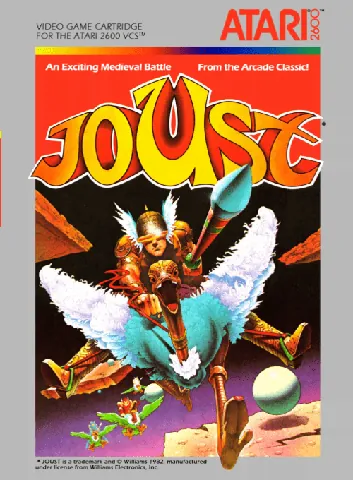
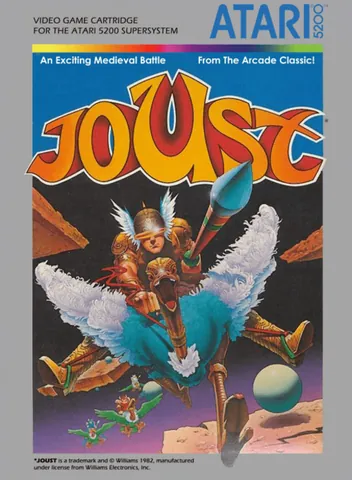
The arcade machine offered smooth animation of the flying ostriches and buzzards along with a vivid color palette that home consoles of the era tried to match with mixed success. The weaker Atari 2600 hardware forced blockier graphics, a more limited color range and simpler sound, which slowed the game down and drained some atmosphere compared to the arcade cabinet. The Atari 5200 ran on a more powerful chipset than the 2600, so its version offered smoother flight and more colorful surroundings closer to the arcade original. Anyone wanting Joust at its best should go for the arcade version, while those after a solid early-1980s home experience will prefer the Atari 5200 over the older 2600.