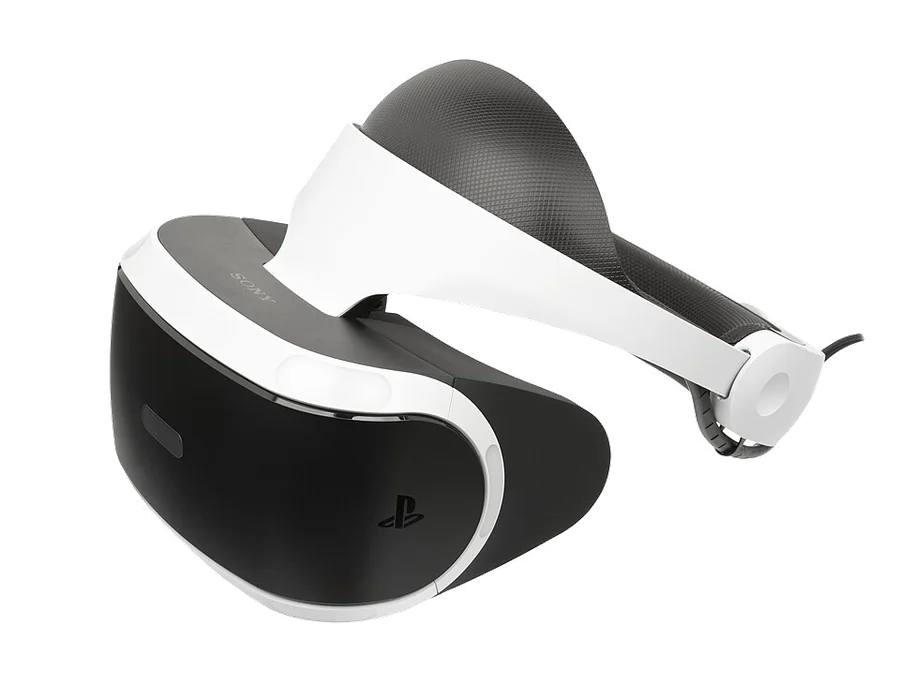
 Sony · 2016
Virtual reality
PlayStation VR
History & context
When Sony launched the PlayStation VR headset in October 2016, it was a bet that virtual reality didn't have to be the domain of expensive gaming PCs. While the competing Oculus Rift and HTC Vive required powerful PCs costing tens of thousands of crowns, PSVR simply plugged into the already-existing PlayStation 4, a console owned by tens of millions of households. It was a move that made Sony the clear leader in consumer virtual reality for several years.
The project ran under the internal codename "Project Morpheus," and Sony first showed it publicly two years earlier, at a developer conference. Unlike PC headsets, this wasn't purely about graphical horsepower — the goal was to find a reasonable compromise between price, comfort, and what the eight-core Jaguar processor and the PS4's graphics chip could actually render in real time for both eyes at once. The result was a headset that couldn't technically match the priciest PC solutions, but was affordable and, crucially, compatible with a console people already owned.
PSVR sold roughly five million units, making it by far the most widespread VR headset in the world for a long time — not thanks to the best technology, but thanks to a smart business strategy tied to the PS4's success. For an entire generation of players, it was their first real contact with virtual reality at home, not at a trade show booth.
Technology: picture and sound
At the heart of the headset was an OLED display with a resolution of 1920×1080, split between both eyes — each eye effectively got a bit less than full HD. The panel supported a refresh rate of up to 120 Hz, which helped dampen the sense of blur during fast head movements and reduced so-called "VR sickness," the nausea caused by a mismatch between what the eyes see and what the inner ear feels.
A crucial part of the package was the external Processor Unit, a box the player set up next to the console. It handled the video conversion for the so-called "social screen" — the ability to also project the game onto the TV for others in the room — and provided the headset's spatial audio. Without this unit, the PS4 alone couldn't have driven the headset while also correctly rendering the image for everyone else in the room.
Motion tracking and controllers
The headset's position in space was tracked by the external PlayStation Camera, the same camera the PS4 used for other purposes too. The camera tracked glowing points — on the headset itself this was a prominent arc fitted with LEDs, and the PS Move controllers and the regular DualShock 4 worked on a similar principle. The solution was cheap and required no additional sensors around the room, but it had a downside too: sensitivity to ambient lighting and a loss of accuracy if the player turned their back to the camera or the LED points blocked each other.
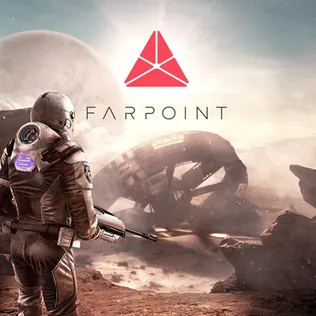
For the full VR experience, a pair of PS Move controllers was recommended, still best remembered today thanks to games like Job Simulator or Statik. Sony later also released a specialized PS VR Aim Controller shaped like a rifle, which significantly improved the experience in shooting titles like Farpoint.
Models and revisions
The original headset (model CUH-ZVR1) used a fairly complicated tangle of cables between the headset, the processor unit, and the console. In 2017 came the CUH-ZVR2 revision, which simplified the wiring and also added HDR support for passthrough to the TV. It was a typical "quiet" mid-generation revision — no new name, just a more practical version of the same concept.
The true successor didn't arrive until the PlayStation VR2 headset for the PlayStation 5, launched in 2023. It was entirely new hardware with no external processor unit and no need for a separate camera — tracking is handled by cameras built directly into the headset, the display has a higher per-eye resolution, and it supports HDR and eye tracking. The original PS VR could only be connected to the PS5 through a special adapter, and only for a limited time, before Sony cut support for the older headset on the new console.
Competition and the context of the era
PSVR entered a fight dominated by the pricier PC headsets Oculus Rift and HTC Vive, and a bit later by the cheaper but computationally weaker Samsung Gear VR, built around mobile phones. Sony chose the middle path: a better experience than mobile VR, but without the need to buy a gaming PC costing tens of thousands of crowns. That accessibility, combined with the PS4's enormous installed base, was the key to PSVR becoming the most successful VR headset of its era.
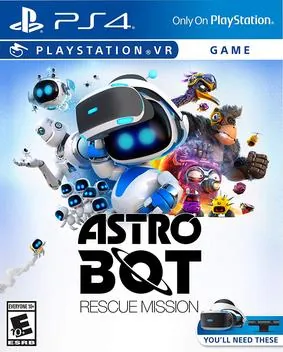
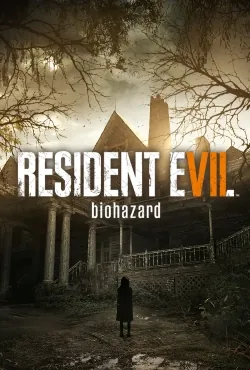
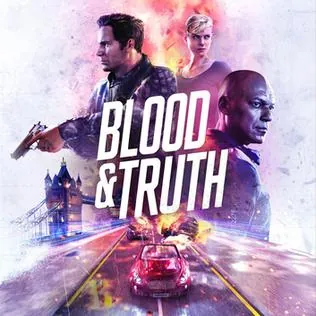
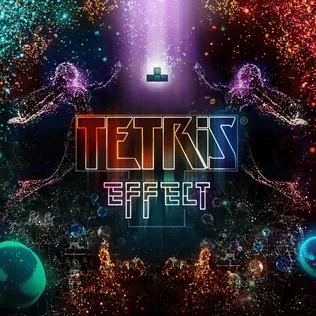
The game library eventually reached several hundred titles, ranging from short tech demos to full-fledged games. PSVR is most often remembered for Astro Bot Rescue Mission, still frequently called the best VR platformer ever made, for Resident Evil 7, which could be completed entirely in the headset, for the rhythm shooter Beat Saber, the unconventional Tetris Effect, and the action title Blood & Truth. The combination of well-known franchises with original VR concepts showed that virtual reality didn't have to be just a technological curiosity, but could be a home for full-fledged games.
The scene today
Emulating the headset itself makes no sense — PSVR is purely a peripheral dependent on the PS4's processing power and on its own hardware with a display and sensors; no software can replace that. Anyone wanting to experience it needs the original combination of console, camera, and headset, or alternatively the newer PS VR2 on PlayStation 5 for the successor generation of titles.
The legal path to games remains the PlayStation Store, where headset owners will find most of the titles mentioned, if they didn't manage to buy them earlier. The emulation scene and projects like Batocera focus on classic flat-screen consoles, so eighth-generation VR peripherals essentially don't appear in them. PSVR thus remains more of a closed chapter tied to specific hardware than a platform you can approach today through a workaround — which, at the same time, makes it an interesting collector's item for fans of console gaming history.
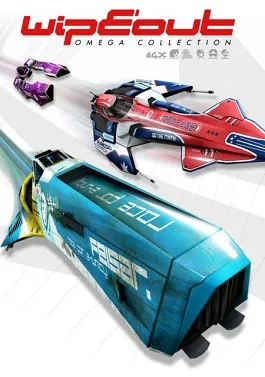
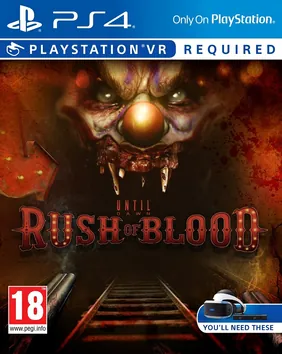
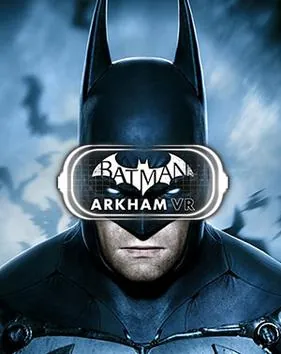
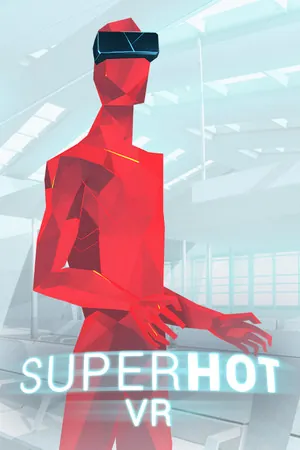
Games on this platform (28)








No game in this genre.