 SNK · 1999
Handhelds
Neo Geo Pocket Color
History & context
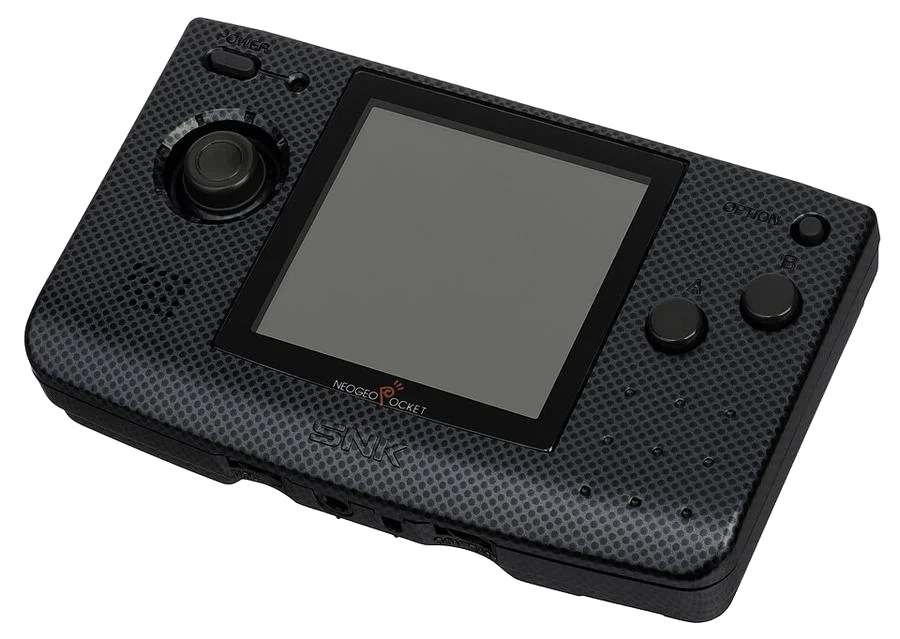
The Neo Geo Pocket Color arrived in 1999 as SNK's last big attempt to reach players directly in their pocket. The company had legendary arcade cabinets and the home Neo Geo AES behind it, but it was a newcomer in handhelds — the previous monochrome Neo Geo Pocket from 1998 practically never made it beyond Japan. The color version was meant to be the real weapon: a faster 16-bit processor, a color display, and a library built on what SNK did best — fighting games.
The fight, however, was uneven from the start. On the other side stood Nintendo with the Game Boy Color, which had a huge installed base, Pokémon, and distribution in every supermarket; on the Japanese market the situation was further complicated by Bandai's WonderSwan. SNK entered with hardware that was in many respects better, but with marketing that barely reached players at all.
That's precisely why it's such a strange chapter today. Almost no one bought it back then, yet everyone who ever held one remembers it fondly — mainly because of the controls. The microswitch joystick with its distinctive click is still considered by many collectors to be the best controller a handheld console ever received. It wasn't a mushy rubber D-pad but a miniature arcade stick that rewarded every movement under your thumb with tangible feedback. In fighting games, that made an enormous difference.
Tech: graphics and sound
Inside ticks a 16-bit Toshiba TLCS-900/H processor running at roughly 6 MHz, supported by an auxiliary Z80 that handles sound exclusively. On paper that's a significantly more capable setup than the 8-bit Game Boy Color — and it shows, both in the smoothness of the animations and in how many objects the console can keep on screen at once.
The display has a resolution of 160 × 152 dots and draws from a palette of 4,096 colors; around 146 are typically shown at once. The panel is reflective and unlit, so it needs good ambient light — by far the device's biggest weakness, and exactly the point where modders most often step in today. The upside of that same design, however, is excellent battery life: two AA batteries last for dozens of hours, considerably more than backlit color competitors of the era.
Sound comes from a chip in the T6W28 family, related to proven PSG generators — three tone channels plus a noise channel, with stereo output to headphones. It has a characteristically sharp, purely chip-tune sound that suits the arcade nature of the library. The console also has a built-in real-time clock and calendar; on first power-up it asks the player for a name, date of birth, and favorite color.
Connectivity and peripherals
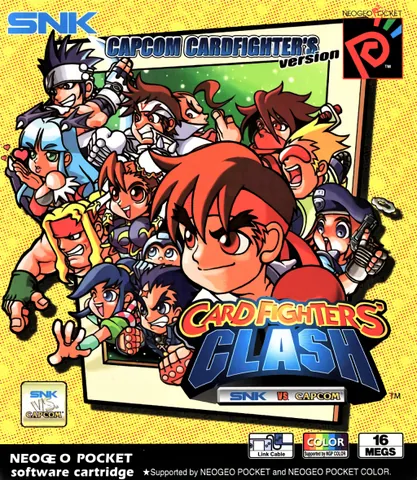
Two units could be connected via a link cable for two-player battles — for fighting games and for SNK's card game SNK vs. Capcom: Card Fighters' Clash, this was the platform's main social feature. The most interesting peripheral, though, was the Dreamcast link cable. SNK and Sega grew close enough at the time that the handheld could communicate with the home Dreamcast and transfer data between select titles — the practical reach was small, but for its era it was a bold move.
Cartridges are small, region-free, and save progress directly to their own memory, so there's no issue with dying save batteries as with some period games elsewhere. The color console is also fully compatible with games made for the original monochrome Neo Geo Pocket.
Models and revisions
Collectors distinguish two generations: the original Neo Geo Pocket (1998, monochrome, practically Japan-only) and the Neo Geo Pocket Color (1999). The color version was released in a single hardware form, but in a wide range of case colors — from silver and charcoal through various shades of blue to translucent "crystal" variants. In Japan several limited editions were added on top, which today rank among the most expensive pieces.
Production ended as early as 2001. SNK ran into serious financial trouble, and distribution in Europe and the US had already been scaled back before that — which is why Western titles are also harder to find than Japanese ones.
Clones and variants
Hardware clones practically don't exist; the platform was too niche for anyone to bother the way they did with famiclones or Game Boy knockoffs. The console officially never really reached Czechoslovakia/Czechia, and anyone who owned one back then got it through import — for most local players it's a console discovered only in retrospect, through emulation.
The more interesting "variant" today is the official re-release. Since 2020, SNK has been releasing individual titles as well as compiled collections — Neo Geo Pocket Color Selection — on Nintendo Switch and PC, so the classics can now be obtained completely legally and without hunting through swap meets.
Today's scene
Emulation is very well handled. The standard is the Beetle NeoPop core in RetroArch, which handles the vast majority of the library without issues; on weaker devices, the more efficient RACE core is used instead. The ngpc system is included in Batocera, ArkOS, and other distributions for handheld emulation consoles — and that's exactly where it makes the most sense, since the format of its games is ideal for short play sessions.
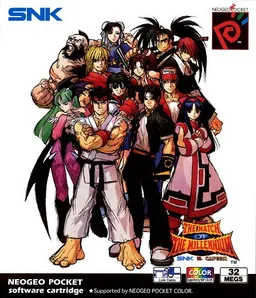
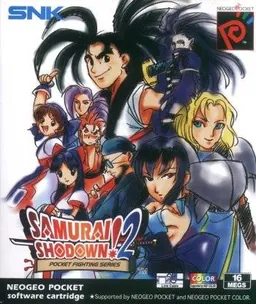
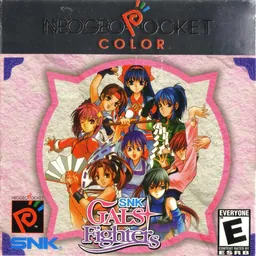
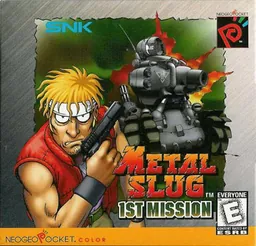
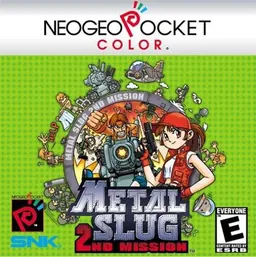
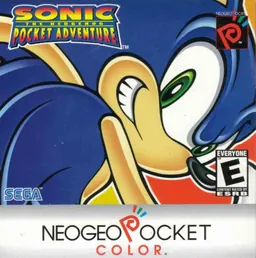
From the library, the titles most recommended today are SNK vs. Capcom: Match of the Millennium, which many players consider the best fighting game ever released on a handheld console, along with The King of Fighters R-2, Samurai Shodown! 2, Gals' Fighters, and both Metal Slug entries. Outside of fighting games, Sonic the Hedgehog Pocket Adventure stands out — a surprisingly well-made version of the blue hedgehog by SNK, technically based on the Mega Drive Sonic. And then there's Card Fighters' Clash, a card-based RPG with a cult following that has lasted to this day.
It thus remains a textbook example of a console that lost the market but won its reputation. Anyone who picks it up today usually understands why within a minute. All it takes is a single click of the joystick.
Games on this platform (23)
No game in this genre.