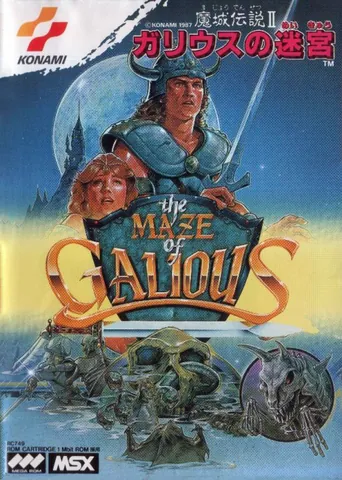
The Maze of Galious
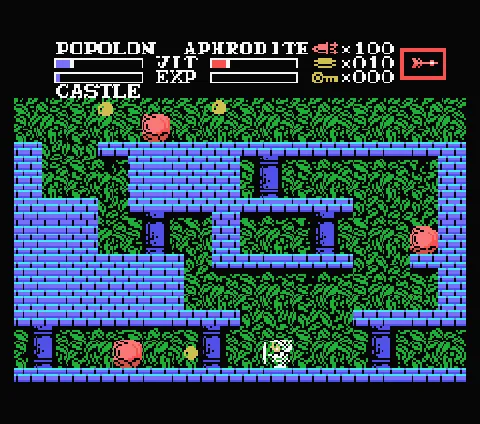
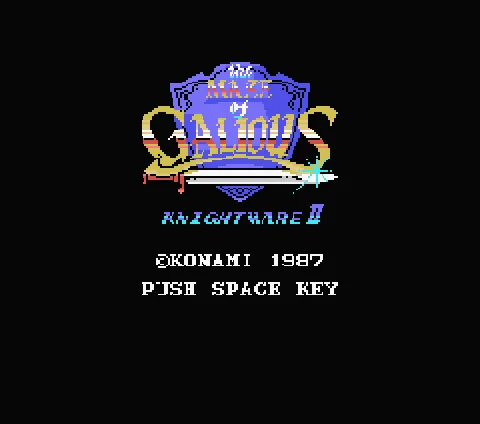
There are games that were so distinctly ahead of their time that the world only caught up decades later — and The Maze of Galious is exactly such a case. Long before anyone uttered the word „metroidvania“, Konami in 1987 built on the MSX computers a sprawling, interconnected castle full of secret passages, keys and puzzles that you have to gnaw through with your own head.
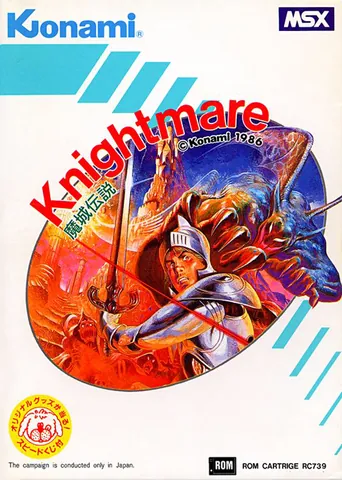
The game is part of the Knightmare series and follows it as its second installment, though it jumps into a completely different genre. Instead of straightforward action you get a world that gradually unlocks: you explore ten „worlds“ connected by a central castle, collecting items and abilities that open up previously inaccessible places. You control two characters at once — the knight Popolon and his wife Aphrodite — each with different traits (Aphrodite, for instance, swims better), and the game forces you to switch between them according to the situation.
For its time it was a remarkably rich design. You will find hidden rooms revealed with the help of passwords and items, a boss at the end of each world, and unexpected moments when you must enter a secret code obtained elsewhere in the game. This layer of discovery and logical reasoning makes Galious an experience that rewards curiosity and patience — while also being able to be thoroughly uncompromising, as retro titles tend to be.
The development context is key here: the MSX was Konami's home platform in Japan, and the studio experimented on it with ideas for which there was no room in the arcades. Maze of Galious is a perfect showcase of that creative freedom — an ambitious, thoughtful title that would have been hard to find elsewhere at the time. No wonder it earned a cult reputation and is still cited as one of the forerunners of the whole subgenre of exploratory action-adventures.
The community's love for this game is so strong that a modern fan remake was created, making the work accessible to new generations in today's graphics and with more comfortable controls. That in itself says something about how timeless the underlying design was — if something is still worth rebuilding decades later, it must have been exceptional from the start.
Why play it: It is one of the grandfathers of the metroidvania — an exploratory adventure full of secrets and puzzles that was ahead of its time and can still absorb you today.
Game 8 of 29 for MSX / MSX2