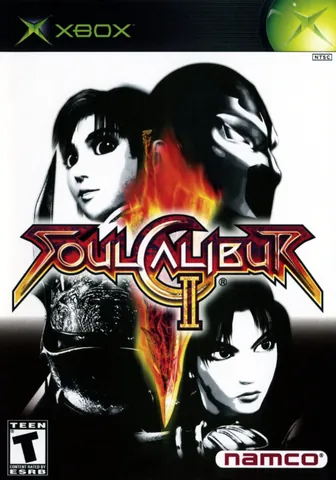
Soulcalibur II
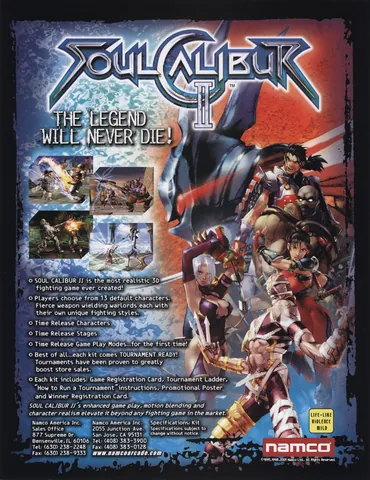
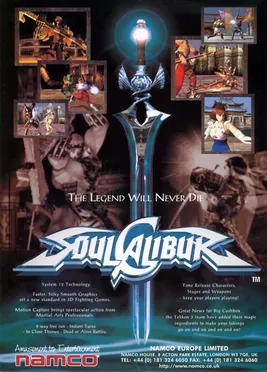
Soulcalibur II, developed by Project Soul, an internal Namco team, is regarded as the pinnacle of weapon-based fighting games, and its 2003 console versions rank among the genre's best-selling titles. The game builds on an eight-directional movement system that, unlike fighting games confined to a fixed lane, lets you sidestep and use spatial tactics, while characters fight with swords, halberds, nunchaku, or twin blades. Each weapon has a different reach and speed, so combat is largely a game of maintaining the right distance and punishing your opponent's mistakes.
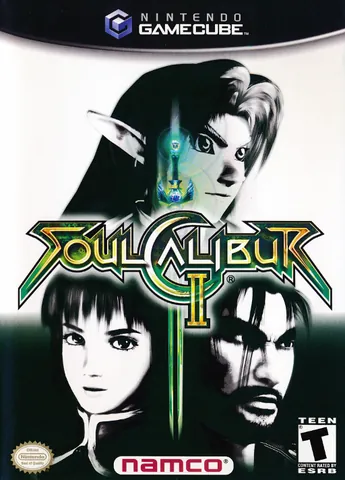
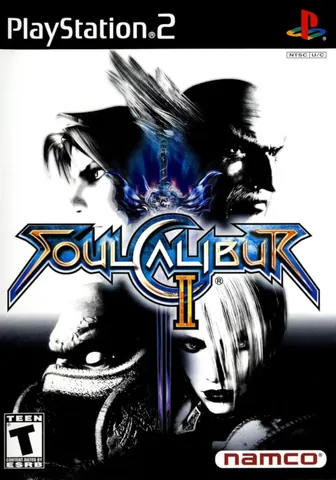
The extensive Weapon Master story mode ties fights together with gradual weapon collecting and ability upgrades, offering dozens of hours of content beyond mere duels, including unusual match conditions like a poisonous floor or draining health. The roster includes icons like Mitsurugi, Ivy, and Nightmare, but the real draw was the platform-exclusive guest characters - Xbox owners got Todd McFarlane's comic-book character Spawn, while GameCube had Link and PlayStation 2 had Heihachi.
Graphical precision, elaborate animation, and a well-balanced combat system that rewards both newcomers and players who drill combos to muscle memory made it a favorite of the tournament scene. A beginner needs just a few buttons to make a match look impressive, while an experienced player works with attack tells, combo interruptions, and high or low strikes that the opponent must block correctly. The soundtrack and elaborate arenas with edges you can knock opponents out of added another tactical layer to the fights and helped cement the game's reputation as one of the most complete experiences the weapon-fighting genre has offered. Soulcalibur II still ranks among the most-cited entries in the series, and its influence is visible in later installments that strive to live up to its reputation as the most balanced and accessible chapter of the whole franchise.
Game 42 of 176 for Microsoft Xbox
The same title elsewhere (3)
Gameplay-wise the three 2003 versions are nearly identical, but they differ in their guest fighters and technical polish. GameCube got an exclusive appearance by Link from The Legend of Zelda, complete with his bow and boomerang; Xbox added Spawn from Todd McFarlane's comic; and PlayStation 2 featured Heihachi from Tekken, making each version a distinct collector's pick. Technically, Xbox benefited from more powerful hardware, generally offering the sharpest textures and steadiest frame rate, while the GameCube version is a touch softer in detail but remains a great choice thanks to its excellent analog controller. Most players today choose whichever version has their favorite guest character.