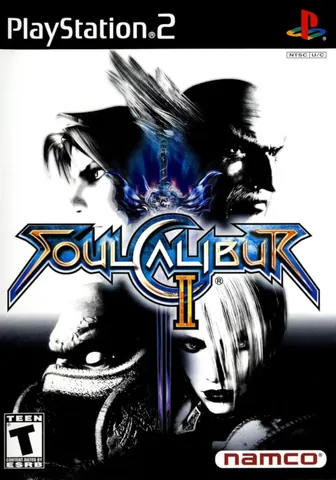
Soulcalibur II
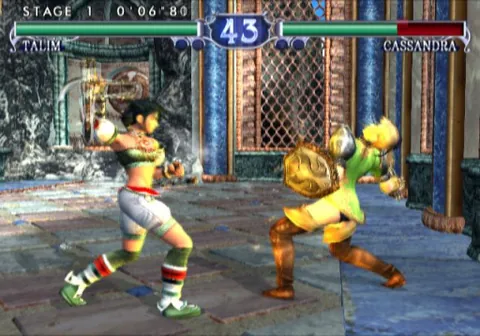
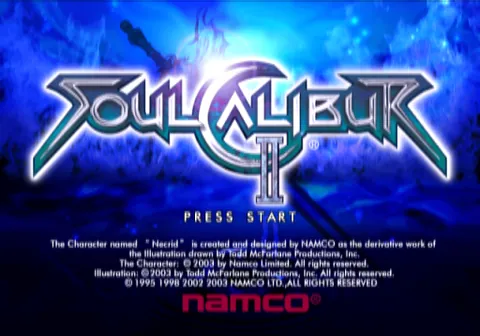
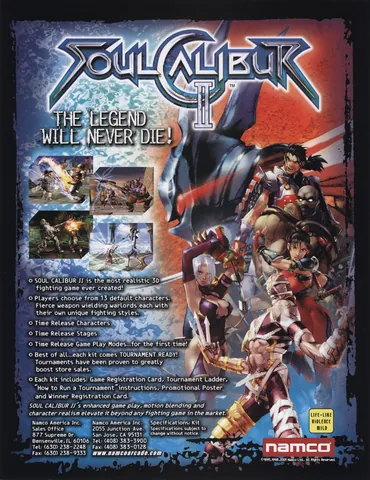
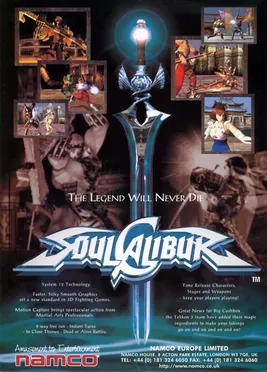
Soulcalibur II from 2003 by Namco ranks among the most acclaimed weapon-based fighting games ever, thanks to its extraordinarily fluid eight-directional combat system in which characters fight with swords, spears, axes, or whips, and combat isn't confined to a classic 2D plane like in Street Fighter but uses the full space of the arena for dodges and lateral maneuvers. Tactical depth is further enhanced by ring-outs and the guard impact defensive technique, which lets a precisely timed block deflect an attack and immediately transition into a counterattack. The graphics, with detailed weapon and costume textures and smooth animations, were among the most technically impressive on PS2 at the time of release.
Crucial to its success was platform-exclusive guest fighters: while the GameCube version offered Link and the Xbox version featured Spawn, the PlayStation 2 version exclusively included Heihachi Mishima from the Tekken series, letting players confront characters from two legendary fighting franchises for the first time. The extensive single-player Weapon Master mode guided players through a story campaign with dozens of weapons and costumes to unlock for each character, giving the game depth beyond two-player duels. A balanced roster rounded out with newcomers like Talim, Cassandra, and Raphael, elegant pacing, and accessibility for both newcomers and veterans made Soulcalibur II one of the most beloved and critically acclaimed fighting games of its era across all three platforms it released on.
A multiplatform release with exclusive guest fighters was an unusual marketing move at the time, still cited today as an example of clever platform differentiation. Thanks to this, Soulcalibur II went down in genre history as a game remembered even by players who otherwise don't follow weapon-based fighters, and as a title the tournament community still returns to years later.
Game 31 of 269 for Sony PlayStation 2
The same title elsewhere (3)
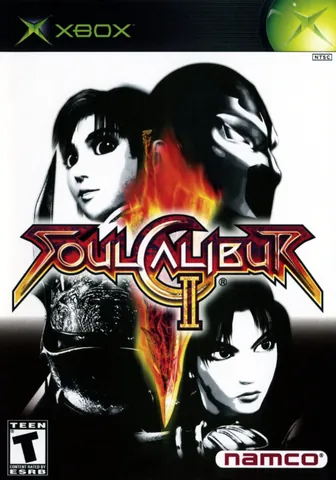
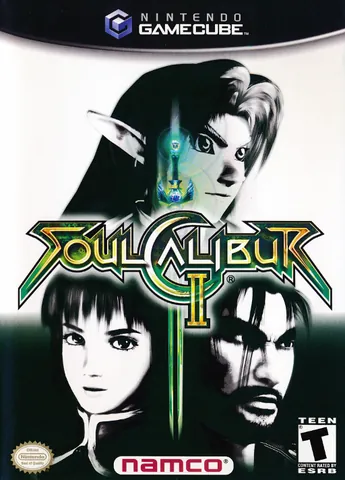
Gameplay-wise the three 2003 versions are nearly identical, but they differ in their guest fighters and technical polish. GameCube got an exclusive appearance by Link from The Legend of Zelda, complete with his bow and boomerang; Xbox added Spawn from Todd McFarlane's comic; and PlayStation 2 featured Heihachi from Tekken, making each version a distinct collector's pick. Technically, Xbox benefited from more powerful hardware, generally offering the sharpest textures and steadiest frame rate, while the GameCube version is a touch softer in detail but remains a great choice thanks to its excellent analog controller. Most players today choose whichever version has their favorite guest character.