Shadow of the Beast
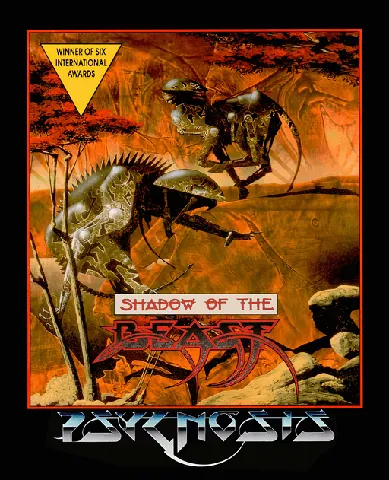
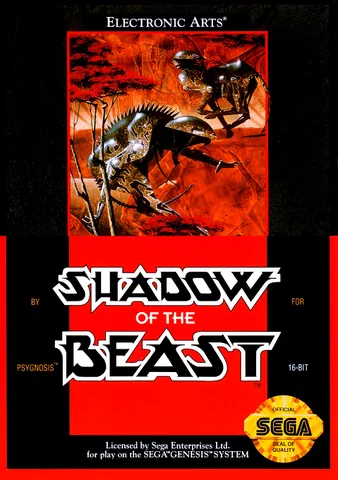
When Shadow of the Beast came out on the Amiga in 1989, people did not believe their own eyes. The game by studio Reflections, released under the Psygnosis label, became a technological showcase for home computers, and its conversion to consoles, including the SEGA Mega Drive, was meant to bring the very same audiovisual orgy into the living room in front of the television.
The gameplay itself is at its core a simple action platformer with elements of exploration. You control the muscular monster Aarbron, once a man, who was transformed by a dark lord into a servant and now returns for revenge. You advance mostly horizontally through fantastical landscapes, beating and kicking enemies and searching for the way onward. The game is famous for its merciless difficulty and for how stingily it hands the player lives.
Where Shadow of the Beast truly shone was its presentation. Multi-layered parallax scrolling created an illusion of depth that few games offered at the time, and every location was artistically unmistakable, from bony trees to underground caves. Equally crucial was David Whittaker's soundtrack, whose atmospheric, melancholic music became one of the most cited in Amiga history.
In development terms, it was a symbol of an era when home computers competed over who could amaze the eye and ear more. Psygnosis, with the owl mark in its logo, was building a reputation as a publisher of visually exceptional games, and Beast helped define this identity. Its success led to two sequels, Shadow of the Beast II and III, and decades later even a modern reboot for the PlayStation 4 in 2016.
The Mega Drive version belongs to the wave of ports that tried to capitalize on the original's fame. For SEGA players it was a chance to taste a legend, even though the versions on various platforms did not reach the same level. Culturally, Shadow of the Beast remains a shorthand for an era when games were talked about mainly through how they looked and sounded.
Why play it: For its unmistakable atmosphere, iconic music, and the feeling that you are playing a piece of history, when a technical show was an attraction in itself.
Game 67 of 151 for SEGA Mega Drive
The same title elsewhere (3)
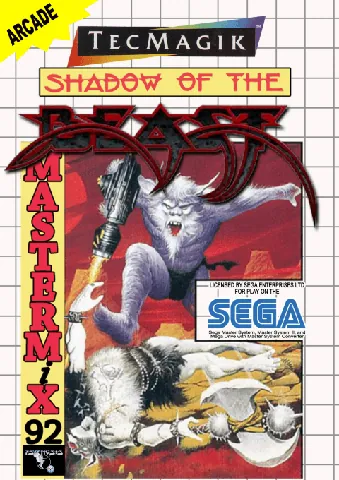
On the Amiga in 1989 the game showed what it could do – smooth multi-layer parallax backgrounds, dozens of colours on screen and David Whittaker's atmospheric soundtrack turned it into a technical showcase, even though gameplay stayed stiff and unforgivingly hard. The Atari ST followed the same concept but its weaker graphics chip meant fewer scrolling layers and rougher colour transitions, leaving the atmosphere flatter. The 8-bit SEGA Master System had to cut the most – palette and background resolution shrank considerably and the parallax was simplified, yet it remained an impressive feat for its time. The SEGA Mega Drive version tried to approach the Amiga original using hardware layers but never quite reached its visual depth. The Amiga remains the best way to experience it today.