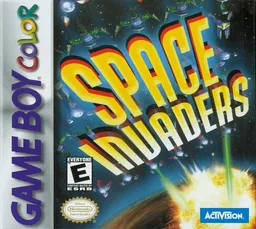
Space Invaders
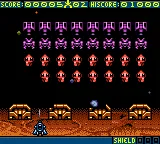
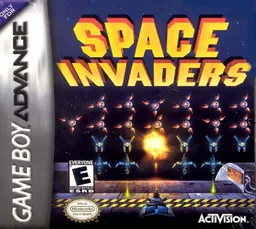
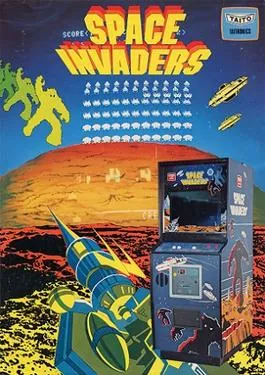
Space Invaders for the Game Boy Color from 1999 is a port of the legendary Taito arcade title from 1978, which gave birth to the entire shoot-'em-up genre and defined many of its rules to this day. The player controls a laser cannon sliding along the bottom edge of the screen, and its sole task is to shoot down the descending formation of alien invaders before they reach it or hit it with their own fire. The fewer enemies remain on screen, the faster they move, so the tension near the end of each wave rises sharply, and the game can still test a player's reflexes even after decades. A few protective bunkers also serve as cover, gradually shot to pieces by fire from both sides, and from time to time a bonus flying ship crosses the screen, awarding valuable extra points if shot down.
The port to the handheld console faithfully preserves the simple controls - side-to-side movement and a single fire button - while adding color graphics that bring the originally black-and-white template to life without disrupting its austere elegance. The classic arcade mode on the GBC was joined by small game variants and a high score table, which moves the game closer to a modern take and gives a reason to return to it even after clearing the first wave. The sound design sticks to the iconic, gradually accelerating stomp of the approaching invaders, one of the most recognizable sounds in video game history.
For GBC owners, it was a pleasant reminder of the entire industry's roots in pocket-sized form, ideal for short gaming sessions on the road or at school. Period reviews mainly praised the accuracy of the port and its nostalgic value, even though it was already a very simple game compared to newer titles at the time. Today, Space Invaders on the GBC works mainly as a historical reminder and a still-functional demonstration of how a minimalist concept managed to lay the foundation for an entire genre of shooters. It was this very title that stood at the beginning of the so-called golden age of arcade machines, and its principles - advancing formations, rising tempo, and the tension of an approaching final wave - reappear in variations in practically every later shmup.
Game 107 of 129 for Game Boy Color
The same title elsewhere (2)
Taito's 1978 arcade original ran on a black-and-white monitor, with color coming only from strips of colored cellophane taped over the screen, plus the iconic four-note bass beat that sped up as the invasion closed in. The home port for Atari 2600 in 1980 had to simplify everything into blockier, fully colored sprites with less detail, yet it became the first officially licensed arcade conversion on a console and famously sold hardware — many bought a 2600 just to play it. In return it offered dozens of game variations (moving shields, invisible invaders, two-player mode) the arcade never had, so today it's worth comparing the stripped-down but addictive home version with the atmosphere of the original cabinet.