Space Invaders (mobile)
Space Invaders is one of the oldest video game icons of all, and its mobile version for Java and Symbian phones carried the legendary concept from the late seventies onto the small display practically unchanged. The player controls a ground cannon at the bottom of the screen and must shoot down descending rows of alien invaders, which move faster and attack more aggressively with each row destroyed. Simple controls — side movement and a single fire button — made the game an ideal candidate for the feature phones of the time, where more complex action titles ran into the limits of the available controls. The player could also take cover behind gradually vanishing bunkers, adding a tactical layer beyond simple aiming and shooting.
Technically it was a very frugal game that got by with a minimum of memory and processing power, letting it run even on older and cheaper devices with limited RAM and CPU. The graphics stayed true to the simple style of the original, and the sounds evoked the characteristic thudding steps of the alien invasion, which sped up and heightened the tension as enemies dwindled. Thanks to the license from Taito, it was an official and easily recognizable product that players downloaded mainly for the nostalgic connection to the arcade original, but also because it was reliable entertainment for a few minutes of waiting anywhere.
In the context of the mobile gaming market of the early 2000s, Space Invaders showed that a decades-old gameplay design could still work on a completely new platform without changing its basic principle. To this day the game serves as a reminder of the power of a pure, well-tuned game idea, and as proof that phones of the era could offer a meaningful arcade experience even without graphical effects or extensive content. For a generation of players who never experienced the arcade cabinets, this port became one of the few real touches of the early history of video games.
Why play it: For players who never experienced arcade cabinets and want a taste of pure, decades-old arcade gameplay — proof that a good idea works even without graphics and extensive content.
Game 61 of 69 for Java a Symbian (telefony před smartphony)
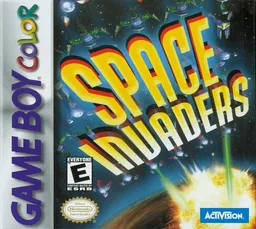
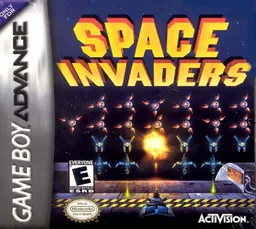
The same title elsewhere (2)
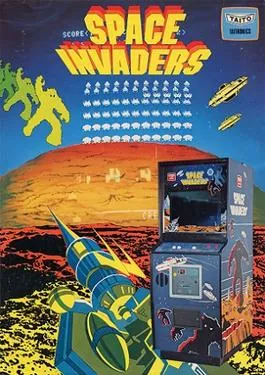
Taito's 1978 arcade original ran on a black-and-white monitor, with color coming only from strips of colored cellophane taped over the screen, plus the iconic four-note bass beat that sped up as the invasion closed in. The home port for Atari 2600 in 1980 had to simplify everything into blockier, fully colored sprites with less detail, yet it became the first officially licensed arcade conversion on a console and famously sold hardware — many bought a 2600 just to play it. In return it offered dozens of game variations (moving shields, invisible invaders, two-player mode) the arcade never had, so today it's worth comparing the stripped-down but addictive home version with the atmosphere of the original cabinet.