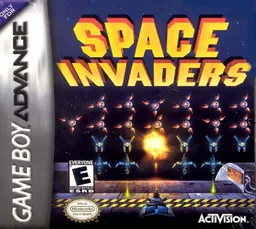
Space Invaders
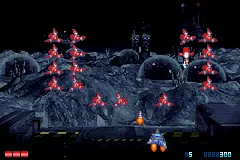
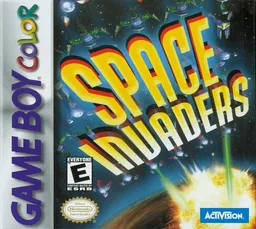
Space Invaders is a port of one of the most influential arcade games in history, released on the Game Boy Advance as an essentially faithful recreation of the 1978 original, supplemented by a handful of modern additions. The core principle stays unchanged – the player controls a cannon moving along the bottom of the screen, picking off descending formations of alien invaders that speed up and drop lower as their numbers dwindle, while an occasional passing UFO offers a points bonus for an accurate hit. The tension comes from a simple but relentlessly escalating pace that grows harder with every new wave.
The GBA version adds bonus modes and minor rule variations to the base game, meant to liven up an otherwise minimalist concept for modern players used to longer sessions and more varied content. The graphics remain deliberately austere and legible, and the music and sound effects draw on the iconic, gradually accelerating thumping that in the original built tension alongside the descending rows of enemies. It's a classic example of how a classic arcade game, even decades later, retains its playability without changing its basic skeleton, merely adapted to a handheld's smaller screen.
Contemporary reactions were measured – reviewers praised its faithfulness to the source and its nostalgic value, while also pointing out that the concept itself is very simple by today's standards and gets exhausted quickly, even though the bonus modes offered at least some additional motivation. Within the GBA library, it was one of several titles making the founding games of the shoot 'em up genre accessible to a new generation of players who may never have encountered the original in an arcade cabinet. Today the game mainly has historical value and works great as a short, undemanding dose of nostalgia between more demanding titles, ideal for quickly switching on the console for a few minutes.
Game 132 of 170 for Game Boy Advance
The same title elsewhere (2)
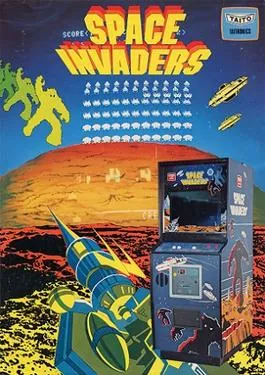
Taito's 1978 arcade original ran on a black-and-white monitor, with color coming only from strips of colored cellophane taped over the screen, plus the iconic four-note bass beat that sped up as the invasion closed in. The home port for Atari 2600 in 1980 had to simplify everything into blockier, fully colored sprites with less detail, yet it became the first officially licensed arcade conversion on a console and famously sold hardware — many bought a 2600 just to play it. In return it offered dozens of game variations (moving shields, invisible invaders, two-player mode) the arcade never had, so today it's worth comparing the stripped-down but addictive home version with the atmosphere of the original cabinet.