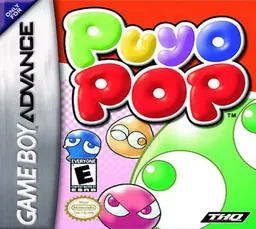
Puyo Pop
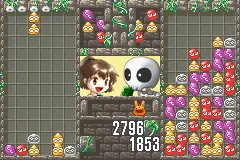
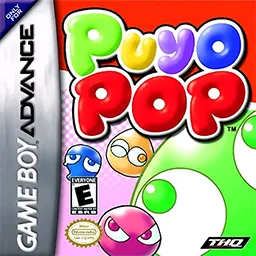
Puyo Pop brought to the Game Boy Advance the Japanese puzzle classic about colorful jelly-like creatures called puyo, which fall in pairs into the playfield and must be arranged so that groups of four or more same-colored pieces form. These then vanish and can trigger a chain reaction, and efficiently setting up and timing such chains against an opponent is the core of the whole competitive experience — the longer and more elaborate a combo a player builds, the more "garbage" drops into the opponent's field, hampering their subsequent moves. Precisely placing each pair of puyo therefore always involves both short-term and long-term planning, since building an efficient combo often requires sacrificing an immediate gain for the sake of a bigger payoff a few moves later.
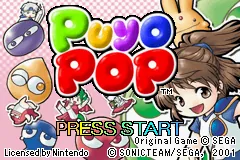
The game relies on a pleasant and clear portable presentation: characters from the Puyo Puyo universe accompany the player through a story mode full of short dialogues and battles of gradually rising difficulty, while cheerful chiptune music and colorful, roundly stylized graphics lend the whole thing a distinctly Japanese, slightly cartoonish flavor. Controls are responsive and react precisely to the quick decision-making this falling-block genre demands, and the link cable allowed for tense live two-player duels. The presentation also benefits from strong, memorable characters who give the otherwise abstract falling-block principle the personality and lightness it needs.
The Puyo Puyo series had a long tradition in Japan well before arriving on the GBA, and among fans of competitive puzzle games it was long a respected rival to Tetris, with its own, deeper chain-combo system. The portable version let players outside Japan and Asia sample this specific style of puzzle even away from home consoles and arcade cabinets, to which it had previously been largely confined. To this day it's mentioned as one of the best-playing and most well-balanced puzzle titles of its generation on any handheld, even compared to later, technically more advanced sequels in the series.
Game 138 of 170 for Game Boy Advance