Solo Flight
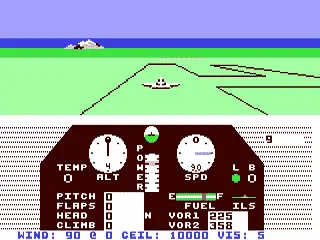
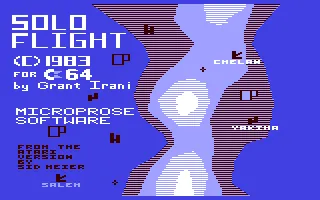
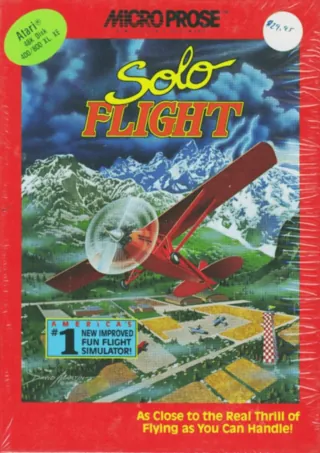
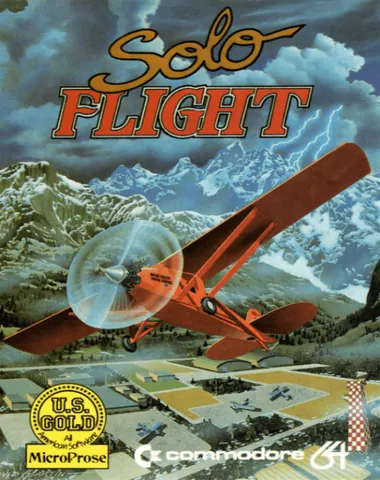
Solo Flight is a civilian flight simulation from studio MicroProse that puts the player in the seat of a pilot of a small sport plane and lets them fly freely over a vast map of the United States. It was released on the Commodore 64 in 1983, and along with other simulators it was among the first titles that tried to replicate genuine aircraft controls on eight-bit computers – with an instrument panel, navigation by radio signals, and the need to monitor altitude, speed, and heading, all without overwhelming the player with dozens of keyboard shortcuts.
The player chooses from several aircraft and plans flights between dozens of airports, while the game simulates weather, visibility, and night flying, which significantly complicates landings and forces the player to rely on instruments rather than the view out the window. Besides free flying, Solo Flight also offers a simpler competitive mode in which the player scores points for safe and precise landings against the clock, which makes the game more accessible to less patient players as well. The graphics are modest – a wireframe horizon and simple airport symbols – but for 1983 it was a reasonably smooth simulation that ran stably on the C64 even during faster maneuvers and more demanding weather conditions.
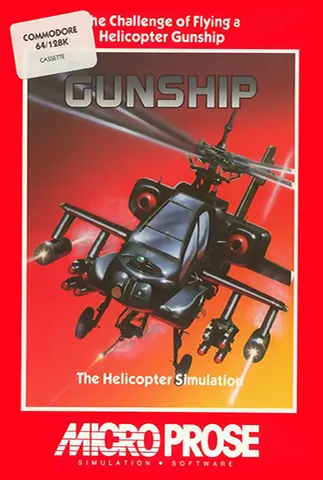
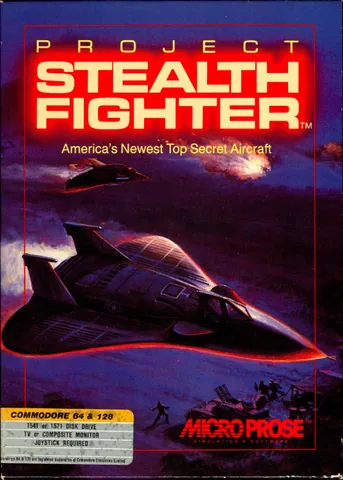
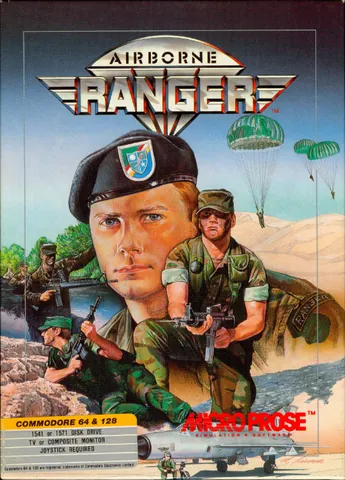
In the mid-eighties, Solo Flight was seen as one of the more accessible flight simulations, since it didn't try to overwhelm the player with the complicated controls of later MicroProse titles focused on military aircraft. For today's player, it's mainly a historical curiosity – it shows what civilian flight simulations looked like before the genre came to be dominated by military cockpits, and how MicroProse gradually built its reputation as a studio specializing in simulations, which later gave us Gunship, F-19 Stealth Fighter, or Airborne Ranger. Even decades later, you can see how carefully the navigation model was designed within the constraints of the eight-bit machine of the time.
Why play it: Mainly as a historical curiosity for fans of MicroProse's development – it shows a more accessible civilian flight simulation before the studio moved on to more demanding military cockpits.
Game 58 of 121 for Commodore 64