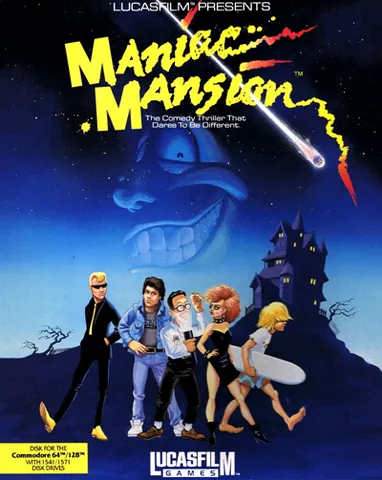
Maniac Mansion
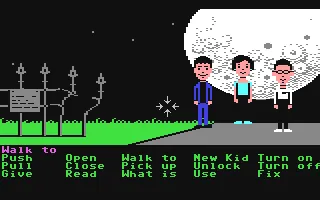
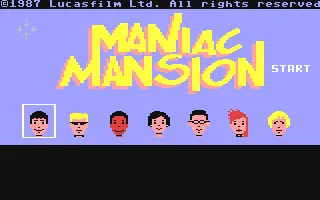
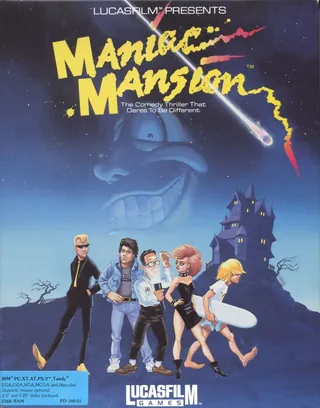
A group of teenagers sneaks into the spooky mansion of a mad scientist to rescue a kidnapped girl — and you get to choose who from the party you send into action. Maniac Mansion from 1987 was not just a funny adventure; it was a work that quietly rewrote the rules of an entire genre.
The game was the first to introduce the SCUMM engine (Script Creation Utility for Maniac Mansion), a tool of the studio Lucasfilm Games that replaced the tedious typing of commands with clicking on verbs and objects on screen. Instead of guessing what words the game would understand, you simply choose "Open", "Pick up" or "Use" and point where. This seemingly small change transformed adventures from a frustrating puzzle with a dictionary into a fluid, accessible experience — and SCUMM became the foundation for the whole golden era of LucasArts adventures.
Maniac Mansion also stands out in that at the start you choose two of seven friends, each of whom has different abilities, which leads to different solutions to puzzles and to several different endings. This freedom and branching were exceptionally progressive at the end of the eighties. On top of that the game adds the typical LucasArts humour, black gags and the famous scene with the microwave and the hamster, which became part of adventure folklore.
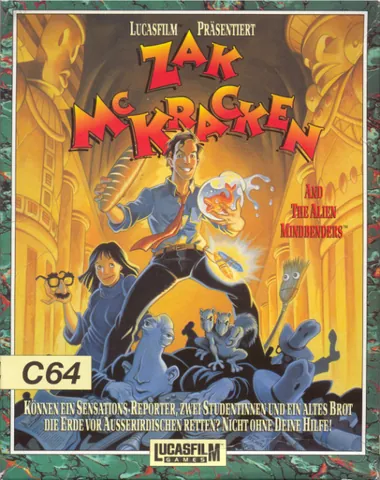
Together with the later Zak McKracken, Maniac Mansion established the identity of LucasArts as a studio that built on cleverness, humour and fairness towards the player. The game earned many ports and its influence is felt in all later classics such as Monkey Island or Day of the Tentacle — a direct sequel in whose intro you can even play the whole original Maniac Mansion.
Even today Maniac Mansion entertains with its atmosphere of B-movie horror shot through with comedy and with the way it rewards experimentation. It is a pioneer to whom everyone who loves point & click clicking owes a great deal.
Why play: Because this is where the SCUMM engine and the modern point & click adventure were born — with humour, multiple characters and several endings to discover.
Game 9 of 121 for Commodore 64
The same title elsewhere (2)
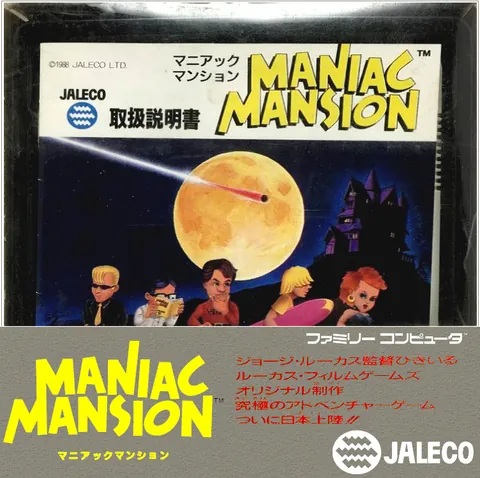
The Commodore 64 is the home platform where Maniac Mansion and the SCUMM engine first came to life — the game benefits from colorful 8-bit visuals and atmospheric SID-chip music that helps build the spooky mood of Doctor Fred's mansion. The PC/DOS port arrived a year later and had to cope with the fact that many contemporary PCs lacked a sound card, so music and effects were often reduced to internal-speaker beeps, while the graphics depended on whether the player had CGA or a better EGA card. Puzzles and gameplay stayed identical, so today's choice mainly comes down to preferring the C64's music or the PC/EGA version's slightly sharper graphics.