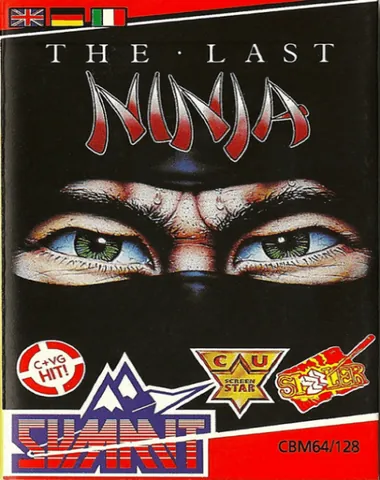
The Last Ninja / Last Ninja 2
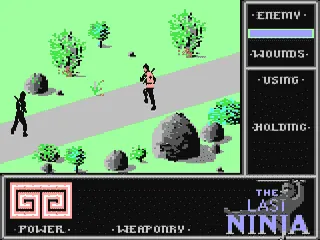
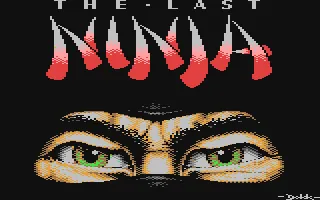
You barely step into the first screen and something breathes over you that was not a given on the Commodore 64: the scene looks like a carefully painted picture, the music underscores the atmosphere, and you know that this game wants to be an experience, not just a challenge. The Last Ninja and its sequel Last Ninja 2 rank among the very best that the British scene ever created on the 8-bit Commodore.
Mechanically these are isometric action adventures. You walk through richly rendered environments, collect items, solve puzzles, and in close combat you use various weapons and strikes. That fusion of action and logic — where you have to sense where to go, what to use with what, and when to draw your sword — gave the games a depth far exceeding the ordinary platformers of the time. Controlling the character in isometry was strict and demanded precision, which turned every successful jump or fight into a small victory.
Behind the games stands the British studio System 3, and the series ranked among the most successful titles of the entire platform. The Last Ninja was released in 1987, the sequel a year later, moving the action from ancient Japan to modern New York. Both installments became enormous sales hits and are cited to this day among the best-selling and technically most advanced games of the Commodore 64.
Culturally, Last Ninja is a symbol of the golden era of 8-bit development in Great Britain. It showed that on a machine with limited memory and a limited color palette one could create an audiovisually rich world that could hold its own against anything on the market. The music, exceptionally acclaimed on both installments, belongs among the iconic soundtracks of the platform and is known to this day even by people who never played the game.
The difficulty may today be the biggest obstacle — both the controls and the puzzles are hard and merciless. But whoever gets past the initial frustration will find one of the most beautiful and ambitious games the 8-bit ever received. It's a classic in the full sense of the word.
Why play: The peak of what the Commodore 64 achieved audiovisually and in design — a beautiful, atmospheric, and uncompromisingly demanding action adventure that connoisseurs remember to this day.
Game 1 of 121 for Commodore 64