Defender of the Crown
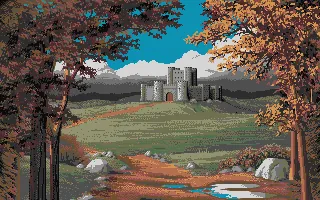
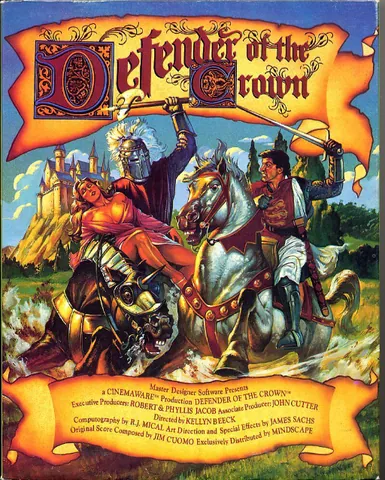
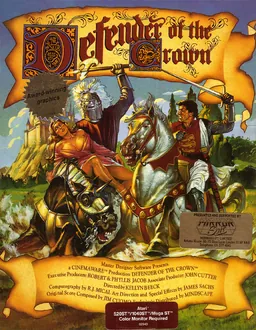
Defender of the Crown casts the player into a medieval England divided among rival noble houses, offering a mix of strategy, tournaments, and action mini-games. As the leader of one of the houses, the goal is to gradually gain control of as much territory as possible, using diplomacy, military campaigns, castle sieges, and the abduction of noble ladies, around whom a side plot unfolds. The strategic map of England shows the balance of power among the various factions, and the player decides where to direct their army and with whom to form alliances, with the choice of one of four playable noble families giving each playthrough a slightly different starting point.
The game from studio Cinemaware set itself apart from other strategy titles through its emphasis on cinematic presentation - between turns on the map, animated sequences play out for jousting tournaments, sword duels, or castle sieges, each functioning as a self-contained action mini-game. On the Atari ST the game benefited from more colorful and detailed graphics than eight-bit platforms could offer, allowing a more faithful rendering of the chivalric aesthetic on which Cinemaware built its reputation. Catapult assaults on castle walls, jousting duels, and archer skirmishes looked more colorful and fluid on the ST than in the older eight-bit versions, accompanied by period music underscoring the chivalric theme.
Defender of the Crown became one of the standout titles of the mid-1980s precisely because it combined a strategic layer with striking animated scenes, and for years it served as a showcase of what home computers were graphically capable of. The concept of alternating between a strategic map and action sequences influenced other Cinemaware games as well as later strategy titles with cinematic presentation. Today the game appeals more as a historical artifact and a showcase of the era's artistic style than for the depth of its strategic layer, which is fairly simple compared to later games.
Why play: For fans of period strategy games who will appreciate the visual and atmospheric presentation more than the depth of the strategic layer, which is fairly simple compared to later games.
Game 50 of 72 for Atari ST
The same title elsewhere (1)
Defender of the Crown made its name above all through the 1986 Commodore Amiga version — painted screens of castles, jousts and duels showed off what 16-bit graphics hardware could do at the time, turning the game into a showcase for Cinemaware's idea of an 'interactive movie'. Conversions to 8-bit machines like the Commodore 64 inevitably had to cut back on colors, resolution and animation smoothness, resulting in simpler, less detailed screens, even though the core game — duels, jousts, castle sieges — stayed intact. If you want to see the title in the form that once wowed audiences, that's the 16-bit Amiga version; the 8-bit ports are more of a modest echo of the same game.